
Written by Anoushka Pandya and Srivalli Adarapu | Art by Anoushka Pandya
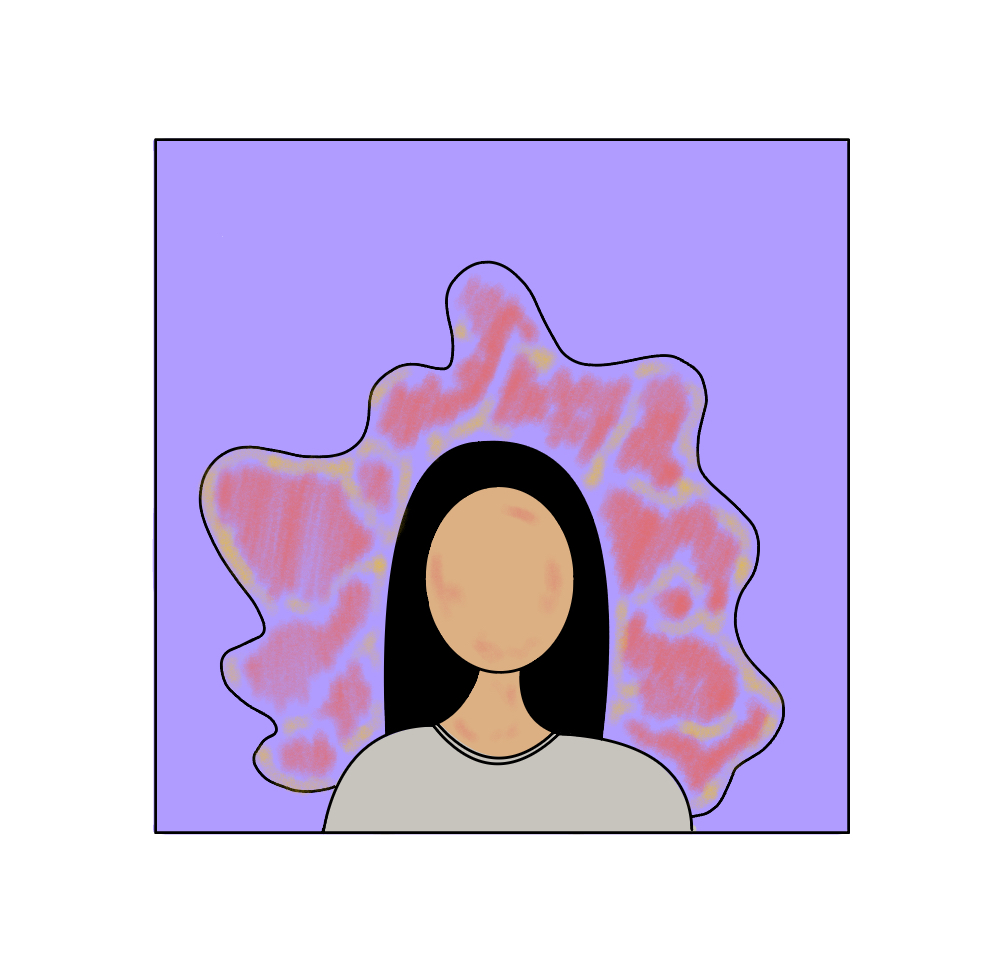
What if someone told you they had the Alice in Wonderland syndrome? You’d likely brush it off, thinking there is no such thing. The renowned whimsical story of Alice in Wonderland has materialized within the perplexing neurological condition of Alice in Wonderland syndrome, also known as AIWS. Alice’s peculiar sensations in the story share uncanny parallels with those who experience AIWS. From perceiving distortions of objects and time to experiencing a sense of disconnection from the world, AIWS strangely resembles Alice’s experience.
Alice in Wonderland Syndrome is a rare neurological condition that disrupts visual perception by distorting the size and shape of objects. This non-contagious and usually temporary condition affects the brain’s ability to process sensory input or how your brain responds to outside stimuli and information. There is limited knowledge of AIWS due to the perplexity of the condition. Less than 200 cases have been reported. AIWS is also found to occur at night and in adolescents more repeatedly. About 30% of adolescents may display symptoms of AIWS.
Those diagnosed with AIWS perceive the size of body parts or other objects differently. They may see them as extremely large, small, far away, close by, or disproportionate. In addition to affecting visual perception, AIWS also disrupts the perception of time. Time appears to whiz by or move at an extremely slow pace. Some with this condition also suffer from derealization and feel as though nothing is real or face depersonalization, which is a sensation of seeing oneself from outside their own body. Few people also experience somatopsychic duality or the feeling of being split into two.
There is no definite cause for AIWS; however, migraines, brain tumors, depression, hallucinatory drugs, and temporal lobe epilepsy are associated with AIWS. AIWS has no proven treatment. However, treatments for the likely causes such as remedies for migraines could bring relief.
The name for this disease was developed in 1955 by British Psychiatrist John Todd, who was the first to group and define these symptoms as AIWS. Raising awareness of this disorder is crucial since it is unknown and hard to diagnose. Its symptoms are not life-threatening but can cause feelings of isolation and anxiety. Knowing more about this disorder will help foster an empathetic and open society. This disorder may have reminded you of the song Anti-Hero by pop star Taylor Swift. In this song, she says the following lyrics: “Too big to hang out, slowly lurching toward your favorite city.” These lyrics can depict how someone with AIWS views their own body, as too large or too small. Taylor Swift herself likely does not have AIWS, but her lyrics can also translate into something someone with AIWS would possibly relate to.
Works cited:
Weissenstein, Anne, et al. “Alice in Wonderland Syndrome: A Rare Neurological Manifestation with Microscopy in a 6-Year-Old Child.” Journal of Pediatric Neurosciences, U.S. National Library of Medicine, 2014, www.ncbi.nlm.nih.gov/pmc/articles/PMC4302569/#:~:text=Alice%20in%20wonderland%20syndrome%20.
Blom, Jan Dirk. “Alice in Wonderland Syndrome.” Neurology Clinical Practice, Wolters Kluwer Health, Inc. on behalf of the American Academy of Neurology, 1 June 2016, cp.neurology.org/content/6/3/259.
John, Lanska R, and Lanska J Douglas. “The Alice-in-Wonderland Syndrome.” Frontiers of Neurology and Neuroscience, U.S. National Library of Medicine, 17 Nov. 2017, pubmed.ncbi.nlm.nih.gov/29151098/.

 pathoscribe
Leave a comment