Written by Srivalli Adarapu | Art by Mahi Raithatha
Neurological disorders such as Parkinson’s disease, essential tremor, and dystonia continue to affect far too many without a definitive cure. Nevertheless, many efforts have been made to mitigate the effects of these diseases through a variety of treatments. Amongst these treatment options, deep brain stimulation (DBS) is an effective and popular choice for managing such neurological disorders.
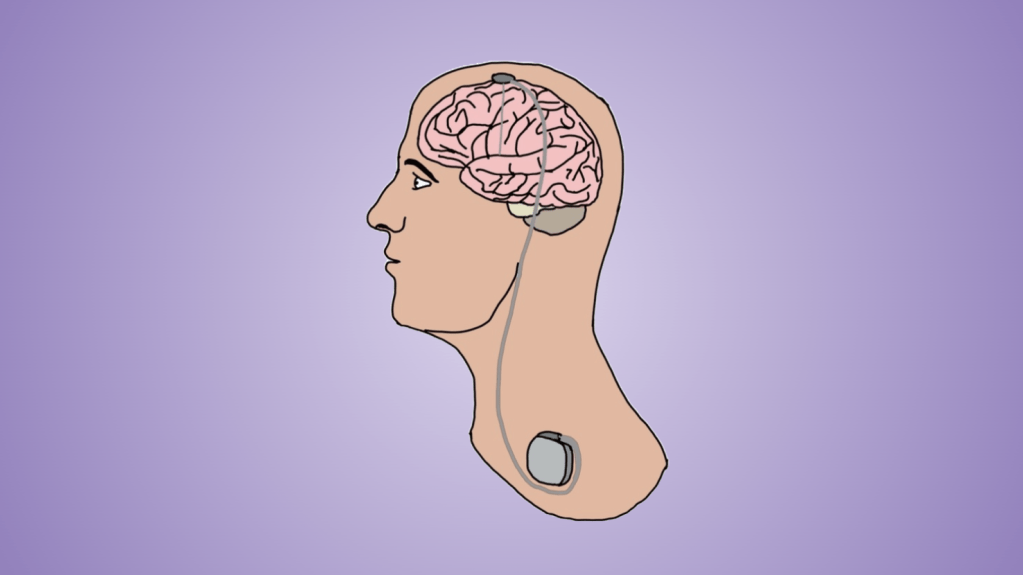
DBS is a surgical intervention used to treat movement disorders by alleviating symptoms associated with these diseases. DBS uses electrical stimulation in which implanted electrodes release electrical signals to certain brain regions, aiming to control abnormal conditions in the brain.
DBS is similar to a cardiac pacemaker in its transmission of electrical impulses. Electrodes are placed in particular brain regions. For instance, in Parkinson’s disease, the electrodes are implanted within the subthalamic nucleus or the globus pallidus interna. The neurostimulator is then placed below the collarbone and connected to the electrodes. This device continuously transmits electrical pulses to the brain regions through the electrodes.
DBS regulates the irregular electrical signals produced by the brain regions involved in movement for those suffering from neurological disorders by supplying electrical signals of its own. Symptoms from movement disorders result from the abnormal pattern of electrical impulses. DBS treats symptoms associated with movement disorders like tremors and stiffness by addressing these abnormal patterns. Although DBS does not provide a definitive cure for movement diseases, it significantly reduces symptoms and helps many cope with their condition.
DBS is only recommended for certain patients. Those experiencing extreme depression, memory difficulties, and difficulty with balance, for example, are not recommended for this surgical procedure as it could possibly worsen symptoms. If you are diagnosed with any movement disorders and are considering DBS as a potential treatment option, be sure to consult your doctor.
According to a PubMed study in 2019, 75% of the 200 patients who underwent DBS reported that the treatment helped them with symptom management. DBS also decreases the amount of medication needed to alleviate symptoms. While DBS effectively diminishes movement-related symptoms, there are potential risks associated with surgery. Any mistakes during surgery could result in bleeding in the brain, difficulty breathing, infection, nausea, and heart complications.
The potential of DBS in treating movement-related symptoms in neurological disorders has inspired research into its additional applications. Ongoing research explores the potential of DBS in treating sleep disorders and various neuropsychiatric conditions like OCD and Tourette Syndrome. These research endeavors are crucial as they hold the possibility of expanding treatment options and further reducing the impacts of diseases.
Works Cited:
- John Hopkins Medicine. “Deep Brain Stimulation.” Johns Hopkins Medicine, 8 Aug. 2021, www.hopkinsmedicine.org/health/treatment-tests-and-therapies/deep-brain-stimulation.
- Mayo Clinic. “Deep Brain Stimulation.” Mayo Clinic, Mayo Foundation for Medical Education and Research, 19 Sept. 2023, www.mayoclinic.org/tests-procedures/deep-brain-stimulation/about/pac-20384562.
- Fox, Michael J. “Deep Brain Stimulation.” The Michael J. Fox Foundation for Parkinson’s Research | Parkinson’s Disease, 2024, www.michaeljfox.org/deep-brain-stimulation?deep-brain-stimulation=.

 pathoscribe
Leave a comment