
Written by Kirsten Batitay | Art by Maya Wen
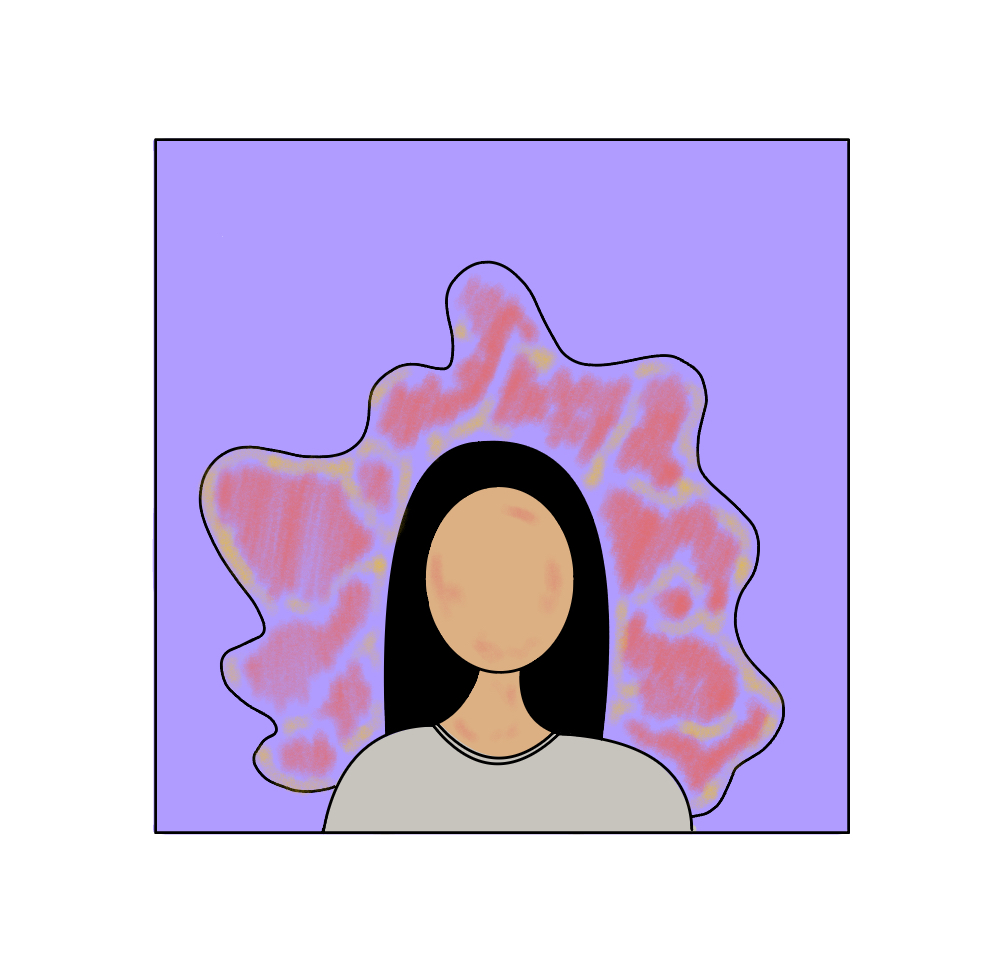
Those with Angelman Syndrome are often characterized by their beaming countenances and bouts of laughter. However, such symptoms are, more often than not, not out of true joy but rather a “ghost in one’s genes,” if you may.
Angelman Syndrome, originally dubbed “Happy Puppet” by British Pediatrician Harry Angelman, is a neurogenetic disorder that affects the nervous system and causes severe physical and learning disabilities. As detrimental as such consequences sound, those affected by this disorder are expected to have a near-normal life expectancy, though they will require life-long support.
The delayed development attributed to this disorder begins to present itself through various signs in babies around 6-12 months old, including being unable to sit without support and making babbling noises. These later devolve into an incapacity to speak or being able to speak only minimally. Regarding the physical aspects of Angelman Syndrome, those affected usually have difficulty walking due to problems with coordination and balance, stiff joints, and uncontrolled movements. Not to be forgotten, of course, is the frequent laughter and smiling–even with minimal stimulation, as well as hyperactivity and strabismus.
Given this disorder’s cause, it is no surprise that its incidence is estimated to be 1 in 15,000 live births. It occurs when gene UBE3A on chromosome 15 is missing or fails to function. As this gene comes from both parents, this disorder can happen when a child does not receive this copy from the mother or receives two inactive copies from the father. Although seldom, the cause can also be unknown.
The visible symptoms of Angelman Syndrome only serve as markers of suspicion that one is affected by it, but blood tests are used for its confirmation. Genetic tests are done on blood samples taken from the affected, and they search for missing chromosomes or chromosome parts, changes in the mother or father’s UBE3A gene, and changes in the child’s UBE3A gene that would impede functionality.
Considering the nature of this disorder, there is currently no cure, though research is being conducted in various countries for treatments. The aforementioned treatments use biotechnology to produce UBE3A proteins, reactivate the father’s copy of the gene, and correct insufficiencies in the disorder’s neurons. Because Angelman Syndrome cannot be completely cured, the current main approach is symptomatic treatment. To treat issues with posture and walking as well as seizures, those affected undergo physiotherapy and receive anti-epileptic medicine. For other symptoms like the inability to speak and hyperactivity, many of the children affected are taught sign language or gestures and may also receive behavioral therapy. The lack of a foolproof cure is no reason to be discouraged, especially when a myriad of strategies are being tested and researched to cure Angelman Syndrome, which is why we must all continue to place our faith in the brilliant physicians and biotechnologists who continuously give their best efforts in treating it.
Works Cited:
Paterson, Nigel and Sarah Holt, directors. NOVA: Ghost in Your Genes. Performance by Michael Skinner, et al., BBC, 2006, https://www.pbs.org/wgbh/nova/genes/.
NHS Team. “Angelman Syndrome.” NHS Choices, NHS, http://www.nhs.uk/conditions/angelman-syndrome/#:~:text=Angelman%20syndrome%20is%20a%20rare,need%20support%20throughout%20their%20life. Accessed 20 Mar. 2024.
Ashrafzadeh, Farah, et al. “Angelman Syndrome: A Case Report.” Iranian Journal of Child Neurology, U.S. National Library of Medicine, 2016, http://www.ncbi.nlm.nih.gov/pmc/articles/PMC4885160/.
“Angelman Therapeutics.” Angelman Syndrome Foundation, http://www.angelman.org/for-parents/angelman-therapies/. Accessed 20 Mar. 2024.

 pathoscribe
Leave a comment