Written by Yong-Lin Hu | Art by Charlene Cheng
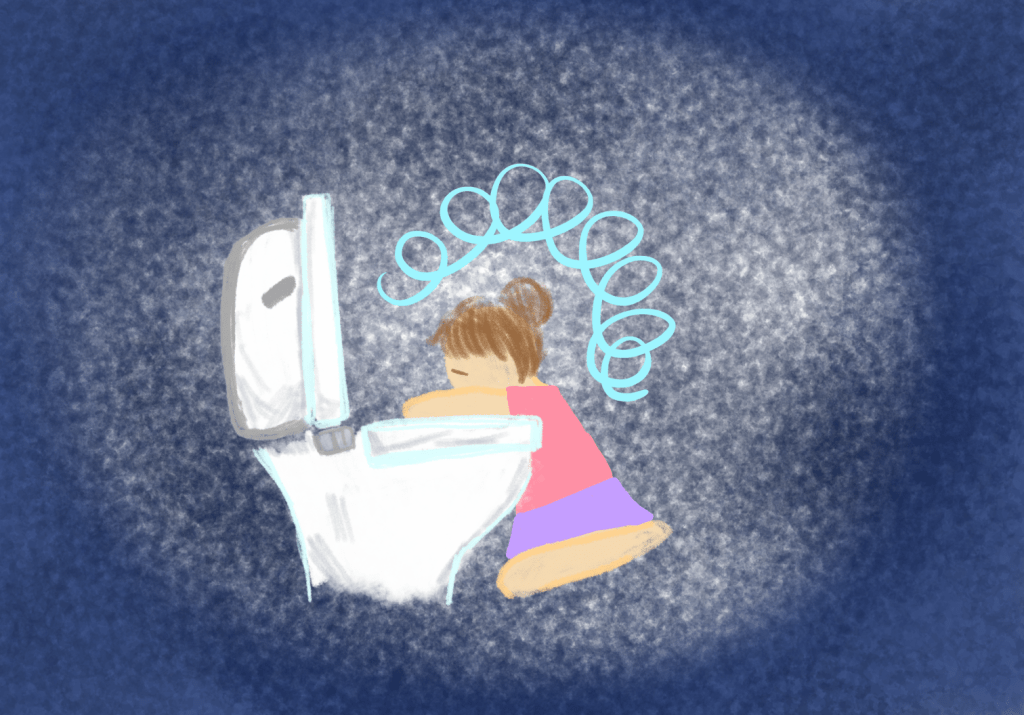
Bulimia Nervosa is an eating disorder characterized by periods of binge eating, which is then followed by purging. Those with bulimia often lose control while eating, consuming large quantities of food in one sitting. However, feelings of shame and disgust lead them to forcibly remove the food from the body in secret, usually through induced vomiting or laxatives. It may also be followed by excessive exercise and fasting periods to compensate. Depending on the severity or how often these cycles of binging and purging occur, this condition can go unseen for many years, allowing for such debilitating habits to be ingrained and increasingly difficult to recover from. As indicated by the word “nervosa,” this disorder involves a psychological addiction to a behavior, belief, or habit–that weight and appearance are directly linked with self-worth.
Although this condition may sound similar to anorexia nervosa (See article: Anorexia Nervosa), aside from binge eating, those with bulimia share a few distinctions: they usually are quick to gain weight, have inflammation in the throat, suffer from dental problems, and have calluses or sores on the hands. Many of these symptoms arise as a result of self-induced vomiting. Other behavioral symptoms include going to the bathroom for long periods, or during or after meals, having acid reflux, excessively exercising or fasting, misusing laxatives and similar medication, and undergoing recurrent cycles of binge eating. They may have irregular or absence of menstruation, depression, anxiety, fatigue, and low self-esteem, along with many other complications that affect physical and mental health. Long-term, this condition can lead to the development of other mental disorders, heart problems, kidney problems, and suicidal behavior. While food is at the heart of this disorder, it is the mental challenges surrounding it that makes it so difficult to overcome.
This disorder is most common among female adolescents and those whose families have a history of substance abuse and other mental illnesses. As such, it is important to foster healthy relations with food, health, and body image to prevent the development of eating disorders and low self-esteem. When treating this condition, doctors may evaluate behavior patterns reported by family members, friends, and those with it themselves. Common tests include blood and urine tests, which determine overall health, ECG tests, which determine heart health, and psychological evaluations, which determine one’s relationship with food, weight, and self-worth. The treatment process for this disorder is difficult. With help from healthcare professionals and loved ones, those with bulimia will develop new habits and be resilient against the debilitating mindset they once revered. It requires continuous sessions of psychotherapy to aid with mental health, antidepressants, and nutrition education. Those with bulimia may return to old habits as a way to cope with outside stressors, so all must be done on both sides to seek help.
Works Cited:
“Bulimia Nervosa – Symptoms and Causes.” Mayo Clinic, 29 Feb. 2024, https://www.mayoclinic.org/diseases-conditions/bulimia/symptoms-causes/syc-20353615. Accessed 30 Mar. 2024.
“Urban Dictionary: Nervosa.” Urban Dictionary, https://www.urbandictionary.com/define.php?term=Nervosa. Accessed 30 Mar. 2024. “Bulimia Nervosa.” Johns Hopkins Medicine, 31 Jan. 2023,

 pathoscribe
Leave a comment