Written by Anoushka Pandya | Art by Anoushka Pandya
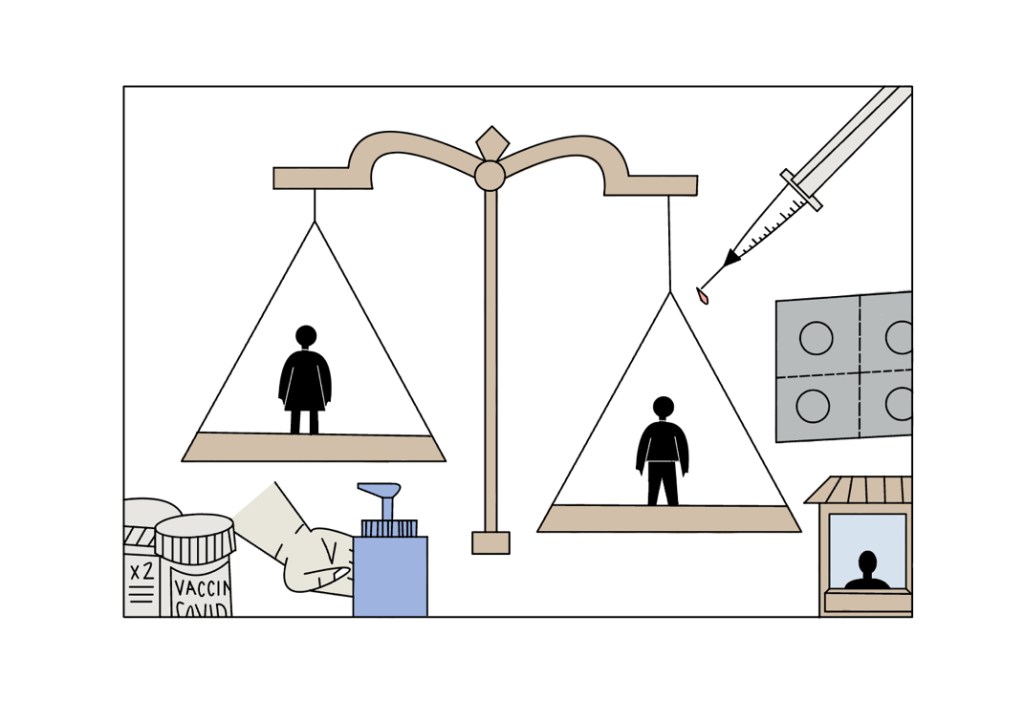
The health gap refers to differences in health and access to healthcare caused by factors like socioeconomic status, race, policy, location, gender, and accessibility. Disparities include disease prevalence, health insurance access, and other areas. The health gap shows that overall health and healthcare access is generally lower among minorities or populations with lower socioeconomic statuses. An example of a health disparity is shown in Cancer Alley, an 85-mile stretch in Louisiana filled with petrochemical industry plants that spew toxic chemicals to its residents. Cancer rates are 1500 times the national average in Cancer Alley.
Cancer Alley was formed when the petrochemical industry bought out the plantation industry but left its community of mostly poor, uneducated black folk there. The influx of chemical plants released tons of toxic chemicals that later were suspected to cause health problems. The plants were suspected to have something to do with increased rates of cancer, but since black people were primarily affected, the issue was let go. The area was deemed a sacrifice zone. Income from these chemical plants was prioritized as opposed to the lives of the people there.
Redlining was a practice of refusing to give someone a loan because they were in a “financial risk” zone. The people who resided in these “financially risky” zones were people of color, generally African Americans. Although these practices have legally ended, Cancer Alley is here now because of redlining and infrastructure policies rooted in systematic racism of the past. Cancer Alley was once a redlined area seen as the perfect place for these industrial plants. The Black community living in Cancer Alley has faced immense health risks because of past policies that prohibited them from living a healthier lifestyle and prioritized “green” areas with white families.
Examples like Cancer Alley highlight the need to take action against these health disparities. This is often not a simple process since many of these health disparities are rooted in systemic racism. Addressing health disparities involves raising awareness, taking action to improve healthcare access among minorities, and tackling the root sources of health disparities, often in policy.
Works Cited:
Mulholland, Marcella, and Julian Brave NoiseCat. “Black People Have Been Saying ‘We Can’t Breathe’ for Decades.” VICE, 16 Dec. 2020, http://www.vice.com/en/article/5dpy73/black-people-have-been-saying-we-cant-breathe-for-decades-robert-bullard.
“Robert Taylor: ‘We Have Been Designated a Sacrifice Zone.’” Poor People’s Campaign, http://www.poorpeoplescampaign.org/we-cry-power/robert-taylor/. Accessed 17 Mar. 2024. Denne,
Fears, Darryl. “Redlining means 45 million Americans are breathing dirtier air, 50 years after it ended.” The Washington Post, 9 Mar. 2022, https://www.washingtonpost.com/climate-environment/2022/03/09/redlining-pollution-environmental-justice/.
Riley, Wayne J. “Health disparities: gaps in access, quality and affordability of medical care.” Transactions of the American Clinical and Climatological Association vol. 123 (2012): 167-72; discussion 172-4.

 pathoscribe
Leave a comment