Written by Yong-Lin Hu | Art by Maya Wen
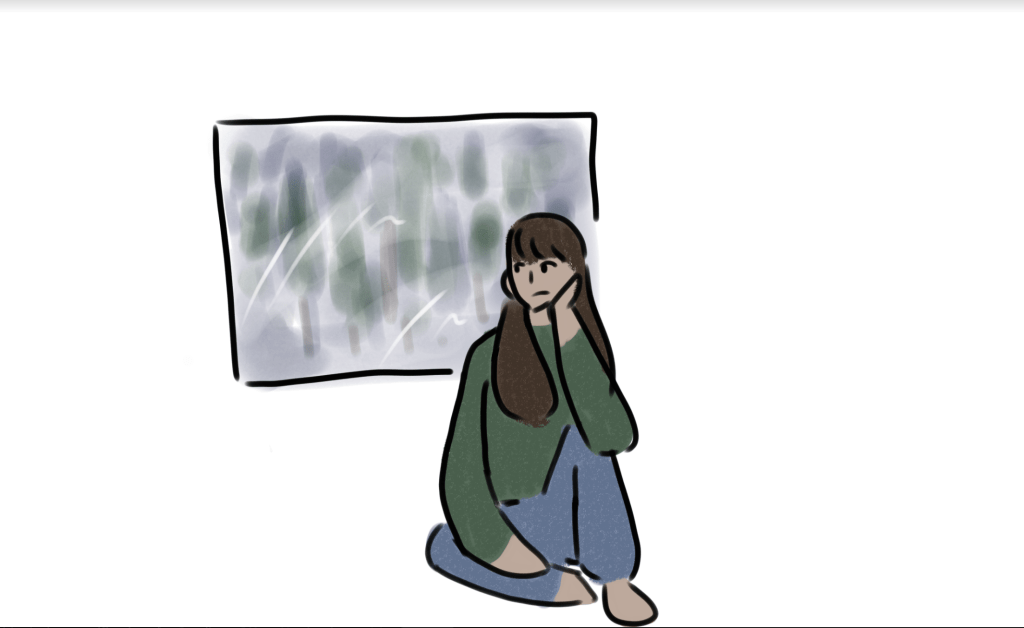
SAD, a fitting acronym for seasonal affective disorder, is a type of periodical depression that some experience with the changing seasons. These mood changes are typically attributed to shorter days and fewer hours of sunlight during the fall and winter. However, others may also experience the less common summer-pattern SAD, where symptoms are experienced during the spring and summer. Symptoms will usually resolve as these depressive months end. Characterizations of this disorder include loss of motivation, lack of interest in activities previously enjoyed, difficulties concentrating, experiencing drained energy levels or excessively sleeping, feeling hopeless, appetite or weight changes, a persistent sad or anxious mood, and in severe cases, suicidal thoughts.
Although the research on SAD is still preliminary, especially concerning summer-pattern SAD, studies have indicated that SAD develops as a result of the effect of weather on the development of brain chemicals. Serotonin levels, a hormone responsible for mood regulation, have an indirect relationship with exposure to sunlight. Sunlight exposure affects vitamin D levels, which promote serotonin activity. As a result, with shorter daylight hours during winter months, serotonin levels decrease and contribute to the development of depression. In contrast, the hormone melatonin, produced in the darkness, regulates sleep-wake cycles. With changing day and night cycles, those with winter-pattern SAD tend to produce too much melatonin, resulting in excessive fatigue and sleeping behaviors. As for summer-pattern SAD, theories have been made that due to increased sunlight, individuals are unable to produce enough melatonin, disrupting sleep quality. The imbalances caused by melatonin, in conjunction with serotonin, lead to the development of depressive symptoms.
Typically, SAD develops during young adulthood, and symptoms must be experienced for at least 2 years consecutively before individuals are formally diagnosed. It occurs more often in women, those with other mental disorders–especially bipolar disorder– and for winter-pattern SAD, those living farther North. Common treatments include psychotherapy and antidepressants, which target general depression, as well as light therapy and vitamin D supplements, which specifically aid against winter-pattern SAD.
Sources:
“Seasonal Affective Disorder.” Johns Hopkins Medicine, https://www.hopkinsmedicine.org/health/conditions-and-diseases/seasonal-affective-disorder#:~:text=Seasonal%20affective%20disorder%20(SAD)%20is,antidepressants%20can%20help%20treat%20SAD. Accessed 4 May 2024.
“Seasonal Affective Disorder.” National Institute of Mental Health (NIMH), https://www.nimh.nih.gov/health/publications/seasonal-affective-disorder. Accessed 4 May 2024.
“Seasonal Affective Disorder (SAD) – Symptoms & Causes.” Mayo Clinic, 14 Dec. 2021, https://www.mayoclinic.org/diseases-conditions/seasonal-affective-disorder/symptoms-causes/syc-20364651. Accessed 4 May 2024.
 pathoscribe
Leave a comment