
Written by Kirsten Batitay | Art by Anoushka Pandya
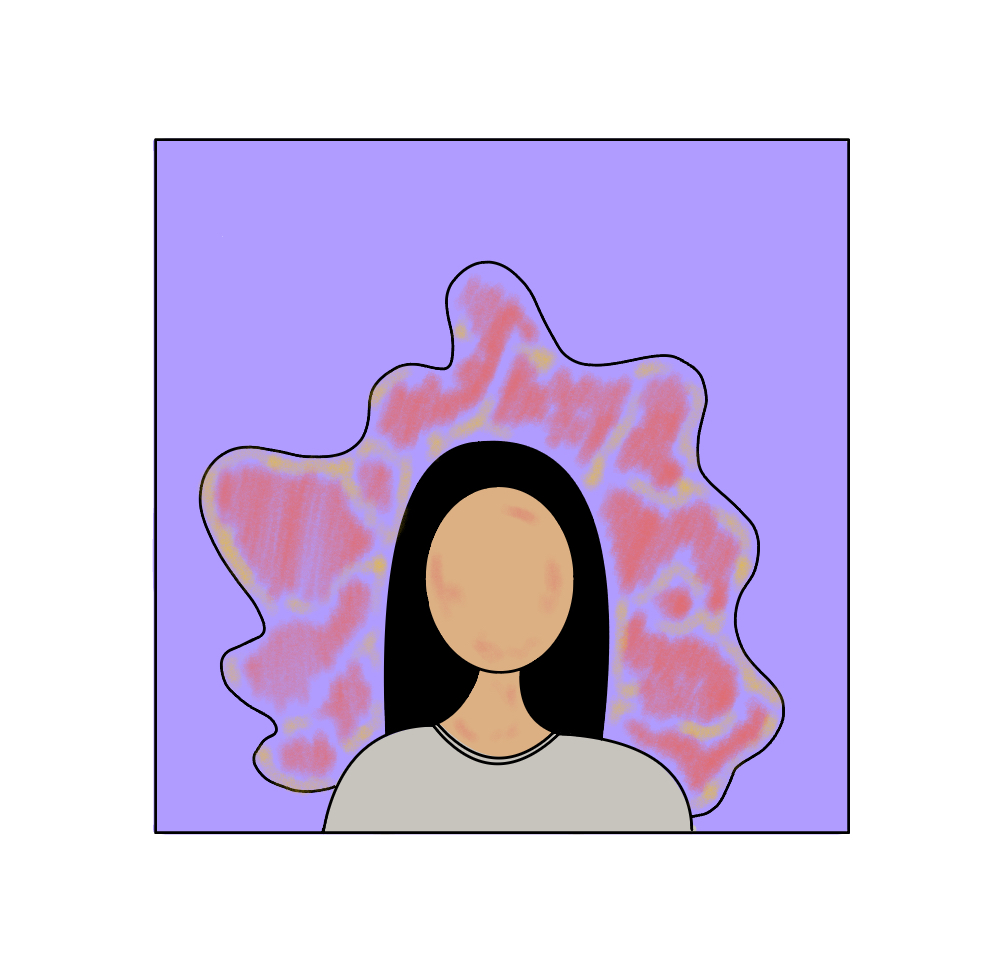
When the term ‘obsessive-compulsive disorder,’ or OCD, comes to mind, often one might think of a person who is unduly organized, a perfectionist who finds happiness in the proper order of all things. While some of that may be true, OCD is not perfectionism.
Obsessive-compulsive disorder is one in which a person experiences persistent and usually anxiety-inducing thoughts, known as obsessions, completes repetitive behaviors they feel they are forced to do, known as compulsions, or both. Compulsions are also often in response to an obsession, and people who have OCD generally don’t have control over their obsessions or compulsions despite knowing that they’re uncommon and feel only temporary satisfaction from completing their compulsions. Due to this, they experience disturbance and unease in their lives due to their condition.
As much as OCD continues to plague many people, its exact causes are unknown. However, some risk factors that increase one’s chances of having it are those related to genetics and biology. Studies and research have shown that having a parent or sibling with OCD increases one’s chance of having it, though specific genes have yet to be found. Brain imaging studies have also shown that those with the disorder usually have differences in their frontal cortex and subcortical structures in their brain. Unsurprisingly, these are the areas involved in controlling emotions and thinking. In addition to these, other mental health disorders like anxiety and mood disorders as well as stressful life events affect one’s likelihood of having OCD.
Usually, people are diagnosed with OCD as young adults, especially as many adults who have it recognize that their compulsions are out of the ordinary. As for children, close adults usually recognize their OCD symptoms because children often see their behavior as something done to prevent bad occurrences. However, symptoms can severely obstruct daily life when left untreated, so it is important to receive treatment. OCD is treated using medications, psychotherapy, or a combination of both. Medications for OCD are commonly antidepressants, but OCD treatments using these drugs might need to use higher doses than those used to treat depression.
In addition to or instead of medications, psychotherapy has proven to be an effective treatment for both children and adults. The most effective is called cognitive behavioral therapy, or CBT. CBT is a talk therapy that helps people identify detrimental or false ways of thinking, which in turn allows them to change their behaviors and create proper responses to difficult situations. Another psychotherapy and specific type of CBT is exposure and response prevention therapy, or ERP, which is one in which people spend time in an environment that is safe but, little by little, exposes them to scenarios that trigger their obsession but prevent them from doing compulsive behaviors. ERP has proven to be very effective for people if they continue treatment.
Truly, obsessive-compulsive disorder does not mean being a “clean freak.” Rather, it is a condition that greatly disrupts one’s daily life and induces undesirable amounts of anxiety in those who are affected. Still, the attention to detail that many people with OCD have can be redirected to creative outlets and be used to develop important skills like problem-solving. While OCD has its downsides, it shouldn’t be viewed negatively. Various celebrities like Frank Sinatra and Camila Cabello have been diagnosed with OCD yet are bright musicians in their chosen genres, which goes to show that despite having this condition, people can still work to the best of their ability and do amazing things.
Sources:
“Obsessive-Compulsive Disorder.” National Institute of Mental Health, U.S. Department of Health and Human Services, http://www.nimh.nih.gov/health/topics/obsessive-compulsive-disorder-ocd#:~:text=Obsessive%2Dcompulsive%20disorder%20(OCD),or%20interfere%20with%20daily%20life. Accessed 20 May 2024.
“Obsessive-Compulsive Disorder (OCD).” Mayo Clinic, Mayo Foundation for Medical Education and Research, 21 Dec. 2023, http://www.mayoclinic.org/diseases-conditions/obsessive-compulsive-disorder/symptoms-causes/syc-20354432.
“Hidden Strengths of OCD.” Unique Community Services, 14 Dec. 2023, uniquecs.co.uk/blog/hidden-strengths-of-ocd/#:~:text=OCD%20sufferers%20tend%20to%20put,potential%20problems%20in%20various%20situations.
Staff, Solara. “Celebrities with OCD – San Diego Mental Health Treatment – Solara.” Solara Mental Health, Solara Staff https://solaramentalhealth.com/wp-content/uploads/Solara-Mental-Health-Veteran-300.jpg, 1 July 2022, solaramentalhealth.com/celebrities-with-ocd/.
Yoak, Author: Elizabeth, et al. “10 Famous People with OCD & What You Can Learn from Them.” Choosing Therapy, http://www.choosingtherapy.com/famous-people-with-ocd/. Accessed 20 May 2024.

 pathoscribe

Leave a comment