Written by Yong-Lin Hu | Art by Anoushka Pandya
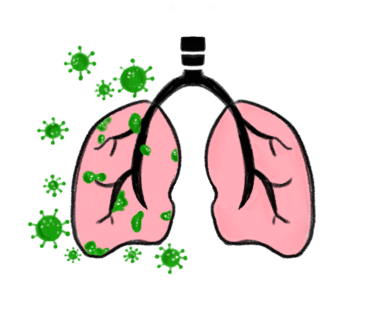
One of the world’s top infectious killers, tuberculosis is a bacterial infection that primarily attacks the lungs, though as the condition worsens, it may also spread throughout the body. The bacteria behind this disease is called Mycobacterium tuberculosis and is believed to have existed for over 3 million years. Tuberculosis is contracted when the targeted bacteria enter the lungs, usually by breathing or consuming such germs that are released from coughs, sneezes, laughs, etc. These have to be contracted from individuals with active TB in the lungs or voice box. Although there are antibiotics designated to treat tuberculosis, the efficacy of the treatment may vary as the condition develops. There are three main forms and stages of this condition, the first of which is Primary TB (tuberculosis). This is the first stage, when immune system cells are still able to find, capture, and destroy the germs. However, some germs may still be able to survive and multiply. At this point, most don’t experience symptoms or only experience flu-like symptoms, including having a low fever, fatigue, cough, etc. The second stage is called Latent TB, when the bacteria exists in the body, but the immune system keeps them isolated by building a wall within lung tissue, preventing them from spreading further. In this confinement of lin tissue, germs do not inflict any more damage on the body. There are no symptoms and the host is not contagious. However, the infection can easily reactivate over time, with some cases of TB being dormant for decades. As such, medication will be given for at least 3 months to prevent its activation. Active TB can occur right after primary infection, though it typically occurs after periods of having latent TB. At this stage, germs will multiply and spread disease throughout the body and to others. Common symptoms include chest pain, chills, fever, cough(ing up blood or mucus), night sweats, and weight loss, fatigue. Other symptoms may be caused by extrapulmonary TB, or when the TB infection spreads to other parts of the body, but these symptoms vary depending on which body parts are infected. They may experience swelling in the brain or spinal cord, have a bulging soft spot on the head, vomit, or be sluggish. There are a variety of medications that may be administered for 6-12 months for those with active TB. In some cases, latent or active TB infections can become drug-resistant, meaning that medications are no longer effective in combating the bacteria. When this happens, different medications may be given for a much longer duration.
Individuals more susceptible to TB include those with weakened immune systems (HIV/AIDS, diabetes, kidney disease), living/traveling in countries where TB is common (Latin America, Africa, Asia, Eastern Europe), working in healthcare, or working/living in places where people live in close proximity (prisons, nursing homes, homeless shelters).
Because of how deadly this disease is, testing for TB is imperative. The two most common tests are a TB skin test, when a small amount of fluid is injected into the skin and two to three days later, a health care provider will see if there is a reaction, and TB blood testing, where professionals measure how one’s immune system reacts when a small amount of blood is mixed with TB proteins. If these tests test positive, supplementary tests may be given–such as a chest X-ray, ct scan, or AFB tests–to determine whether the infection is latent or active.
Works Cited:
view, Log in or sign up to. “Understanding Tuberculosis: Causes, Symptoms, and Treatment Options.” WebMD, https://www.webmd.com/lung/understanding-tuberculosis-basics. Accessed 29 May 2024.
“Tuberculosis – Symptoms & Causes.” Mayo Clinic, 22 Mar. 2023, https://www.mayoclinic.org/diseases-conditions/tuberculosis/symptoms-causes/syc-20351250. Accessed 29 May 2024.
CDC. “Testing for Tuberculosis.” Tuberculosis (TB), 22 May 2024, https://www.cdc.gov/tb/testing/index.html. Accessed 29 May 2024.

 pathoscribe
Leave a comment