Written by Hamsini Punukollu | Art by Anoushka Pandya
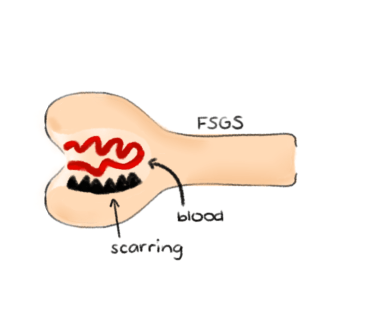
Focal Segmental Glomerulosclerosis (FSGS) is a rare kidney condition that results in scarring of the kidney’s filtering units and affects 7 in 1 million people. This scarring impairs the kidneys’ ability to filter waste effectively, potentially leading to kidney failure. While the exact cause of this disease is unknown, certain health problems are thought to cause FSGS, such as diabetes, sickle cell disease, and infections, including some viruses like HIV and lupus. Other potential causes include obesity, high blood pressure, long-term use of anabolic steroids like heroin, excessive urine in your kidneys, medicines such as some cancer treatments, and kidney birth defects.
The kidneys contain millions of tiny filtering units called glomeruli, which remove waste and excess substances from the blood to form urine. Due to FSGS, certain glomeruli become scarred and lose their filtering ability. This scarring disrupts the normal function of the kidneys, leading to proteinuria (excess protein in the urine), reduced kidney function, and in severe cases, kidney failure. The National Kidney Foundation states that symptoms include swelling in areas such as the legs, ankles, or around the eyes (edema), proteinuria, reduced protein levels in the blood, elevated levels of fat lipids in the blood (high cholesterol), and in some instances, high blood pressure.
FSGS can be classified into two categories based on its cause:
- Primary (idiopathic) FSGS: The cause is unknown and often occurs without any associated conditions.
- Secondary FSGS: It develops as a result of another condition, such as obesity, hypertension, viral infections like HIV, drug toxicity (especially due to heroin or certain medications), or genetic mutations.
According to the National Center for Biotechnology Information, in the United States, approximately 50% of nephrotic syndrome ,a kidney disease that causes too much protein to be passed through the urine, is attributed to FSGS. Nephrotic syndrome symptoms include swelling around the eyes and in the feet and ankles, foamy urine, and weight gain due to excess fluid retention. The prevalence of FSGS has gradually increased over the years, becoming the most common primary glomerular process contributing to kidney failure in the United States.
While FSGS is a chronic disease, there are ways to maintain symptoms. Treatments include immunosuppressants, blood pressure medicines, and diuretics (water pills) to help your kidneys get rid of salt and water. Additionally, healthy life changes, such as following a kidney-friendly eating plan, being active for 30 minutes almost daily, and quitting smoking or other kinds of tobacco are beneficial treatment plans for patients with FSGS.
Focal Segmental glomerulosclerosis is a kidney disorder with potentially devastating consequences. Early diagnosis and appropriate management are crucial to slowing the progression of the disease and preserving kidney function. With continued research and medical advancements, there is hope for better treatments and improved quality of life for individuals affected by FSGS.
Works Cited
Focal segmental glomerulosclerosis (FSGS). (2024, June 6). American Kidney Fund. https://www.kidneyfund.org/all-about-kidneys/other-kidney-diseases/focal-segmental-glomerulosclerosis-fsgs
Sangameswaran, K. D. G., Hashmi, M. F., & Baradhi, K. M. (2023, August 28). Focal Segmental Glomerulosclerosis. StatPearls – NCBI Bookshelf. https://www.ncbi.nlm.nih.gov/books/NBK532272/
Focal segmental glomerulosclerosis (FSGS) – Symptoms and causes – Mayo Clinic. (2024, March 28). Mayo Clinic. https://www.mayoclinic.org/diseases-conditions/fsgs/symptoms-causes/syc-20354693
Focal Segmental Glomerulosclerosis (FSGS). (2023, September 29). National Kidney Foundation. https://www.kidney.org/atoz/content/focal



 pathoscribe
Leave a comment