Written by Micaela Montinola | Art by Tanisha Arora
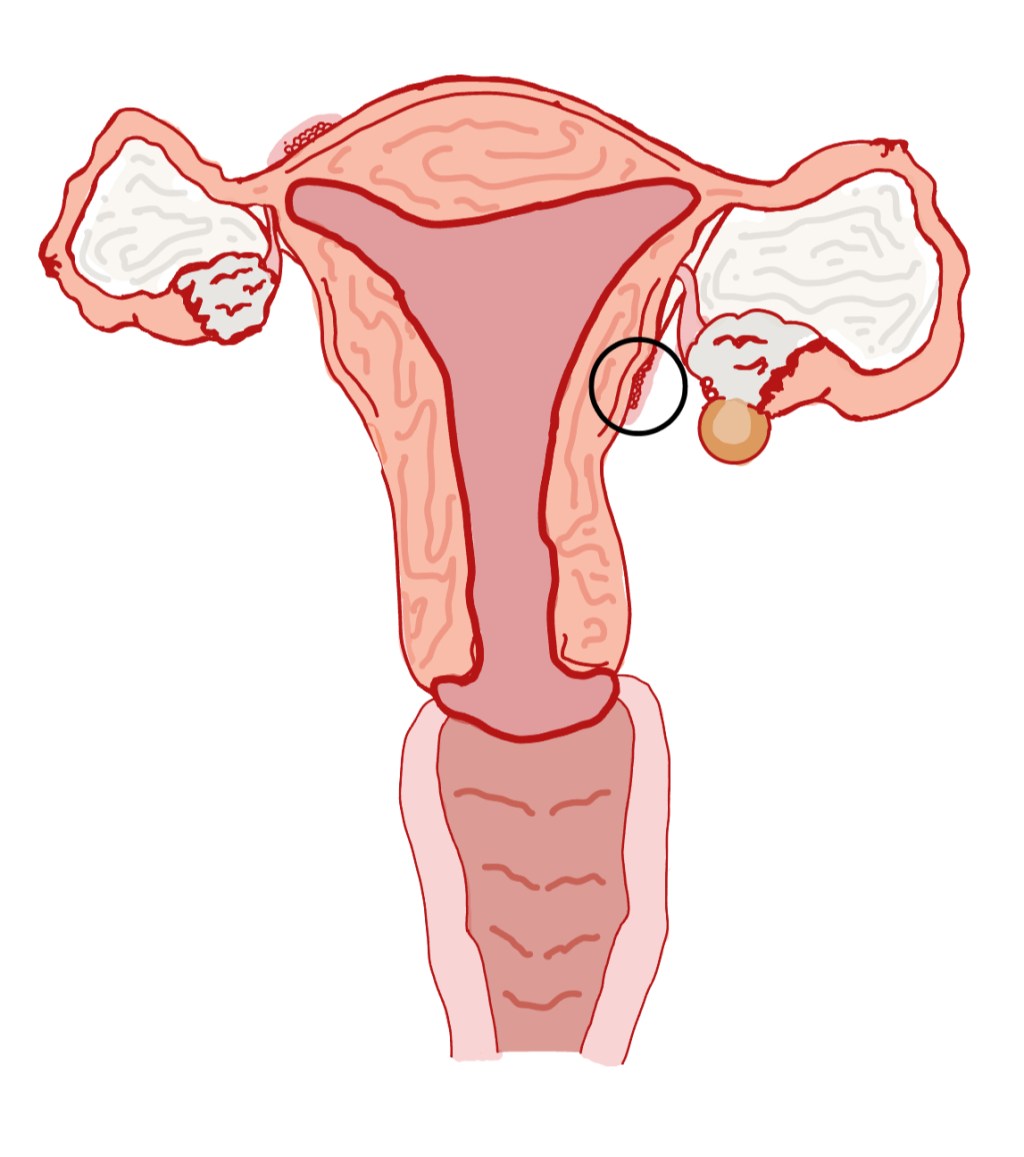
Endometriosis, also referred to as “endo,” is a systematic chronic health condition in women in which tissue similar to that of the endometrium, or the lining of the uterus, grows outside the uterus. This causes increasing, debilitating pain during the menstrual cycle and sometimes infertility. Endometriosis, despite leading to such excruciating pain and severe circumstances, is unfortunately also a frequently misdiagnosed or undiagnosed disease, hence why it is known as the “missed disease.” This condition is vastly under-recognized and under-treated due to, in large part, the lack of research, funding, and government policies.
Pain is the primary symptom of endometriosis. The pains associated with endometriosis mainly include extremely painful periods which may get worse over time, chronic pelvic, abdomen, or back pain, painful sexual intercourse, and pain during urination or bowel movements. The degree of pain experienced with endometriosis is far more severe than the standard period pains, especially since they are progressive, meaning they get worse over time due to accumulating scar tissue, and systematic, thus potentially affecting the whole body. Additional symptoms consist of heavy or prolonged menstrual bleeding, frequent spotting in between periods, fatigue, hypersensitivity to pain, digestive issues, depression and anxiety. The long-term and serious consequences of endometriosis may involve infertility, the blocking of the fallopian tubes eventually resulting in cysts from the trapped blood, inflammation or swelling, and forming scar tissue that can cause pelvic pain and fertility problems.
One reason why endometriosis can be so difficult to diagnose is because its symptoms can vary widely among patients and may be caused by other health conditions. Endometriosis diagnoses are delayed by 4 to 11 years on average. The typical diagnosis procedure includes assessing the patient’s medical history, performing a pelvic exam, and running other diagnostic tests. Unfortunately, the delay in diagnosis is due to the symptoms mimicking other diseases, so doctors will refer women to many different subspecialists. However, to say that these referrals are unnecessary and quite complicated, as there is not yet a simple test to diagnose endometriosis. Nonetheless, treatment should still be provided if a woman is experiencing painful periods, especially those that are cyclic, progressive, and indicate endometriosis.
Because there is no cure for endometriosis, treatment usually only involves managing symptoms. Medications are frequently used to reduce pain or inflammation, and these may constitute non-inflammatory drugs, pain relievers, and hormonal birth control. Surgery may also be offered if medications fail to cease painful symptoms and may involve the surgical excision of scar tissue and endometrial implants or a complete hysterectomy, the removal of the uterus. The former procedure does result in reduced pain but only temporarily so, as endometriosis often recurs. While a hysterectomy reportedly alleviates pain in 80% to 90% of women with endometriosis, there is a small chance that the disease can still recur, so this procedure is paired with prescribed hormonal therapy to reduce that chance.
Bringing awareness to endometriosis within the medical and research fields is key in contributing to better diagnostic and treatment outlooks for patients with this debilitating condition. All of the whole-body symptoms associated with this disorder should be recognized as possibly correlated, particularly when the common symptom is cyclic pelvic and period pain. While we can hope that a simple diagnostic test will be developed in the future, focusing on listening to and caring for the current patients suffering from endometriosis should be prioritized.
Works Cited:
“Endometriosis.” Office on Women’s Health, 22 Feb. 2021, http://www.womenshealth.gov/a-z-topics/endometriosis.
“Endometriosis.” Yale Medicine, Yale Medicine, 11 Mar. 2024, http://www.yalemedicine.org/conditions/endometriosis.
Hudson, Nicky. “The missed disease? endometriosis as an example of ‘undone science.’” Reproductive Biomedicine & Society Online, vol. 14, Mar. 2022, pp. 20–27, https://doi.org/10.1016/j.rbms.2021.07.003.


 pathoscribe
Leave a comment