Written by Hamsini Punukollu | Art by Srivalli Adarapu
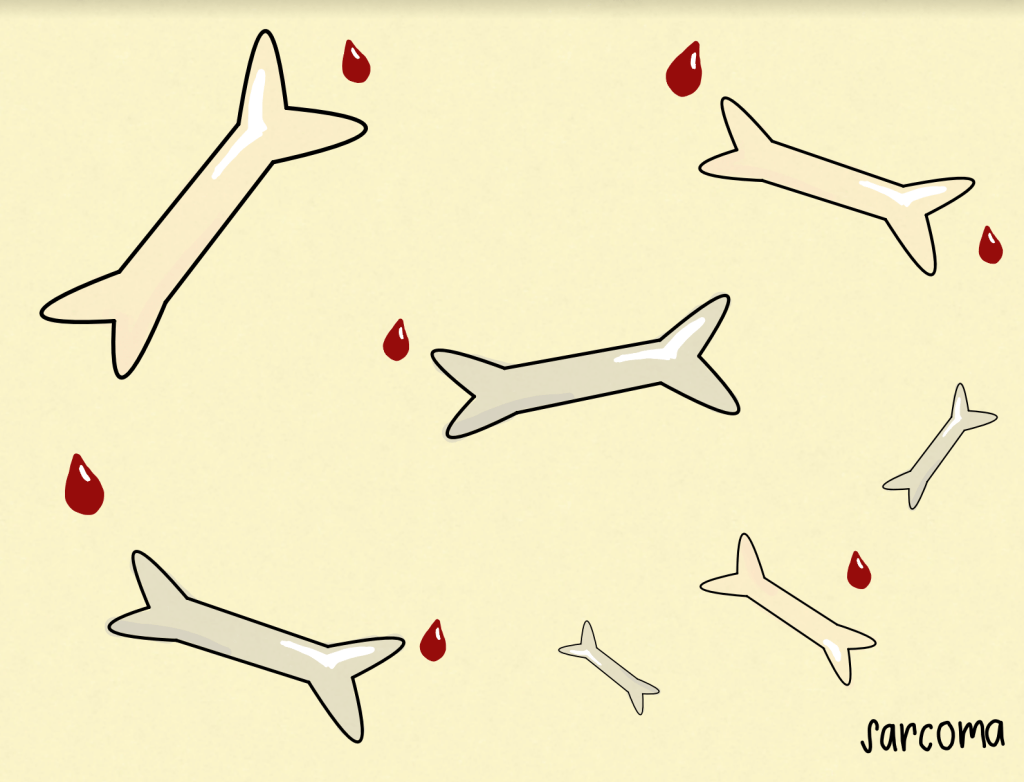
Sarcoma is a rare cancer that develops in the bones and soft tissues, including fat, muscles, blood vessels, nerves, deep skin tissues, and fibrous tissues. Around 200,000 cases are diagnosed in the U.S. each year. Understanding sarcoma is crucial for early detection, effective treatment, and improved patient outcomes. Before proceeding, it is important to note that there are two types of sarcoma: Bone and soft tissue sarcoma.
Osteosarcoma, the most common type of bone cancer, typically occurs in the long bones of the arms and legs. It mostly affects teenagers and young adults. Symptoms include bumps, redness, anemia, fever, exhaustion, and unexplained weight loss. According to the NHS, treatments include bone surgery, chemotherapy, and radiotherapy.
According to the Mayo Clinic, soft tissue sarcoma is a rare type of cancer that starts as a growth of cells in the body’s soft tissues. The soft tissues connect, support, and surround other body structures. While there are different types of soft tissue cancers, they mainly affect adults. Symptoms include new lumps, belly pain, nausea and vomiting, and unintended weight loss. Treatments include surgery or chemotherapy.
According to cancer research, the cause of most soft tissue sarcomas is unknown. However, some factors may increase your risk of developing it. Age, genetics, lifestyle, and environmental factors increase your risk of developing sarcoma.
Imaging studies and biopsies are used to diagnose sarcoma. X-rays, CT, MRI, and PET scans are examples of imaging tests that can be used to see tumors and pinpoint their position and size. A biopsy involves taking a sample of tissue from the tumor and examining it under a microscope to determine the exact type of sarcoma and confirm the presence of cancer cells.
To fully understand sarcoma and develop treatments, ongoing research is vital. Therapies, advanced surgical methods, chemotherapeutic medications, targeted therapies, and immunotherapies are all being investigated in clinical studies.
Sarcomas are a complicated and diverse group of cancers that need to be treated with particular care. Early detection, precise diagnosis, and thorough treatment strategies are required to improve patient outcomes. Patients and their families might have hope that this difficult disease will be better understood and treated thanks to ongoing research and scientific advancements in the medical field.
Works Cited:
Sarcoma. (n.d.). Johns Hopkins Medicine. https://www.hopkinsmedicine.org/health/conditions-and-diseases/sarcoma#:~:text=Sarcomas%20are%20rare%20cancers%20that,in%20the%20U.S.%20each%20year.
Risks and causes of soft tissue sarcomas. (n.d.). https://www.cancerresearchuk.org/about-cancer/soft-tissue-sarcoma/risks-causes
Soft tissue sarcoma – Symptoms and causes – Mayo Clinic. (2023, April 27). Mayo Clinic. https://www.mayoclinic.org/diseases-conditions/soft-tissue-sarcoma/symptoms-causes/syc-20377725


 pathoscribe
Leave a comment