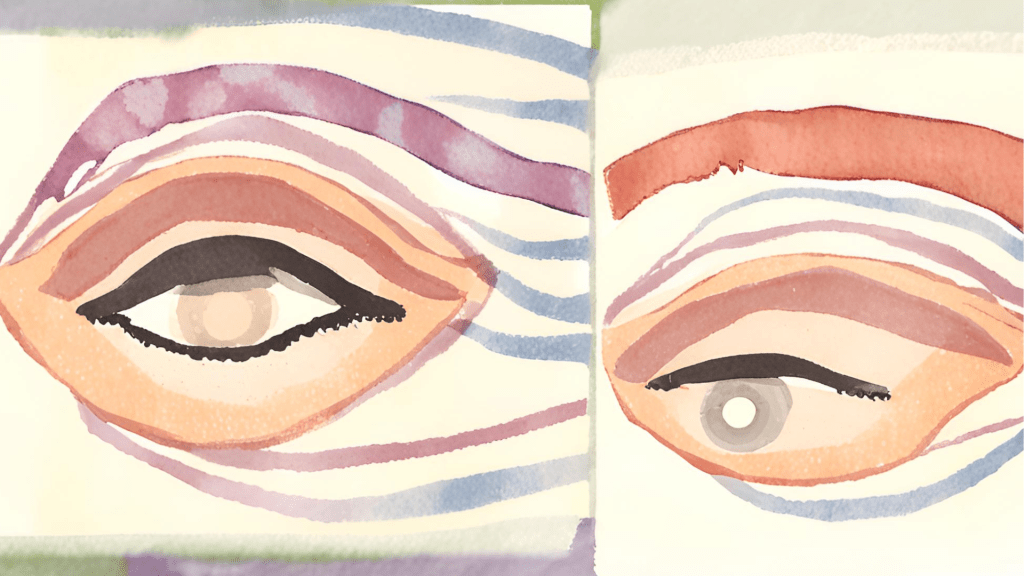
Written by Anoushka Pandya | Art by Lily Ozaeta
“I need to lock in!” Most of us correlate “locking in” with the slang term meaning to be focused, but the medical condition, “locked-in syndrome,” has nothing to do with focus at all.
Locked-in syndrome is a neurological disorder in which the entire body is paralyzed, save for the eyes. Those with the disorder are physically “locked in” their position. Despite being fully paralyzed, people with locked-in syndrome are conscious and have cognitive skills. They communicate through eye movements.
There are three forms of locked-in syndrome:
- Classical form: Total immobility except for eye movement.
- Incomplete form: Classical form, but with some sensation and movement in some areas.
- Total immobility: An extreme form with no eye movement. The brain continues to function, though
Locked-in syndrome is caused by an injury to the pons, a specific part of the brain. Among its other roles, the pons transmits motor (movement) information and controls muscle movement. This injury is most commonly a stroke or blood clotting. Locked-in syndrome affects adults more than children because strokes occur more frequently in adults.
People suffering from locked-in syndrome cannot eat, breathe, talk, drink, or move voluntarily. They require caregivers full-time and need consistent help. However, they can comprehend auditory and visual information. Although this condition seems very extreme, the majority of people with locked-in syndrome are not unhappy.
A study of 65 patients with locked-in syndrome published in the British Medical Journal’s BMJ Open discovered that 72% of the patients communicated that they were happy. 28% were unhappy, with 7% of them saying they had suicidal thoughts. These patients disprove the preconceived notion that you cannot live a happy and meaningful life with locked-in syndrome.
There is, unfortunately, no current cure for locked-in syndrome. The syndrome is managed through a caregiver and supportive therapy. Although this disease is very rare, we must raise awareness and avoid stereotyping people who have it.
Works Cited:
“Locked-in Syndrome (LIS): What It Is, Causes & Symptoms.” Cleveland Clinic, 3 Mar. 2022, my.clevelandclinic.org/health/diseases/22462-locked-in-syndrome-lis.
“Locked in Syndrome – Symptoms, Causes, Treatment: Nord.” National Organization for Rare Disorders, 7 Mar. 2018, rarediseases.org/rare-diseases/locked-in-syndrome/.
Cheng, Maria. “Many Locked-in Syndrome Patients Happy, Study Shows.” NBCNews.Com, NBCUniversal News Group, 24 Feb. 2011, http://www.nbcnews.com/health/health-news/many-locked-syndrome-patients-happy-study-shows-flna1c9465540.


 pathoscribe
Leave a comment