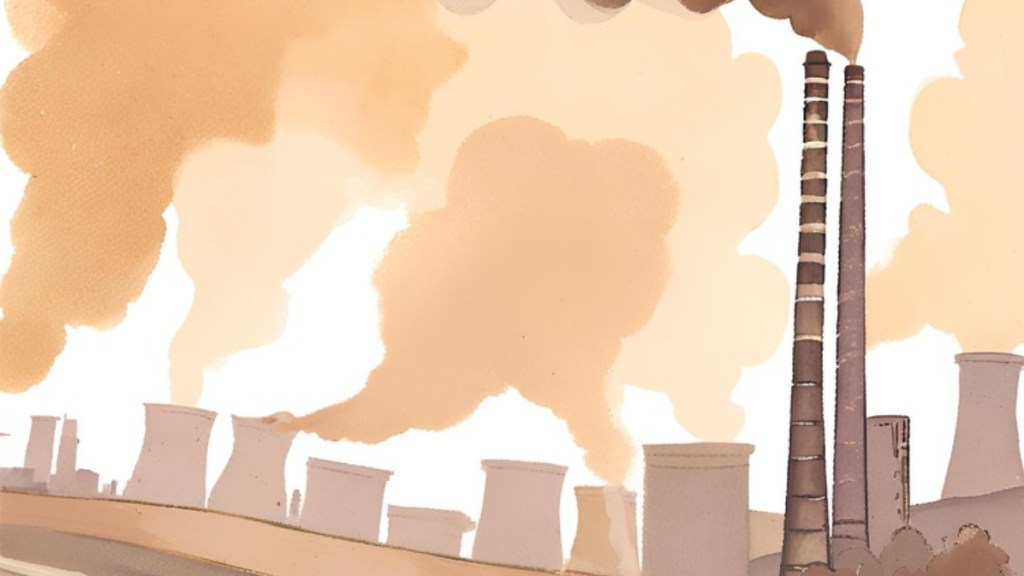
Written by Winna Florencia Wongs | Art by Lily Ozaeta
The average amount of air pollution last year, according to iQAir, was around PM2.5. In an article by Kompas.id titled “City Air Pollution,” vehicle emissions, open burning, and seasonal factors are to blame for the poor air quality.
As stated by the World Health Organization (WHO) in their “global air quality guidelines,” a rating of PM2.5 is harmful since it may lead to lung ailments, cancer, heart disease, and stroke. According to the Institute for Health Metrics and Evaluation, these are some of the largest illness cases in Indonesia.
With those in mind, we should try to prevent it. To remember prevention methods, we should make sure to SMILE!–stay healthy overall. Getting enough sleep, eating a healthy diet, and exercising regularly can help strengthen your respiratory system and make it more resistant to irritation from pollutants. Next, monitor air quality reports. Many areas have air quality indexes (AQIs) that tell you how polluted the air is. You can find these reports online or through weather apps. Improve indoor air quality. Keep windows and doors closed on high-pollution days. You can also use an air purifier to remove pollutants from your indoor air. Limit outdoor activity when air quality is poor. Equip yourself with a mask when necessary. If you must be outdoors on a high-pollution day, wear a well-fitting mask.
Unfortunately, you can sometimes be unlucky and still get sick from bad air quality. But fear not, we are not alone in this. We have great doctors and governmental support in Indonesia. The first thing you must do if you have some symptoms such as coughing, shortness of breath, stuffy nose, and burning eyes is to seek doctors who are certified and get yourself checked.
Works Cited:
Air Quality, Energy and Health (AQE). WHO Global Air Quality Guidelines: Particulate Matter (PM2.5 and PM10), Ozone, Nitrogen Dioxide, Sulfur Dioxide and Carbon Monoxide. 22 Sept. 2021, www.who.int/publications/i/item/9789240034228.
De Souza, Guilherme Martins, et al. “Probability of Benefit With the Use of Neuromuscular Blockade in Patients With Acute Respiratory Distress Syndrome.” Journal of Thoracic Disease, vol. 11, no. 9, Sept. 2019, pp. 3676–80. https://doi.org/10.21037/jtd.2019.09.26.


 pathoscribe
Leave a comment