Written by Naema Rashid | Art by Maya Wen
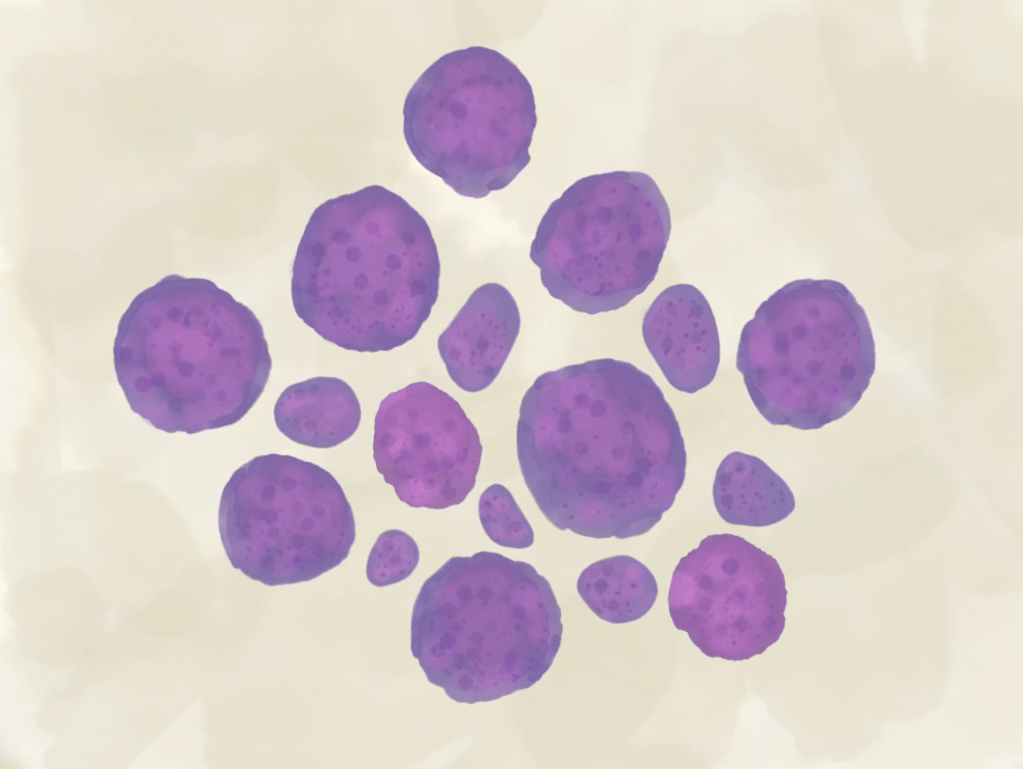
Hematopoietic stem cells, or HSCs, are multipotent stem cells that can differentiate into various types of blood cells. These cells are responsible for producing all the different types of blood cells.
Found in the bone marrow, hematopoietic stem cells in our body can develop into different types of cells. Within the hematopoietic tissue, there are cells capable of both long-term and short-term regeneration. Only a small fraction of cells in myeloid tissue are hematopoietic stem cells, about 1 in every 10,000.
Hematopoiesis is the blood cell production process. Cells that circulate in your blood include immune cells (white blood cells), red blood cells, and platelets. Hematopoiesis is a complex and highly regulated process that is essential for maintaining homeostasis in the body.
Through the differentiation and maturation of hematopoietic stem cells, the bone marrow continuously produces billions of blood cells daily to ensure proper oxygen transport, immune defense, and blood clotting. The understanding of hematopoiesis and its regulation is crucial for the development of novel treatments for blood disorders and cancers.
Hematopoietic stem cells, like all adult stem cells, mostly exist in a state of quiescence, or reversible growth arrest. This state of dormancy is regulated by a complex interplay of intrinsic and extrinsic factors that help to strike a balance between quiescence and activation.
By elucidating the mechanisms that control quiescence in HSCs, researchers can potentially harness this knowledge to improve treatments for a wide range of hematologic disorders and diseases. Quiescence in HSCs is not just a state of inactivity, but a critical component of their function and maintenance within the bone marrow niche.
This ability of hematopoietic stem cells to migrate between bones is crucial for their role in replenishing the blood cell populations throughout the body. This unique ability ensures a constant supply of healthy blood cells.
The ability of HSCs to home to the bone marrow, circulate in the blood, and migrate to different tissues and organs allows them to respond to various signals quickly and contribute to the body’s immune response and tissue repair processes.
The clinical significance of HSCs lies in their potential for use in treating a variety of diseases, such as leukemia, lymphoma, and certain genetic disorders. HSCs can be used to replenish the blood cells of patients who have undergone chemotherapy or have a disorder that affects their blood cell production.
HSCs have the potential to be used in regenerative medicine to repair damaged tissues and organs, offering hope for treating a wide range of conditions, including heart disease, diabetes, and neurological disorders.
Through bone marrow transplants, regenerative medicine, and gene therapy, HSCs offer hope for patients with diseases that were previously untreatable.
Ongoing research in this field holds promise for the development of new and innovative therapies that harness the power of HSCs to improve patient outcomes and advance the field of medicine.
Sources:
National Cancer Institute. “NCI Dictionary of Cancer Terms.” National Cancer Institute, Cancer.gov, 2019, http://www.cancer.gov/publications/dictionaries/cancer-terms/def/hematopoietic-stem-cell.
Wikipedia Contributors. “Hematopoietic Stem Cell.” Wikipedia, Wikimedia Foundation, 16 Oct. 2019, en.wikipedia.org/wiki/Hematopoietic_stem_cell.
Lee, Ji Yoon, and Seok-Ho Hong. “Hematopoietic Stem Cells and Their Roles in Tissue Regeneration.” International Journal of Stem Cells, vol. 13, no. 1, Dec. 2019, https://doi.org/10.15283/ijsc19127.
“Hematopoietic Stem Cell – an Overview | ScienceDirect Topics.” Www.sciencedirect.com, http://www.sciencedirect.com/topics/medicine-and-dentistry/hematopoietic-stem-cell.

 pathoscribe
Leave a comment