
Written by Kirsten Batitay | Art by Charlene Cheng
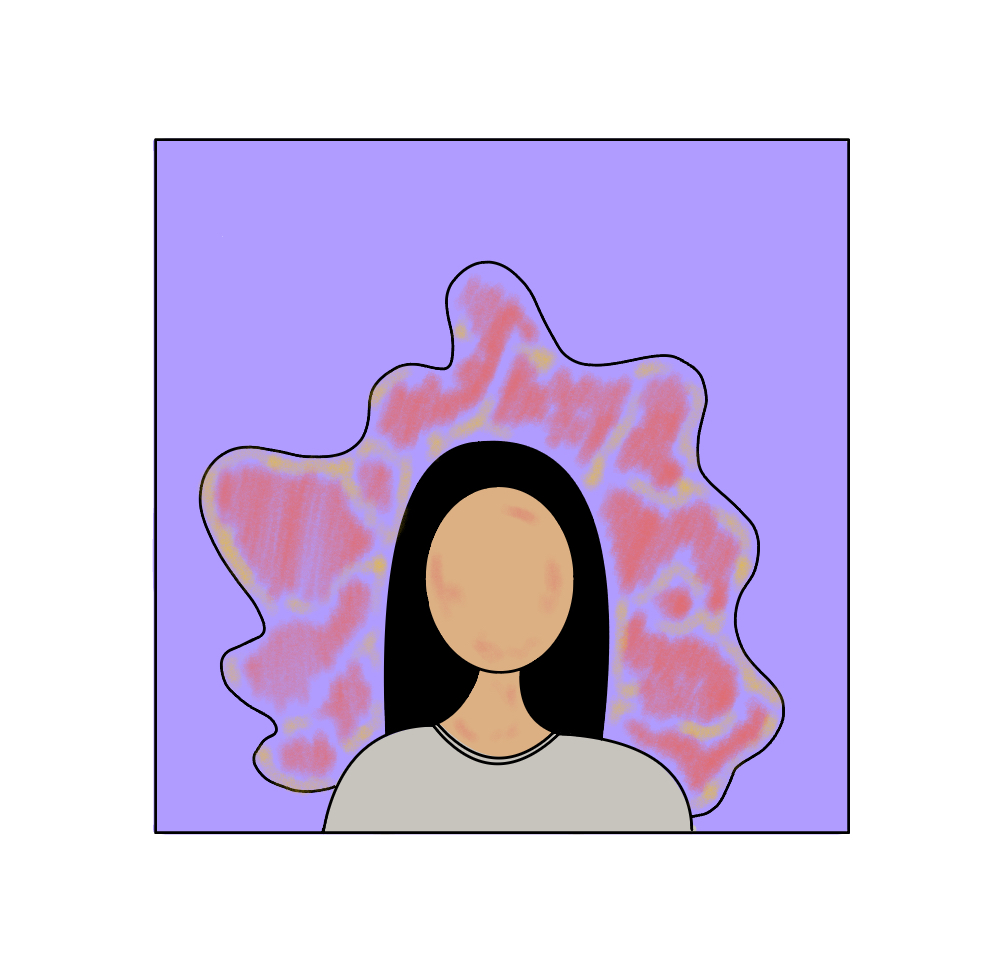
The insane, violent villain. The crazy, uncontrollable serial killer. In popular media, what might both of these people have in common? I’ll answer that question for you: their motivations might be chalked up to their having schizophrenia.
As much as we hear it being thrown around, what is schizophrenia? It is a mental health disorder that affects how one feels, behaves, and most importantly, thinks. People who have it are usually diagnosed between ages 16-30, after their first episode of psychosis, or “a collection of symptoms that affect the mind, where there has been some loss of contact with reality.” However, it’s important to note that gradual changes in a person’s behavior and thinking often appear even before that first episode.
Generally, schizophrenia symptoms can fall within three categories: psychotic, negative, and cognitive. The first category, psychotic symptoms, includes changes in one’s thinking, actions, and how they experience the world. These include what are considered the “hallmark characteristics” or symptoms of schizophrenia–hallucinations and delusions. Hallucinations occur when any or more of a person’s five senses perceive things that are not there, and delusions arise when a person has strong, untrue beliefs that might seem irrational to others. Such symptoms can cause one to have difficulty differentiating between what is real and what is not.
Another of these psychotic symptoms includes a thought disorder, which occurs when someone has unusual or illogical ways of thinking, possibly causing them to have trouble organizing their thoughts and speech. Nonetheless, some people may have schizophrenia and still not experience hallucinations or delusions, as those living with it experience it differently.
The next category, negative symptoms, includes difficulties with social interactions, normal functioning, and a general loss of pleasure in daily life, which are sometimes mistaken for symptoms of other mental illnesses like depression. Lastly, cognitive symptoms include problems with concentration, memory, and attention, which can interfere with decision-making and information processing.
Given these symptoms, research suggests that a combination of genetic factors and aspects of one’s environment and life–such as living in poverty or stressful or dangerous surroundings– affect the development of schizophrenia. And while it can sometimes run in families, no single gene causes it.
As symptoms can make it difficult to participate in everyday life, treatments for schizophrenia focus on helping those living with it manage them, improve daily function, and achieve personal goals. Most commonly, anti-psychotic medications–including pills, injections, and liquid forms–are taken, and they can help make psychotic symptoms less intense and frequent.
Next is psycho-social treatment, which helps people manage their symptoms and find solutions to day-to-day challenges. This is often paired with anti-psychotic medication, and those who undergo it are less likely to be hospitalized or have symptoms reoccur. Some examples of psychotherapy are cognitive behavioral therapy, behavioral skills training, and supported employment. Educational programs are also available to families and friends of those living with schizophrenia to ensure they are made aware of the symptoms, treatment options, and strategies to help their loved ones.
The single most important thing to remember is that most people living with schizophrenia are not violent. In actuality, they are more at risk of being harmed rather than being the ones doing the harm, especially as the hallucinations that many of them face can be disturbing, deeply unsettling, harmful, or all of the above. The greatest risk of self-harm and violence towards others is when schizophrenia is untreated or it occurs with substance or alcohol misuse.
A difficult challenge faced by those living with it is that there can be a lot of stigma around going to receive medical help in fear of being perceived as “crazy” or “dangerous” by others. However, treatment should not be deterred by anyone, and those living with schizophrenia should not be convinced by anyone not to get medical help, as treatment is both a choice and a right. As a society, we need to stop perceiving schizophrenia as a publicly “threatening” disorder as the ones who are most affected by it are the ones who live with it.
Works Cited:
National Institute of Mental Health Contributors. “Schizophrenia.” National Institute of Mental Health, U.S. Department of Health and Human Services, http://www.nimh.nih.gov/health/topics/schizophrenia. Accessed 31 Aug. 2024.
National Institute of Mental Health Contributors. “Understanding Psychosis.” National Institute of Mental Health, U.S. Department of Health and Human Services, http://www.nimh.nih.gov/health/publications/understanding-psychosis. Accessed 31 Aug. 2024.
TEDx Talks. “I Am Not A Monster: Schizophrenia | Cecilia McGough | TEDxPSU.” YouTube, YouTube, 27 Mar. 2017, http://www.youtube.com/watch?v=xbagFzcyNiM.
UK Research and Innovation. “What it’s like to live with #schizophrenia?” YouTube, YouTube, 15 May 2020, http://www.youtube.com/watch?v=EvN7R1oRuOI.
Koranne, Shailee. “How Schizophrenia Is Misrepresented in TV and Film – and How We Can Do Better | CBC Arts.” CBCnews, CBC/Radio Canada, 29 Mar. 2022, http://www.cbc.ca/arts/how-schizophrenia-is-misrepresented-in-tv-and-film-and-how-we-can-do-better-1.6381980.

 pathoscribe
Leave a comment