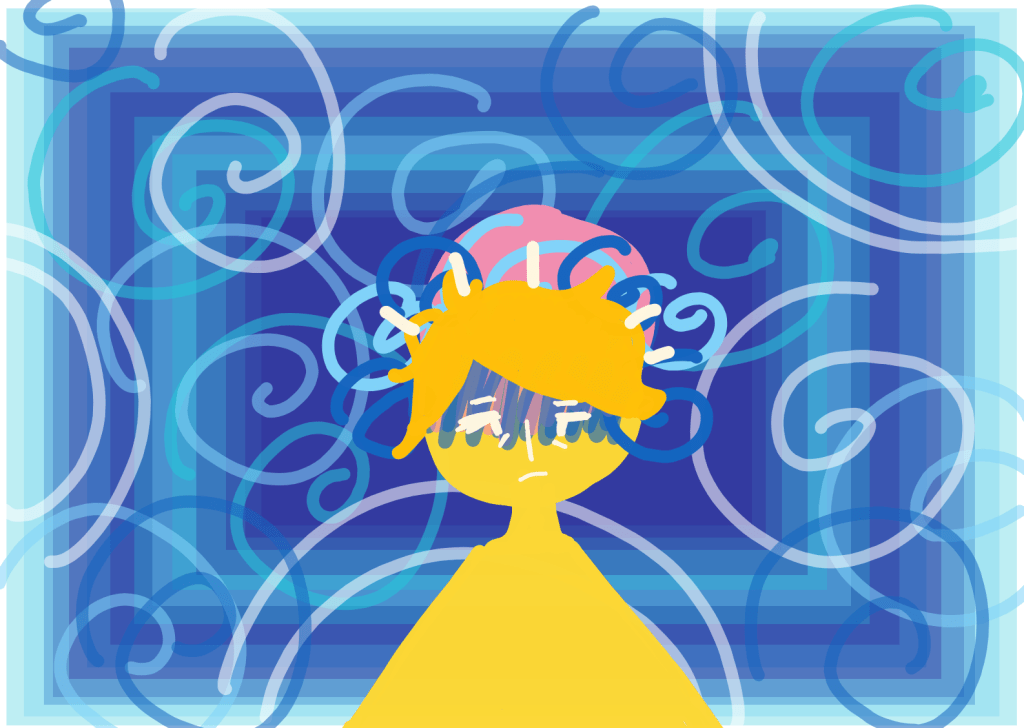
Written by Abigail Lee Aol | Art by Charlene Cheng
There are more than one hundred and fifty types of headaches. Yes, 150! The main ones are known as primary and secondary.
Primary headaches are caused by over-activity of certain parts of our brain and not necessarily by underlying medical conditions. More often than not, they are the “underlying medical condition.” It is caused by a problem with the nerves, blood vessels, and chemicals involved in pain sensitivity in the brain. Secondary headaches, however, are caused by underlying conditions such as head trauma, brain infections, internal bleeding, high blood pressure, and overuse of medication, to mention but a few.
Some primary headaches include tension headaches, migraines, and cluster headaches. Tension headaches come in two types based on the frequency and intensity of their occurrence. Episodic headaches occur when the pain lasts from 30 minutes to a week, and chronic headaches occur when it lasts for hours. Episodic tension headaches can occur up to 15 times a month, while chronic tension headaches are more frequent. Essentially, it feels like a tight pressure surrounding the head. The neck and shoulders may also be affected.
Another type of primary headache includes migraines, which may first appear with warning signs associated with vision and other senses. For example, distortion of images and flashes in vision are previews of the throbbing head pain that follows.
Lastly, cluster headaches are most commonly present with intense pain around the eye or on one side of the head. They are called cluster headaches because they attack specific regions of the head either simultaneously or one at a time.
Possible causes of headaches include skipping meals, insufficient sleep, prolonged screen time, and dehydration.Additionally bad posture, intense physical activity, stress and anxiety, and noise can also lead to these headaches
Aside from the above, different things may trigger a headache differently in people. It’s important to identify these triggers (if any) and avoid them.
The art of reflexology can also be a useful tool in reducing the intensity of headaches. Reflexology leverages pressure points in one part of the body to create relief in another. Some pressure points that are connected to pain relief include the space between the thumb and the middle finger and the base of the neck. Before attempting self-provided reflexology, it is important to understand the various techniques it applies.
Painkillers are a go-to for many when it comes to handling headaches. Unfortunately, overuse of certain drugs contributes to what is known as rebound headaches. These are experienced as a side effect often as severe as the headache originally being treated.
Evidently, medication can only go so far. Sometimes, all we have to do is be kind to ourselves. Drink enough water, eat regularly, limit screen time, and allow our bodies to rest when overwhelmed.
“Puff out your chest,
Take a deep breath,
Everything’s gonna be alright!”
Sources:
“Headaches.” Cleveland Clinic, 7 June 2024, my.clevelandclinic.org/health/diseases/9639-headaches.
“Cluster Headache – Symptoms and Causes – Mayo Clinic.” Mayo Clinic, 26 Aug. 2023, http://www.mayoclinic.org/diseases-conditions/cluster-headache/symptoms-causes/syc-20352080.
Clements, Isaac Perry. “Headaches 101.” HowStuffWorks, 8 Mar. 2023, health.howstuffworks.com/diseases-conditions/headache/headache.htm.
Watson, Stephanie. “What Causes Headaches? Tips for Identification and Treatment.” Healthline, 21 Aug. 2018, http://www.healthline.com/health/headache/what-causes-headaches#quick-diagnosis.

 pathoscribe
Leave a comment