Written by Akemi Li | Art By Ginkgo C
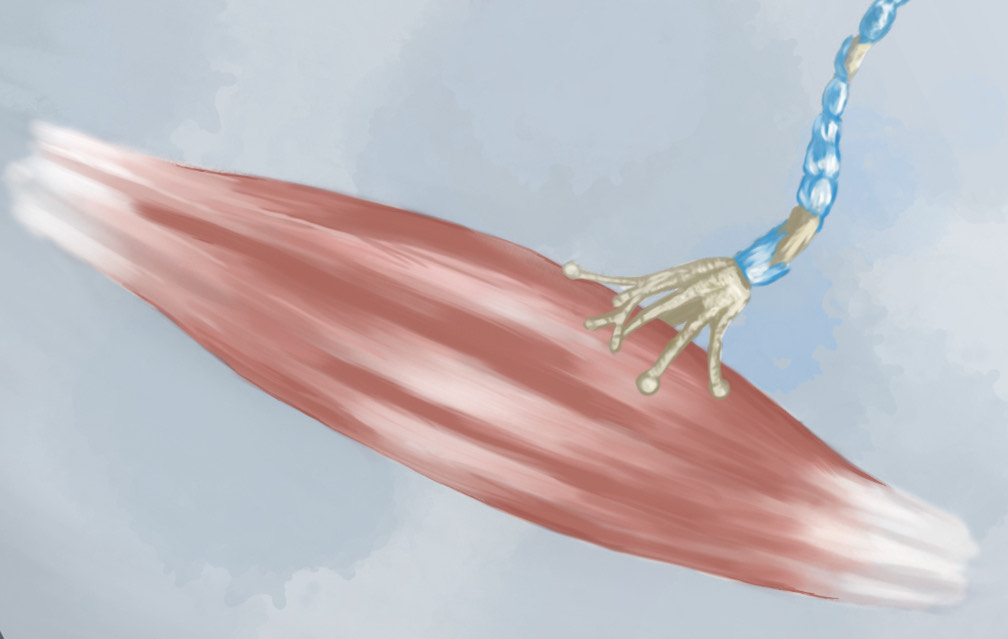
Amyotrophic lateral sclerosis (ALS), formerly known as Lou Gehrig’s disease, affects the nervous system, specifically damaging the nerve cells in areas like the spinal cord and the brain. Studies still need to be continued to discover the exact cause, but currently, 10% of cases are caused by inheritance. These cases are known as “familial ALS” where more than one individual is diagnosed with ALS. Those with FALS are often diagnosed with symptoms at younger ages. Familial ALS is also primarily autosomal dominant. In other words, parents with this mutation have a probability of 50% of passing the mutation to their offspring. Autosomal dominant refers to an individual with one gene copy with the mutation and one without.
The roots of this disorder may also be due to the environment and genes. Other risk factors include gender, which is seen as more common in males. Cases are also commonly seen in individuals ages 60 through mid-80s. As with any other disease, being surrounded by an environment that is made up of people consistently smoking may be harmful to anyone. Research has also shown possible connections to military service.
Symptoms of this disease may usually start with having trouble with walking, speech, swallowing, and muscle weakness or twitching. Other conditions may be sudden changes in behaviors and thoughts and involuntary emotional responses. As the disease worsens, it may impact other everyday functions such as speaking, breathing, and eating. Other complications could include difficulties with the respiratory system, leading to patients requiring ventilation support. Other support that may be needed is feeding tubes for those having challenges consuming food.
To understand one’s physical conditions and the risk factors of carrying a child, genetic testing is always recommended. Some clinics and medical centers may also conduct neurological exams, counseling, and psychological assessments before predictive testing, an assessment for family members to see if they have the mutation but are asymptomatic. ALS needs to be discovered early in the prevention of symptoms worsening, as most patients will live up to 14-18 months after being diagnosed. However, this is not for everyone, as some live 10 years or more. Scientists are currently still looking for a cure, however, those diagnosed with this disease should always go through treatments to ease the symptoms as most causes of death are related to respiratory failure.
Works Cited:
Deborah Hartzfeld. “FYI: Familial Amyotrophic Lateral Sclerosis (FALS) and Genetic Testing” ALS Association, 2020, https://www.als.org/navigating-als/resources/familial-amyotrophic-lateral-sclerosis-fals-and-genetic#:~:text=Most%20of%20the%20time%20ALS,environmental%20and%20genetic%20risk%20factors.
Mayo Clinic. “Amyotrophic lateral sclerosis (ALS)” Mayo Clinic, 2024, https://www.mayoclinic.org/diseases-conditions/amyotrophic-lateral-sclerosis/symptoms-causes/syc-20354022

 pathoscribe
Leave a comment