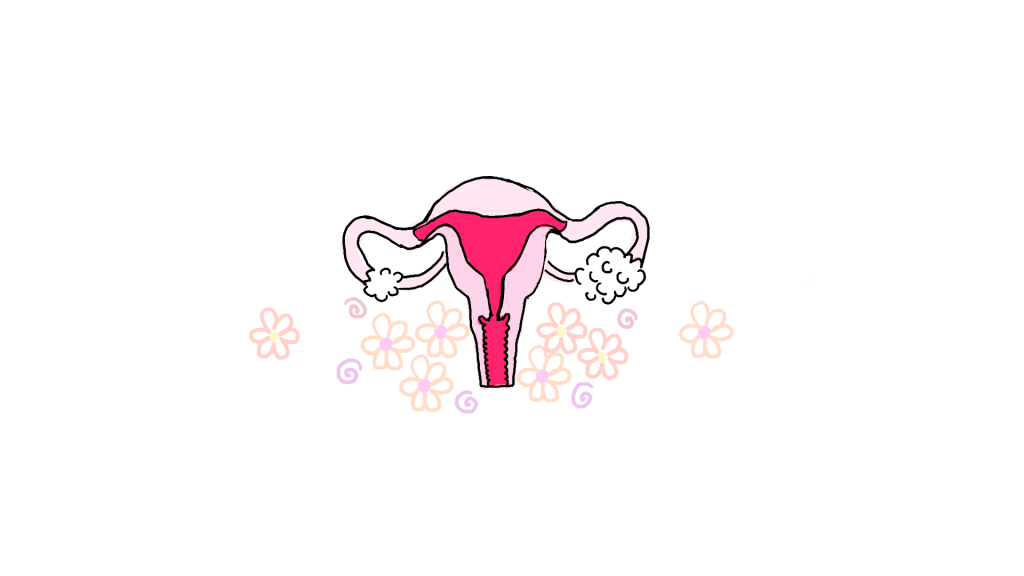
Written by Kirsten Batitay | Art by Nourah Bakary
Acne. Weight gain. Both are changes that girls can undergo during puberty, but they’re also symptoms of polycystic ovary syndrome. Polycystic ovary syndrome, or PCOS, is a health problem in which those who have it have a hormonal imbalance and issues with metabolism that can affect their overall appearance and health. This condition can occur in women of any race or ethnicity at any age after puberty.
PCOS is one of the leading causes of infertility in women, because the reproductive hormonal imbalance that characterizes, it creates issues in the ovaries, the parts of the female reproductive system that generate the egg released monthly as part of a normal menstrual cycle. However, in women with PCOS, the egg may not develop in the way it should, or it may not be released during ovulation. The exact cause of this is unknown, but many experts believe that high levels of androgens and insulin play a role.
Androgens are dubbed “male hormones,” but women also make them, just on small levels. Women who have PCOS have higher than average androgens, but excessively high levels can prevent ovulation during each menstrual cycle. On the other hand, insulin is also a type of hormone, but its function is to move glucose from your blood into cells throughout your body. Many women with PCOS have insulin resistance, which is when the body’s cells don’t respond to insulin as they should, causing insulin blood levels to be higher than normal.
As it is a reproductive hormonal imbalance, one of the main symptoms of PCOS is an irregular menstrual cycle, which could include having menstrual periods that come too often, not often enough, or missing a period in general. Symptoms similar to those of puberty, acne on the face, upper back, and chest, as well as weight gain or difficulty with weight loss all occur. Other symptoms are thinning hair or hair loss on the scalp and hirsutism, or excessive hair growth in unexpected places.
Given that PCOS symptoms may overlap with those of other health conditions, there are multiple tests to diagnose it. These include a physical exam, pelvic exam, pelvic ultrasound, and a blood test. These tests check for symptoms like excessive hair growth, androgen hormone levels, and more. When other conditions are ruled out, someone can be diagnosed with PCOS if they have at least two of these symptoms: irregular menstrual periods, multiple cysts on one or both ovaries, higher than average blood levels of androgens, or signs of having high levels, like hirsutism, acne, and thinning of scalp hair.
Unfortunately, there is currently no cure for PCOS, but its symptoms can be relieved through a combination of at-home changes and medicines. Some steps that those with PCOS can take to help with their symptoms include weight loss, which helps lower blood glucose levels, improves the way their body uses insulin and helps their hormones reach normal levels, and hair removal using creams, laser hair removal, or electrolysis. Some medicines, though not approved by the FDA to treat PCOS symptoms, include anti-androgen medicines and metformin, which block the effect of androgens and can lower insulin and androgen levels, respectively.
The dangerous combination of many of its symptoms overlapping with other conditions and the lack of awareness and education surrounding it cause PCOS to be “underdiagnosed, misdiagnosed, and under-recognized by healthcare providers.” This then highlights the need for increased advocation of PCOS because if it is not given proper care and acknowledgment, PCOS can lead to the development of cancer and other severe consequences.
Works Cited:
Cleveland Clinic Staff. “What Is Insulin?” Cleveland Clinic, 4 Nov. 2024, my.clevelandclinic.org/health/body/22601-insulin.
OASH Staff. “Polycystic Ovary Syndrome: Office on Women’s Health.” OASH | Office on Women’s Health, http://www.womenshealth.gov/a-z-topics/polycystic-ovary-syndrome. Ottey, Sasha. “My Life with PCOS: A Personal Story: RESOLVE: The National Infertility Association.” RESOLVE, 3 Jan. 2022, resolve.org/my-life-with-pcos-a-personal-story/#:~:text=There%20is%20also%20a%20long,all%20to%20ask%20for%20help.
 pathoscribe
Leave a comment