Written by Shaurya Gulani | Art by Trevor Cheng
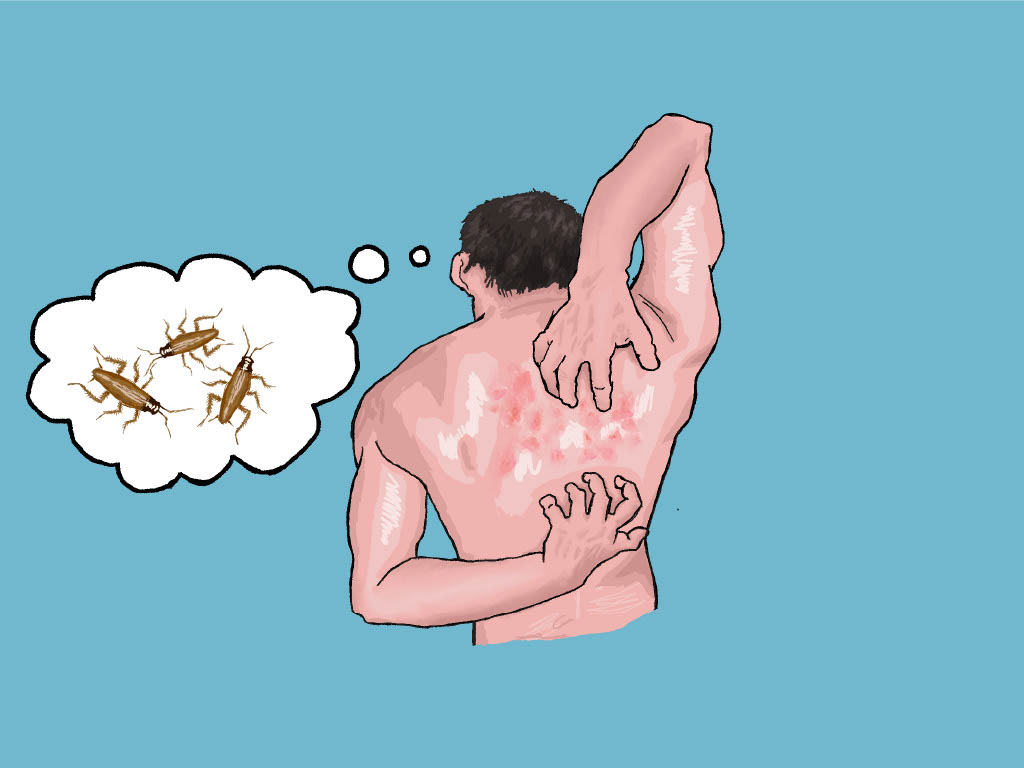
For years, Morgellons disease was written off as simply imaginary. Still, the painful reality of spider leg-like fibers in the skin that more and more people are reporting, has brought the attention of experts to unravel its web.
Morgellons disease is an extremely rare condition that causes people to have black, white, blue, or red fibers protruding from underneath the skin. Other symptoms include joint pain, memory problems, fatigue, and more. The disturbing nature of fibers in the skin of people with this disease results in frequent picking at theirs skin. While this can lead to skin infections,current research points to the belief that the condition itself is not life-threatening. Doctors can diagnose Morgellons disease by looking out forslow-healing skin lesions, skin crawling sensations, and in-depth analysis of fiber-like material in the skin.
The exact cause of Morgellons disease is currently unclear, but the mainstream scientific consensus is that it is a form of a delusional infestation. In this way, experts have brought attention to the hurtful cycle of the repeated itching of one’s skin because of the belief that there is something in it, an action that in and of itself will cause fiber-like clumps or skin sores. By manifesting the belief of an infestation of parasites in your skin, you can risk it becoming a reality. It is important to bring to the attention of those with Morgellons disease to help those persons focus on addressing the problem correctly, by treating the psychological aspect and not just the dermatology behind the symptoms.
Works Cited:
“Delusional Parasitosis.” Mayo Clinic, Mayo Foundation for Medical Education and Research, 9 Apr. 2024, http://www.mayoclinic.org/delusional-parasitosis/art-20044996.
“Morgellons Disease: Pictures, Causes, Symptoms, and More.” Medical News Today, MediLexicon International, http://www.medicalnewstoday.com/articles/morgellons-disease#causes. Accessed 30 Dec. 2024.


 pathoscribe
Leave a comment