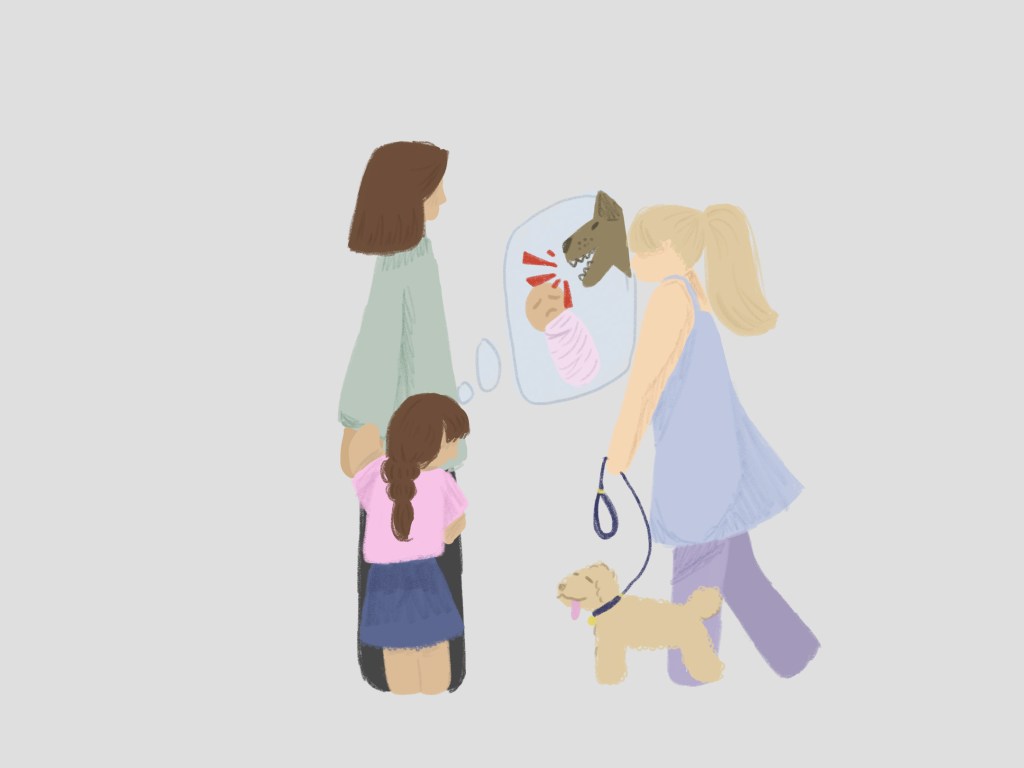
Written by Kirsten Batitay | Art by Maya Wen
Take a traumatic event from your life, and imagine reliving it. Not just remembering it, but tangibly re-experiencing it. This is a reality for many people living with post-traumatic stress disorder, or PTSD.
Post-traumatic stress disorder may develop in those who have experienced a “shocking, scary, or dangerous event.” And while we often think of military veterans with PTSD, anyone can have it, regardless of age. In addition to the previous group, those with PTSD may also include those who have experienced or been a witness to a sexual or physical assault, abuse, or other similar event.
The symptoms usually start three months after the traumatic event, but there are certain criteria that one must meet to be diagnosed with PTSD. These include having symptoms for longer than one month, the symptoms being unrelated to substance use, another illness, or medication, and said symptoms being severe enough to disrupt parts of daily life, like work or relationships.
To delve deeper into the diagnosis, the diagnosis of an adult with post-traumatic stress disorder must have at least one avoidance, at least one re-experiencing, at least two cognition and mood, and at least two arousal and reactivity symptom(s) for at least one month.
Avoidance symptoms include avoiding thoughts or feelings and places related to or reminiscent of the traumatic event. A few examples of re-experiencing symptoms are experiencing flashbacks and “physical signs of stress.” Furthermore, some cognition and mood symptoms are feeling socially isolated and having difficulty remembering key parts of the event, and some arousal and reactivity symptoms are being easy to startle and having trouble concentrating.
Although the name of the disorder implies the cause, direct experience of a traumatic event is not the only type of experience that leads to PTSD. Other causes include “learning that someone close to you had a traumatic event” and being repeatedly exposed to graphic details of such an event, which is the case for first responders. Some risk factors that increase one’s chance of developing this disorder are dealing with extra stress after the event and being previously exposed to traumatic experiences.
Debilitating as PTSD may seem, there are treatments for it, including psychotherapy, medications, or a combination of the two. Psychotherapy can be done in a group setting or one-on-one, and one type of it is cognitive behavioral therapy or CBT. Two types of CBT are exposure therapy and cognitive restructuring. The former gradually exposes people to their trauma in a safe way, which helps them learn to manage their fear, and the latter helps people make sense of the event, as they sometimes remember it differently from how it happened.
In terms of medications, two selective serotonin reuptake inhibitors, or SSRIs, have been approved by the US Food and Drug Administration for PTSD. These are antidepressants that help manage or treat symptoms like anger, worry, and nightmares.
One of the most crucial ways to help someone with post-traumatic stress disorder is to offer them support, patience, encouragement, and understanding. Living with a disorder or disease can feel incredibly isolating, but it can be a great help to those with such disorders or diseases to know that they are not alone. If you know someone with PTSD, you can help by learning more about it, paying close attention to any possible triggers of symptoms, and offering positive distractions like outings or walks. When we educate ourselves on these disorders, we gain an immense amount of sympathy not only for those around us but for strangers as well.
Sources:
Mayo Clinic Staff. “Post-Traumatic Stress Disorder (PTSD).” Mayo Clinic, Mayo Foundation for Medical Education and Research, 16 Aug. 2024, http://www.mayoclinic.org/diseases-conditions/post-traumatic-stress-disorder/diagnosis-treatment/drc-20355973.
National Institute of Mental Health Contributors. “Post-Traumatic Stress Disorder.” National Institute of Mental Health, U.S. Department of Health and Human Services, http://www.nimh.nih.gov/health/topics/post-traumatic-stress-disorder-ptsd. Accessed 5 Nov. 2024.
Veterans Health Administration. “Understanding PTSD: Gina’s Story.” YouTube, YouTube, 13 July 2012, http://www.youtube.com/watch?v=nZLD9z6_bFI.Veterans Health Administration. “Understanding PTSD: Teresa’s Story.” YouTube, YouTube, 13 July 2012, http://www.youtube.com/watch?v=I3Ir3xdwqWw.

 pathoscribe
Leave a comment