Written by Abigail Lee Aol | Art by Nourah Bakary
Disclaimer: At this point in time, reflexology is still a practice that lacks adequate research, so please keep this in mind as you read.
As the concerns surrounding conventional treatments grow, from the various side effects medicines have to questions on their sustainability, alternative and complementary treatments that offer a holistic approach are gaining recognition. Key among these is reflexology.
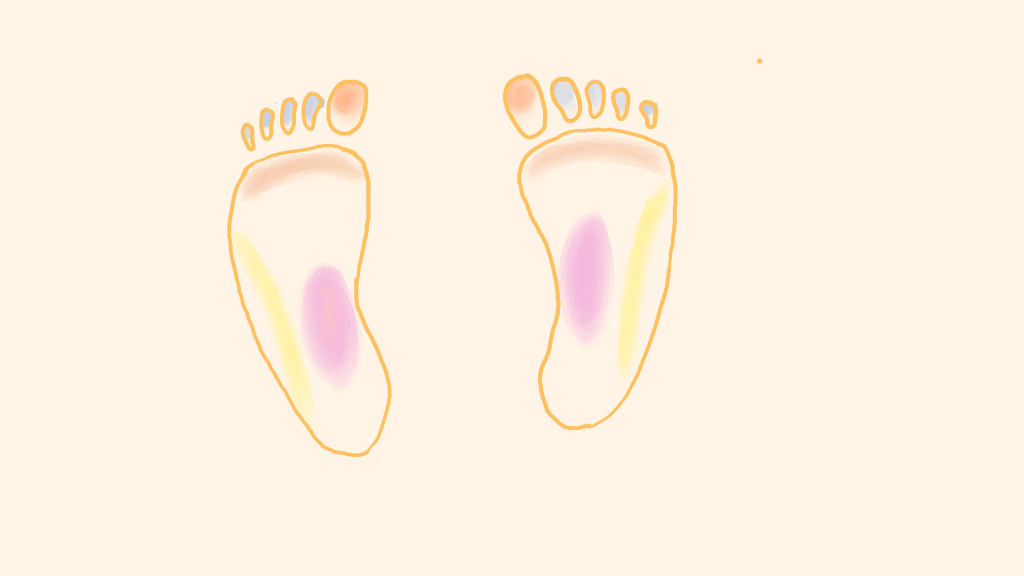
Reflexology is an art that is believed to have originated in Asia, with sources in Chinese and Indian history, although its exact origins are not known. It works under the principle that various body organs have direct connections with points on the hands, legs, and ears. Reflexology therefore is the treatment wherein pressure is applied to various points of the body to create a desired change or outcome in another. Essentially, the use of pressure in point A (outside the body) to influence the state of point B, which is usually an internal organ. Based on the zone theory, the body is divided into vertical lines, each of which has organs, which correlate to different fingers and toes. A chart is used to identify and map the areas within them and the body organs they correspond to.

Reflexology also alludes to ideas around the flow of energy or “qi” in the body. Pain, stress, fatigue, and all other health problems are believed to arise when this flow of energy is blocked, when the communication between body parts is interrupted.
It aims to open up those communication channels and restore the flow of energy by enhancing blood flow. Pressure applied also leads to nerve stimulation and is often associated with endorphin production. As a result, reflexology provides relief to a wide range of ailments including stress, headaches, fatigue, back pain, sinuses, and hormonal imbalance, to mention but a few.
However, despite various claims and testimonials by people for whom reflexology positively affected their health, there remain numerous blind spots concerning this treatment. Therefore, much caution must be exercised by seeking out professionals in this field.
Individuals with foot or skin infections and irritability face a substantial degree of risk as the treatment is very hands-on and could potentially cause harm if not properly administered. People under prescription medicines that may cause blood thinning or affect blood pressure in any way need to properly consult their medical practitioners to ensure their safety and well-being prior to the use of this practice.
Otherwise, reflexology is a relatively safe practice that presents an opportunity to not only embrace a deep-rooted approach to healing but also explore the cultural and historical significance of traditional medicine techniques even as the world continues to change.
Embong, Nurul Haswani, et al. “Revisiting Reflexology: Concept, Evidence, Current Practice, and Practitioner Training.” Journal of Traditional and Complementary Medicine, vol. 5, no. 4, Sept. 2015, pp. 197–206. https://doi.org/10.1016/j.jtcme.2015.08.008.
Popova, Irina, and Irina Popova. “When to Avoid Reflexology: Contraindications You Should Be Aware Of.” DarwynHealth, 6 July 2024, darwynhealth.com/alternative-medicine/reflexology/safety-and-efficacy-in-reflexology/risks-and-contraindications-of-reflexology/when-to-avoid-reflexology-contraindications-you-should-be-aware-of/?lang=en.
Clinic, Cleveland. “Reflexology: What It Is, and Does It Work?” Cleveland Clinic, 2 July 2024, health.clevelandclinic.org/reflexology.
Vermont Reflexology & Massage. “Reflexology: The Art and Science | Vermont Reflexology & Massage.” Vermont Reflexology & Massage |, 7 June 2013, vtreflex.com/reflexology.
Cirino, Erica. “Reflexology 101.” Healthline, 4 Dec. 2018, http://www.healthline.com/health/what-is-reflexology.


 pathoscribe

Leave a comment