Written by Anoushka Pandya | Art by Maya Wen
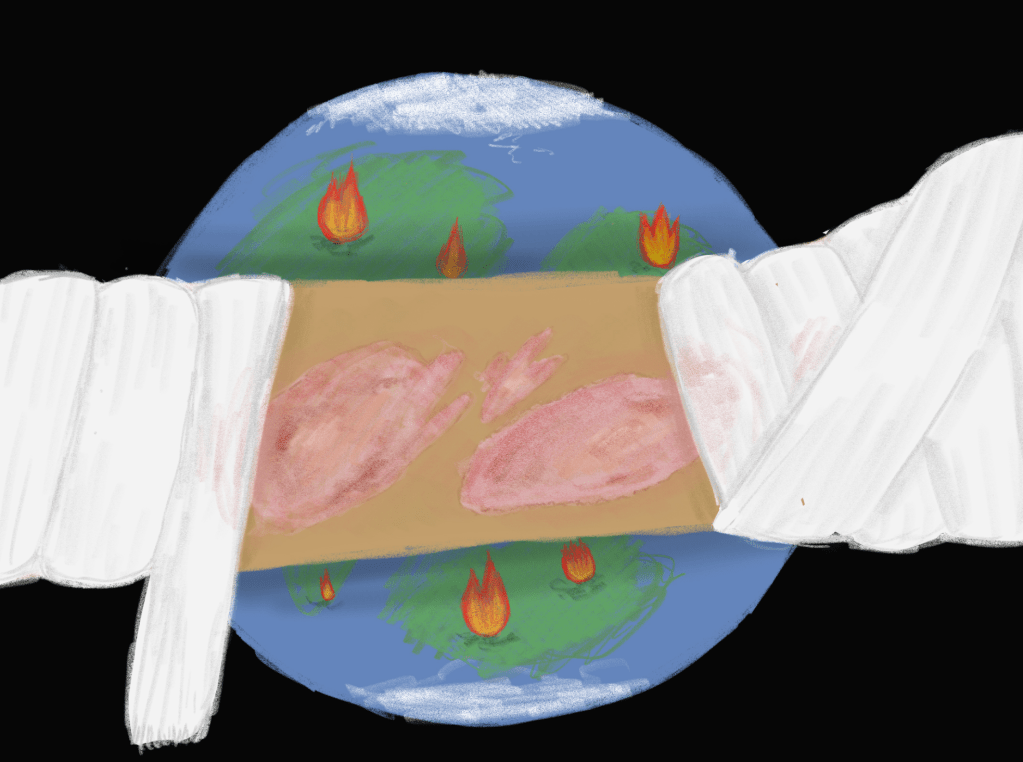
During the recent LA Wildfires, over 40,000 acres of land were destroyed, thousands of homes were either completely or severely damaged, and over 150,000 people were displaced. The Eaton and Palisades fires brought attention to the severe impacts of wildfires in multiple areas; in addition to the visible deterioration of one of the world’s most influential cities and the detrimental impacts on LA residents, the fires contributed to our growing climate crisis. This article will explore the effects of fire on an individual and our climate.
On a direct level, burns can severely impact one’s skin and cause irreversible damage. Certain physical abilities may be hindered, and on a more extreme scale, certain physical parts may be lost. Burns cause tissue damage and can permanently damage bodily tissue, hindering our body’s ability to heal. Burns can be surface-level or can penetrate every part of one’s body. They can damage nerves and in turn, impede sensation. Wildfires also result in smoke inhalation and respiratory damage. Specifically, wildfires result in the mass production of PM 2.5 (fine particulate matter/pollutant). Exposure is associated with asthma, lung disease, inhibited activity, heart attacks, strokes, and premature mortality. Fires displace many and lead to loss of property and life. Fires also result in trauma and severe emotional damage. After wildfires, many survivors have reported PTSD, depression, and anxiety associated with fire.
In controlled or natural amounts, fires have a negligible, even beneficial impact on natural ecosystems. They can promote vegetation growth and nutrient production. However, when not controlled or excessive, fires release greenhouse gases that contribute to global warming and climate change. They destroy forests, which act as “carbon sinks” that regulate the amount of carbon in our atmosphere. They can damage many natural habitats, leading to the loss of wildlife and displacement of many animals.
The majority of recent fires are caused by humans. Wildfires can be triggered by minuscule actions, like improperly discarding a cigarette or not completely putting out a fire. To protect ourselves and our environment, we must work towards managing the impact of fire, promoting fire safety, and preventing excessive wildfires. Even seemingly insignificant actions can harm.
This article is a collaboration between Pathoscribe and Everything Starts Small [ESS]. Pathoscribe is focused on raising health awareness of topics related to medicine or human affairs. ESS aims to build a more sustainable future through international environmental projects and inspire and empower youths to make the environmental change they believe is lacking in their communities. Through this collaboration, we wanted to highlight the expansive impacts of fires, which harm our bodies, our minds, and our environment.
Works Cited:
Editorial Staff. “How Wildfires Affect Our Health.” American Lung Association, 1 Jan. 2016, http://www.lung.org/blog/how-wildfires-affect-health.
“Burns and Wounds.” Johns Hopkins Medicine, http://www.hopkinsmedicine.org/health/conditions-and-diseases/burns. Accessed 25 Feb. 2025.
“California Air Resources Board.” Inhalable Particulate Matter and Health (PM2.5 and PM10) | California Air Resources Board, ww2.arb.ca.gov/resources/inhalable-particulate-matter-and-health. Accessed 25 Feb. 2025.
“Wildfires and Climate Change.” Center for Climate and Energy Solutions, 14 July 2023, http://www.c2es.org/content/wildfires-and-climate-change/.

 pathoscribe
Leave a comment