Written by Aashna Gupta | Art by Maya Wen
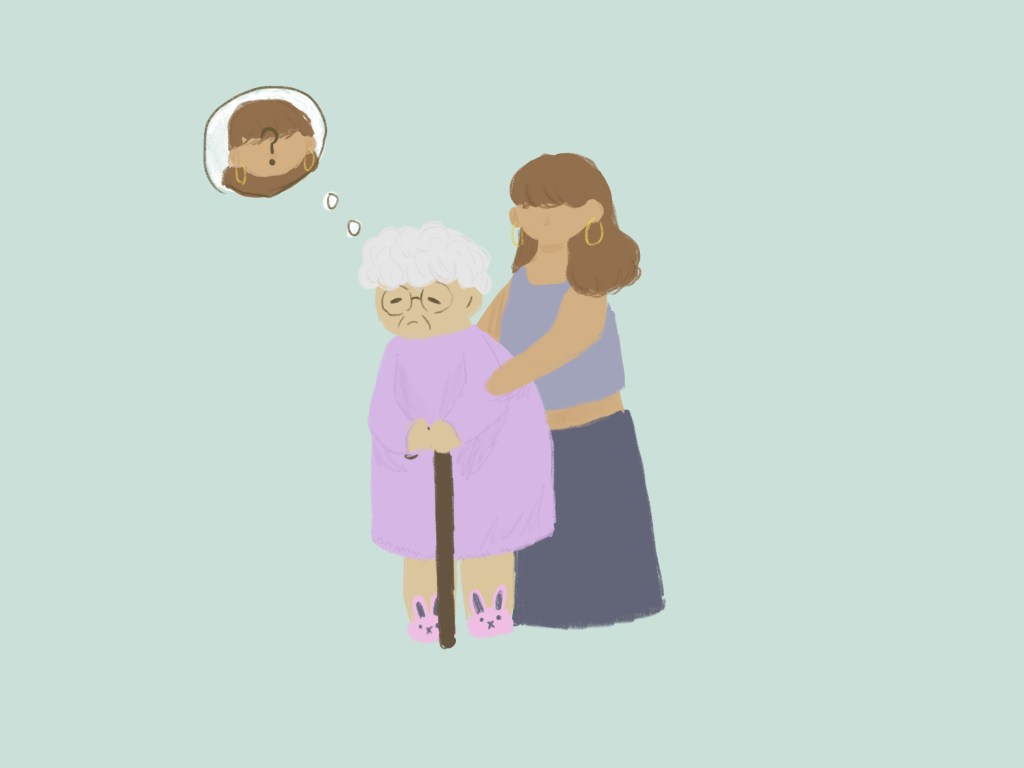
Alzheimer’s disease has affected many well-known figures in American history, including former U.S. President Ronald Reagan and actor Gene Wilder. Alzheimer’s is a brain disease that slowly destroys memory and thinking skills, eventually interfering with a person’s ability to perform daily tasks such as writing and even walking. As life expectancy increases globally, the prevalence of Alzheimer’s continues to rise, making it a critical public health issue. Understanding its symptoms, causes, and treatments is important in the fight against Alzheimer’s.
The first signs of Alzheimer’s often include forgetting names, dates, or recent conversations. As the disease gets worse, people struggle to recognize family, follow conversations, or make simple decisions. In later stages, individuals might require full-time care as they may lose the ability to communicate, talk, or care for themselves. Along with memory loss, people with Alzheimer’s can have mood swings, confusion, and personality changes. Behavioral changes such as mood swings, depression, aggression, and confusion also commonly accompany Alzheimer’s. These symptoms make daily life difficult, not only for patients but also for their families and caregivers.
Scientists believe that Alzheimer’s happens because of a mix of genetics, age, and lifestyle. In Alzheimer’s, harmful proteins build up in the brain, damaging nerve cells and making it harder for the brain to function. People over 65 are at the highest risk, and those with a family history may be more likely to develop the disease. Other risk factors include head injuries, poor heart health, and lack of exercise. While the exact cause is unknown, scientists believe it results from a combination of genetic, environmental, and lifestyle factors. By identifying key genetic & environmental factors, scientists aim to develop more effective treatments and ultimately work towards a cure.
There is no cure for Alzheimer’s, but treatments can help manage symptoms and temporarily slow its progression. Medications such as cholinesterase inhibitors and NMDA receptor antagonists can temporarily improve memory and thinking skills in some people. Doctors also recommend non-drug therapies such as brain exercises, healthy food, and regular physical activity to support brain health. Caregivers play a crucial role in helping patients maintain their daily routines. Ongoing research focuses on discovering more effective treatments, early detection methods, and potential ways to prevent the disease altogether.
With Alzheimer’s cases increasing worldwide, raising awareness and advancing research are crucial steps toward combating this condition. Families and caregivers of those affected face immense challenges, which emphasizes the need for greater support systems & resources. As scientific understanding progresses, hope remains for future breakthroughs that could lead to better treatments and, ultimately, a cure for Alzheimer’s disease.
Works Cited
“Alzheimer’s Disease.” Mayo Clinic, Mayo Foundation for Medical Education and Research, 8 Nov. 2024, http://www.mayoclinic.org/diseases-conditions/alzheimers-disease/symptoms-causes/syc-20350447. Accessed 09 Mar. 2025.
http://www.nia.nih.gov/health/alzheimers-symptoms-and-diagnosis/what-are-signs-alzheimers-disease. Accessed 09 Mar. 2025.
“ADI – Dementia Statistics.” Alzheimer’s Disease International (ADI), http://www.alzint.org/about/dementia-facts-figures/dementia-statistics/. Accessed 09 Mar. 2025.

 pathoscribe
Leave a comment