Written by Srivalli Adarapu | Art by Anoushka Pandya
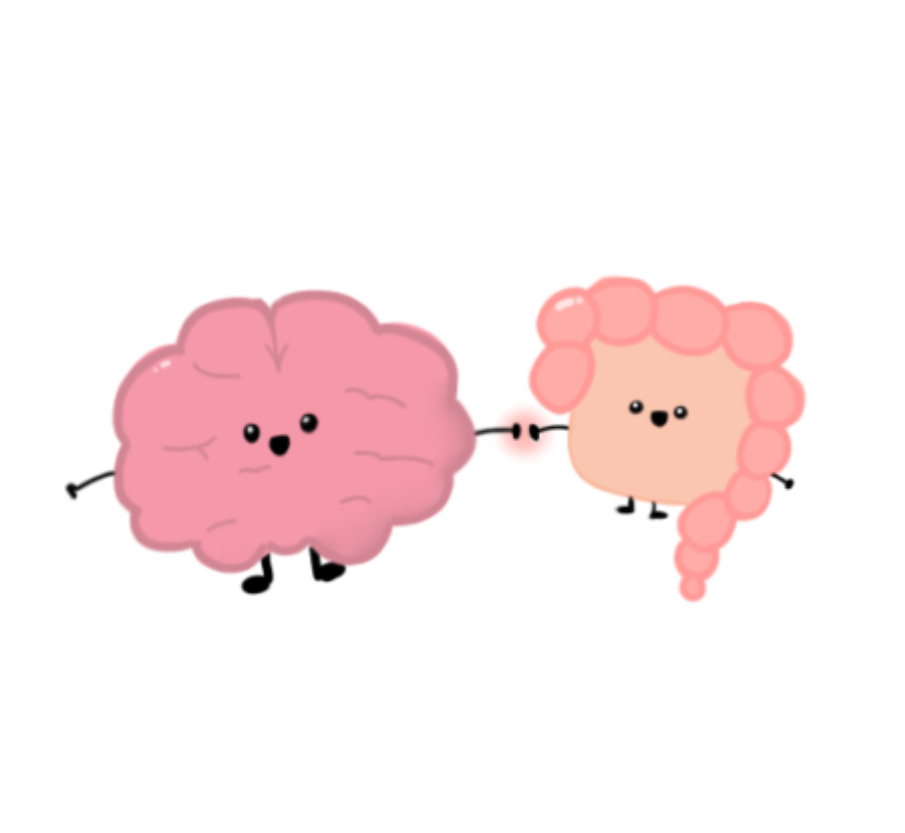
When it comes to the human body, many distinguish the brain and the gut and treat them separately. Mental health concerns are generally treated through therapy or medications targeting the brain, while digestive and intestinal problems are managed with medications aimed at the gut. Nonetheless, the gut and brain are closely connected through the gut-brain axis. In fact, according to the NIH, the gut supplies approximately 95% of the body’s total serotonin—the neurotransmitter that regulates happiness, mood, and arousal. A healthy gut produces adequate amounts of serotonin, whereas an unhealthy gut leads to a reduction in serotonin production and consequently leads to poor mental health.
The gut-brain axis bidirectionally links the intestines with the central nervous system. Those with mental health disorders such as anxiety and depression simultaneously experience gut-related comorbidities like IBS (see our article: IBS: More than Diarrhea). Likewise, those experiencing bowel or digestive issues consequently experience changes in mood, as well as mental health changes. This is because imbalances in the gut microbiome can fluctuate levels of serotonin, influencing one’s mood.
Nearly 1 in 5 American adults are affected by a mental health condition, while nearly 60-70 million Americans have gastrointestinal diseases as of 2022, according to the NIH and American Gastroenterological Association, revealing how many are affected by mental health or gut-related comorbidities because of the gut-brain axis.
While the potential for poor gut health or mental health to deteriorate overall mental health or gut health can be intimidating, the gut-brain axis can also help improve gut or mental health. For instance, those affected by mental health disorders can try building a healthier diet and exercising regularly to improve gut health. On the other hand, individuals facing gut problems can focus on their mental health to recuperate. For example, many IBS patients are recommended to take antidepressants to improve their mental health in hopes of improving gut health. These holistic approaches to mental and gut health can effectively promote overall well-being.
Works Cited:
Harvard Health. “The Gut-Brain Connection.” Harvard Health, 18 July 2023, http://www.health.harvard.edu/diseases-and-conditions/the-gut-brain-connection.
“The Brain-Gut Connection.” Johns Hopkins Medicine, 20 June 2024, http://www.hopkinsmedicine.org/health/wellness-and-prevention/the-brain-gut-connection.
Allen, Melissa, et al. “The Gut-Brain Axis: A Call on Mental Health Providers and Professionals Working in Allied Fields of Study to Become Informed.” Family Therapy Magazine – American Association for Marriage and Family Therapy, 2 May 2024, ftm.aamft.org/the-gut-brain-axis-a-call-on-mental-health-providers-and-professionals-working-in-allied-fields-of-study-to-become-informed.


 pathoscribe
Leave a comment