Written by Caitlin Maramba | Art by Tanisha Arora
Imagine taking a test during class when you suddenly hear a classmate begin to loudly and repeatedly bark. When a teacher steps in to help, he just gets worse. His shoulders jerk up, as if he were shrugging, but instead his body had decided to move completely on its own. At first, it may just seem to be a humorous joke or simply a disobedient child, but this is a real disorder called Tourette Syndrome. Tourette Syndrome, or TS, affects close to 200,000 people in the United States.
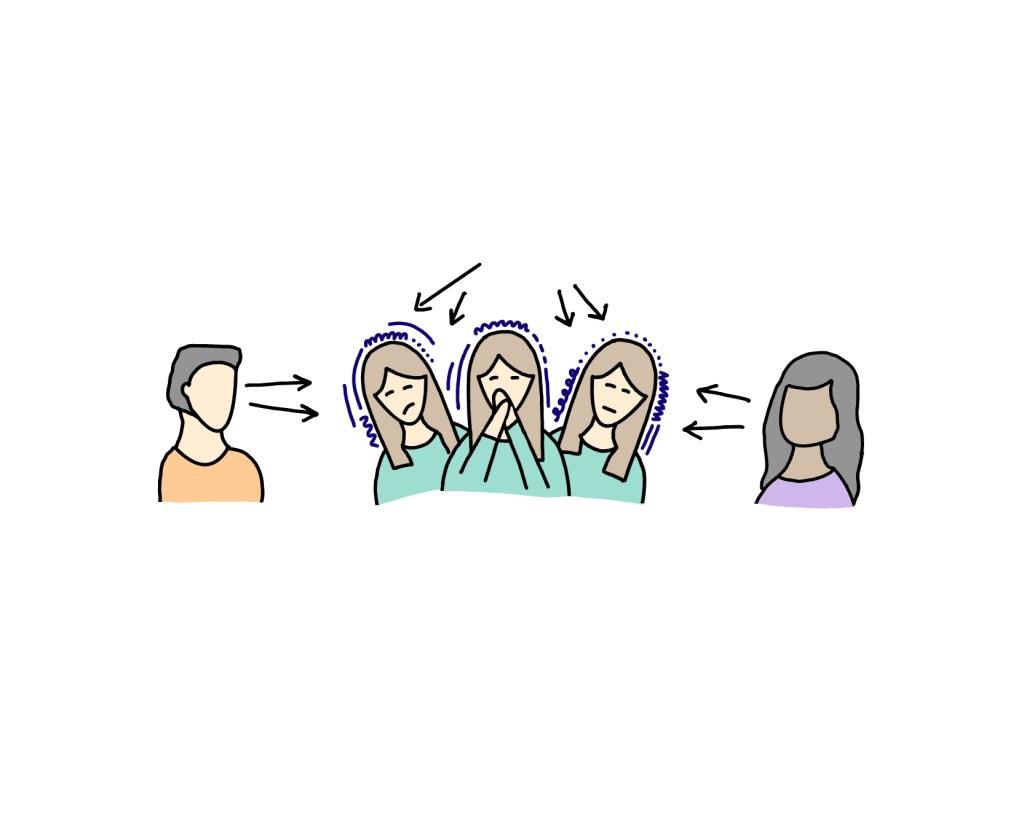
Tourette Syndrome belongs to a group of disorders categorized by tics, repetitive and uncontrollable movements. Other disorders include transient tic disorder and chronic tic disorder, and they are differentiated by the types of tics they have and the consistency of when they appear. However, Tourette Syndrome is the most severe. Tics are often triggered by powerful emotions or seeing an action similar to a tic in their environment. They can be kept in check by calming activities. The effects of tics can be seen as disruptive in the classroom and can distance individuals from others.
Tics can be categorized as vocal and motor, and even further into simple and complex. Vocal tics involve speaking or making noise; motor tics involve some sort of movement. Simple tics only involve a few muscle groups and are brief in nature. Complex tics are practiced and involve several muscle groups to complete a specific action. Examples of simple vocal tics include grunting, coughing, throat clearing, and barking. Complex vocal tics include repeating the words of others and themselves or excessively cursing. Simple motor tics include eye blinking, head jerking, shoulder shrugging, eye darting, nose twitching, and mouth movements. Complex motor tics include touching or smelling objects, repeating certain movements, stepping in a certain pattern, obscene gestures, bending, and hopping. While there are many ways tics can present, all of them are completed involuntarily and repetitively by individuals with Tourette Syndrome.
Symptoms for TS typically start at ages six to fifteen years old, and boys are three to four times more likely to have the disorder than girls. While much is unknown about the exact cause of the disorder, it is thought to be triggered by a combination of genetic and environmental factors. An official diagnosis of Tourette Syndrome must include three requirements to differentiate it from other tic disorders. The patient must experience both motor and vocal tics, have displayed symptoms for over a year, and first had symptoms during childhood or teenage years. Additionally, a medical professional must check that the tics were not triggered by other substances, medication, or another disorder entirely.
There is no known cure for Tourette Syndrome. Regardless, individuals with Tourette Syndrome report symptoms becoming manageable over time and experience a regular life span. Treatment usually includes drugs, most notably neuroleptics. Neuroleptics restrict the amount of dopamine in your brain, which can increase tics. Additionally, therapy can help those with Tourette Syndrome function during work, school, and social situations if they have extremely severe symptoms. A strong support system of family and friends will also help those with Tourette Syndrome, specifically children.
Works Cited
“Tourette Syndrome.” mayoclinic.org. Mayo Clinic, 8 August 2018,
http://www.mayoclinic.org/diseases-conditions/tourette-syndrome/symptoms-causes/syc-20350465. Accessed March 14, 2025.
“Tourette Syndrome.” my.clevelandclinic.org. Cleveland Clinic, 23 February 2021,
my.clevelandclinic.org/health/diseases/5554-tourette-syndrome. Accessed March 14, 2025.
“Tourette Syndrome.” ninds.nih.gov. National Institute of Neurological Disorders and Stroke, 31
January 2025, http://www.ninds.nih.gov/health-information/disorders/tourette-syndrome. Accessed March 14, 2025.

 pathoscribe
Leave a comment