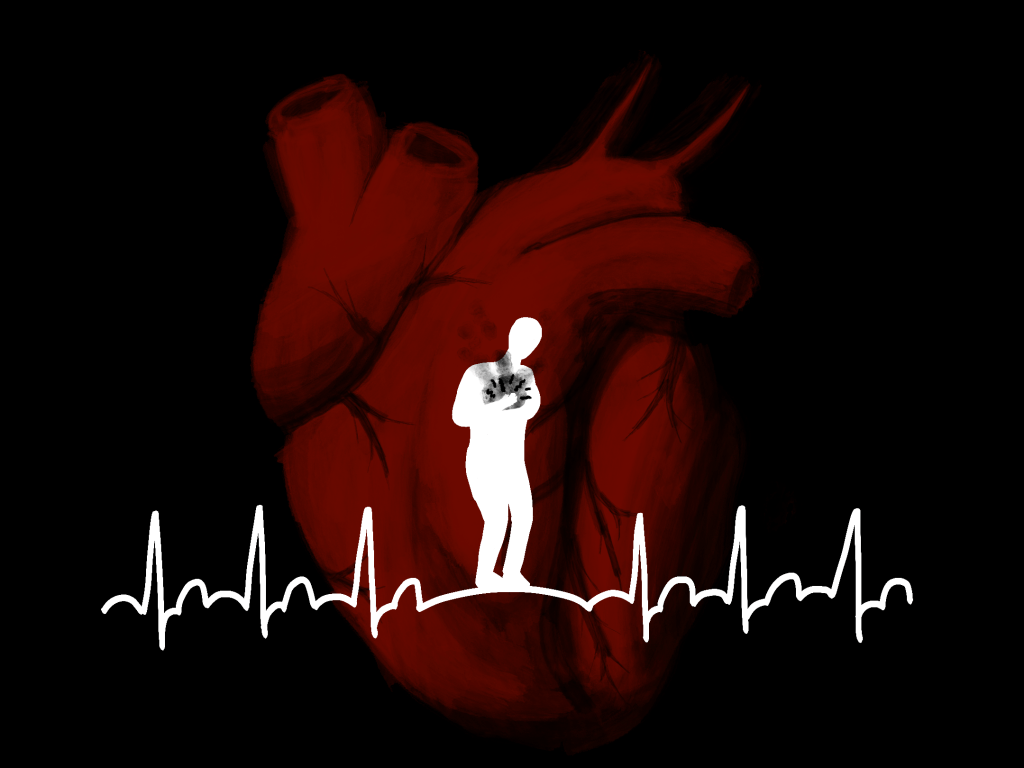
Written by Ashley Thamaraikkannan | Art by MollyAnn Caulfield
An estimated 1.5-5% of people in the United States suffer from an irregular heartbeat, otherwise known as an arrhythmia. Arrhythmias can occur due to issues in the heart’s electrical system or poor underlying conditions. Fortunately, there are many treatment options for those who suffer from this. Overall, some arrhythmias can be harmless, while others can be life-threatening.
To begin, the causes of this abnormal heart rate vary from person to person. For example, an abnormality of the heart’s electrical system can be congenital, or something that a patient may be born with. This is when an abnormal muscle fiber connects to the upper and lower chambers of the heart. The existence of this fiber can lead to various forms of tachycardia later in life. Along with this, some acquired conditions can cause a heart arrhythmia. For example, a heart attack can cause the heart muscle to scar, and when this occurs, it may also cause ventricular tachycardia. Excessive alcohol consumption also raises the risk for this condition.
Furthermore, the five types of arrhythmias include atrial fibrillation, tachycardia, bradycardia, flutter, and ventricular fibrillation. Atrial fibrillation means that there is an irregular heartbeat in the upper chamber of the heart. Tachycardia is a rapid heart rate, while bradycardia is a slow heart rate. The term “flutter” refers to a “fluttering” sensation in the heart. Lastly, ventricular fibrillation, otherwise known as V-fib, is a life-threatening condition that occurs when the electrical signals that tell the heart to pump cause it to quiver (fibrillate) instead of pumping blood.
To add, the symptoms of an arrhythmia can vary depending on the different types. For example, fluttering and quivering in the heart are mostly associated with atrial and ventricular fibrillation. However, some general symptoms include fatigue, weakness, dizziness, fainting, shortness of breath, anxiety, sweating, and more. In more extreme cases, some patients may collapse and go into sudden cardiac arrest.
Although heart arrhythmias can be daunting, there are many treatment options for those who suffer from them. For instance, there are various procedures or therapies that can help. Catheter ablation is a procedure that cauterizes or burns the specific heart cells that cause the abnormal heart rate. Additionally, cardioversion delivers a controlled shock to your heart to restore a regular heartbeat. In addition to therapies, there are also medications available, such as antiarrhythmic drugs and anticoagulant drugs that reduce blood clots. Lifestyle changes can also be implemented. Some examples of this include managing blood pressure and blood sugar levels, avoiding tobacco, cutting back on alcohol, and working towards a healthy weight. Moreover, devices like a permanent pacemaker and an implantable cardioverter defibrillator can help maintain a healthy heartbeat. To treat the heart diseases that cause arrhythmias, coronary artery bypass surgery and maze procedures are available. Minimally invasive surgical procedures include biventricular pacemaker leads, which are tiny wires placed on the heart.
To conclude, arrhythmias can be harmless or life-threatening, and can start from either pre-existing or acquired conditions. Symptoms can vary from person to person but should be taken seriously. Fortunately, various treatment options are available for patients. Overall, heart arrhythmias require proper treatment and diagnosis and should be detected early on to improve the quality of life for those who are affected by this condition.
Works Cited
Cleveland Clinic. (2019). Arrhythmia | Cleveland Clinic. Cleveland Clinic. https://my.clevelandclinic.org/health/diseases/16749-arrhythmia
John Hopkins Medicine. (2019). Arrhythmias. Johns Hopkins Medicine. https://www.hopkinsmedicine.org/health/conditions-and-diseases/arrhythmias
Mayo clinic. (2023, October 13). Heart arrhythmia. Mayo Clinic. https://www.mayoclinic.org/diseases-conditions/heart-arrhythmia/symptoms-causes/syc-20350668
Clinic, M. (n.d.). Heart Arrhythmia: Causes, symptoms, treatment. Www.marshfieldclinic.org. https://www.marshfieldclinic.org/specialties/heart-care/arrhythmia
American Heart Association. (2014). Symptoms, Diagnosis and Monitoring of Arrhythmia. Www.heart.org. https://www.heart.org/en/health-topics/arrhythmia/symptoms-diagnosis–monitoring-of-arrhythmia

 pathoscribe
Leave a comment