Written by Anoushka Pandya | Art by Maya Wen
During the summer of 2024, I had the opportunity to shadow a pulmonologist. I observed his daily life and routines and, after receiving consent from the patients, sat in on a few consultations. I noticed that many of these consultations were for a condition called sleep apnea. I was curious: What exactly is sleep apnea, and how prevalent is it in our society?
Sleep apnea, by definition, refers to momentary cessations (pauses) in breathing while sleeping. There are two main types of sleep apnea:
- Obstructive sleep apnea (OSA): Obstructive sleep apnea is the more common form of sleep apnea, in which a physical obstruction in the upper airway reduces or, in worse cases, completely blocks airflow. An example of this obstruction could be the throat narrowing in, preventing air from flowing.
- Central sleep apnea (CSA): Central sleep apnea occurs when the brain cannot send the correct signals needed to breathe during sleep, leading to periods of paused breathing.
The most frequent symptoms of sleep apnea include feeling restless, waking up at night gasping for air, and snoring, but symptoms can also include irritability, headaches, and daytime sleepiness. The AHI (apnea-hypopnea index) assesses and classifies obstructive sleep apnea, which can range from mild to severe levels. Normal people have an AHI of less than 5, meaning breathing momentarily is interrupted or paused 0 to 5 times every night. An index of 5-15 indicates mild sleep apnea, and 15-30 and 30+, respectively, indicate moderate and severe apnea.
Sleep apnea has a variety of causes and begins to increase in frequency with age. It occurs more often in males than females. It can be caused by physical traits like a large neck, swollen tonsils, or being overweight, has a genetic basis (if a family member has sleep apnea, one is more likely to as well), and is linked to behaviors like smoking and alcohol use.
Sleep apnea does not have a definitive cure, but treatments can manage the condition. Lifestyle changes like weight loss, increased physical activity, and abstinence from substances can treat sleep apnea, and in certain mild cases, completely prevent it. Oral appliances can be used to keep the mouth and airways open during sleep. This treatment plan is most effective for those with mild or moderate sleep apnea. Certain surgeries (nasal or jaw) may also prevent sleep cessations. However, the most common and most effective treatment for Sleep Apnea is CPAP.
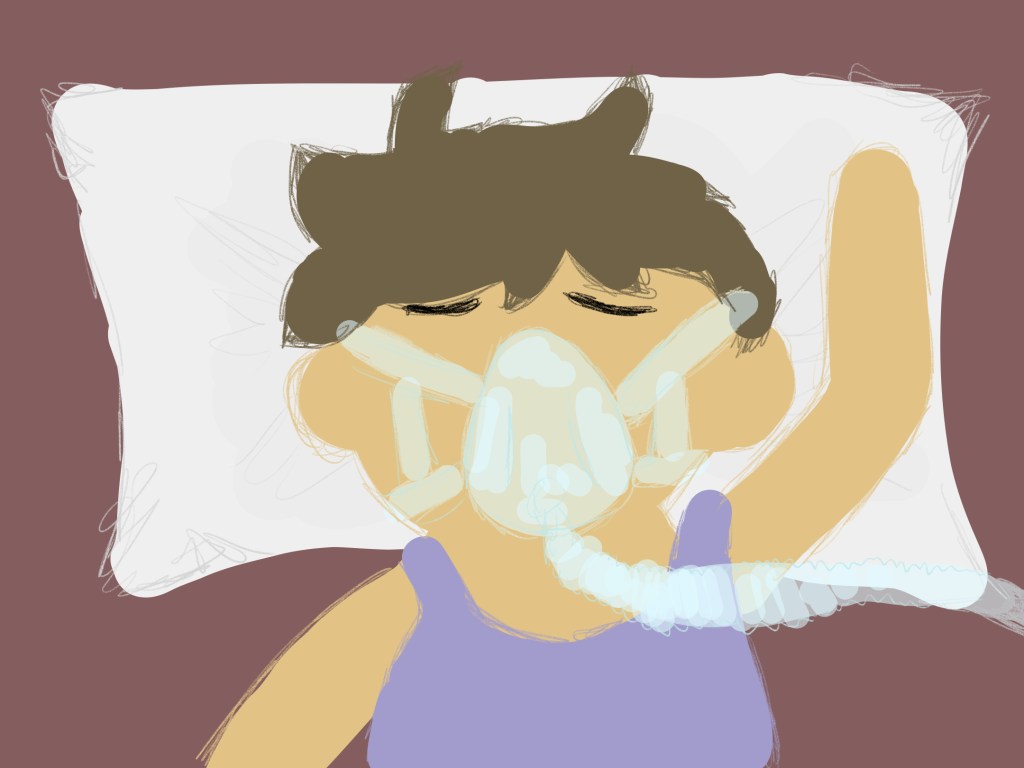
CPAP (continuous positive airway pressure) machines continuously deliver air through a mask worn on the face at night, keeping airways open and preventing breathing cessations that occur due to sleep apnea. There are different PAP machines, like a BPAP (bilevel positive airway pressure) machine and an APAP (auto-adjusting positive airway pressure), that differ in the amount and frequency of air provided; among these options, CPAP is most frequently used, but the other two can be used if cases apply for them. While extremely effective, CPAP can cause discomfort and claustrophobia for its users. Medication is currently being developed, and there is ongoing research on new and possibly more effective treatments, so there may be more alternatives in the future.
30 million adults are estimated to have sleep apnea, but only a fraction of these adults are treated and realize they have sleep apnea. So the next time you hear someone snore, reconsider the ease with which you brush it off as something mildly annoying but normal. It may be worth it (for both you, the listener, and the snorer) to talk to your doctor about sleep apnea and seek treatment.
Works Cited:
- https://www.nhlbi.nih.gov/health/sleep-apnea
- https://www.mayoclinic.org/diseases-conditions/sleep-apnea/symptoms-causes/syc-20377631
- https://www.hopkinsmedicine.org/health/conditions-and-diseases/obstructive-sleep-apnea
- https://my.clevelandclinic.org/health/diseases/8718-sleep-apnea#management-and-treatment
- https://www.ama-assn.org/delivering-care/public-health/what-doctors-wish-patients-knew-about-sleep-apnea#:~:text=About%2030%20million%20people%20in,well%20as%20higher%20stress%20levels.

 pathoscribe
Leave a comment