Written by Akemi Li | Art by Lily Ozaeta
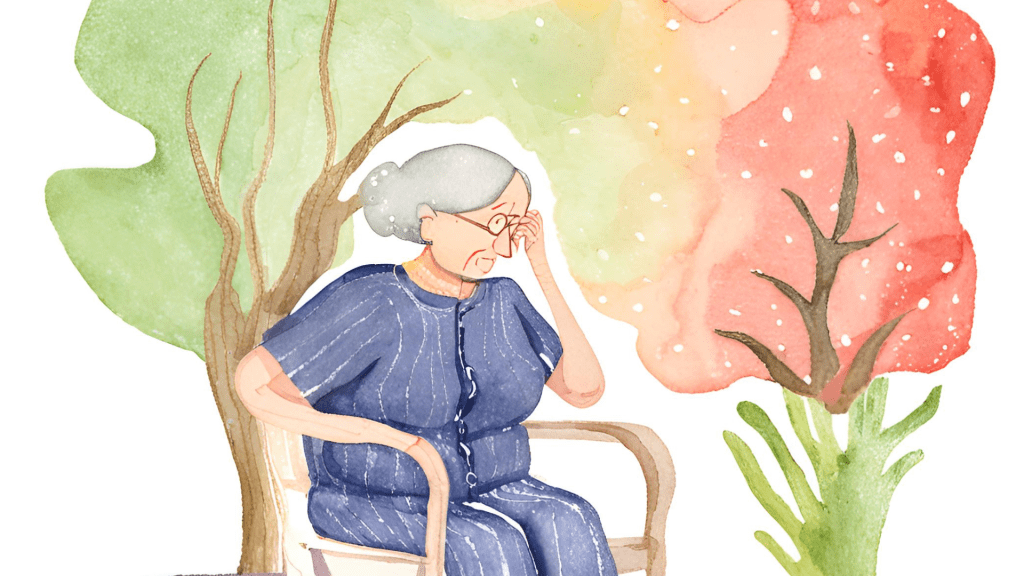
Dementia is not necessarily a disease but a term to describe a collection of symptoms, including memory loss and other symptoms related to thinking abilities relatively caused by damage to the brain, affecting everyday activities. Types of dementia that you may have heard of include vascular, Lewy body, and frontotemporal. One of the most common ones is Alzheimer’s, which is the main cause of diagnosis in 60-80% of cases. The severity of dementia involves when the patient has to rely on another for basic activities like eating.
Risk factors for this medical condition include genetics and age. It’s seen more commonly in elderly people, as statistics show ⅓ of people aged 85 years or older are matched with a type of dementia. However, dementia does not occur naturally because of aging, as many who live beyond 90 years old show no signs of dementia at all. Some patients have been observed to have dementia due to rare genetic variants. Other causes or influential effects consist of heavy alcohol use over a long time, head injury, and delirium.
Signs and symptoms only show when healthy neurons, also known as nerve cells, stop functioning properly and lose connections with the brain. Some symptoms include difficulty speaking, repeating questions, and using unusual words to refer to familiar objects. It’s also possible for dementia to develop in people who already have intellectual and developmental disabilities, leading to more difficulties in recognizing symptoms. As of now, there is no cure for dementia.
There is no exact test to diagnose someone with dementia. Doctors typically look at medical history, physical examination, characteristic changes, and laboratory tests to figure out if dementia could be a possible cause of their symptoms. Some tests that may be helpful include brain scans, genetic tests, blood tests, and cognitive and neurological tests.
Research is still being conducted on why some people have dementia and others don’t. Scientists are also figuring out how underlying diseases transform into different varieties of dementia. One recent discovery is LATE, another type of dementia. Understanding the underlying causes helps in developing prevention, treatment, and care strategies.
Works Cited:
National Institute on Aging. “What Is Dementia? Symptoms, Types, and Diagnosis” National Institute on Aging, 2022, https://www.nia.nih.gov/health/alzheimers-and-dementia/what-dementia-symptoms-types-and-diagnosis

 pathoscribe
Leave a comment