Written by Aashna Gupta | Art by MollyAnn Caulfield
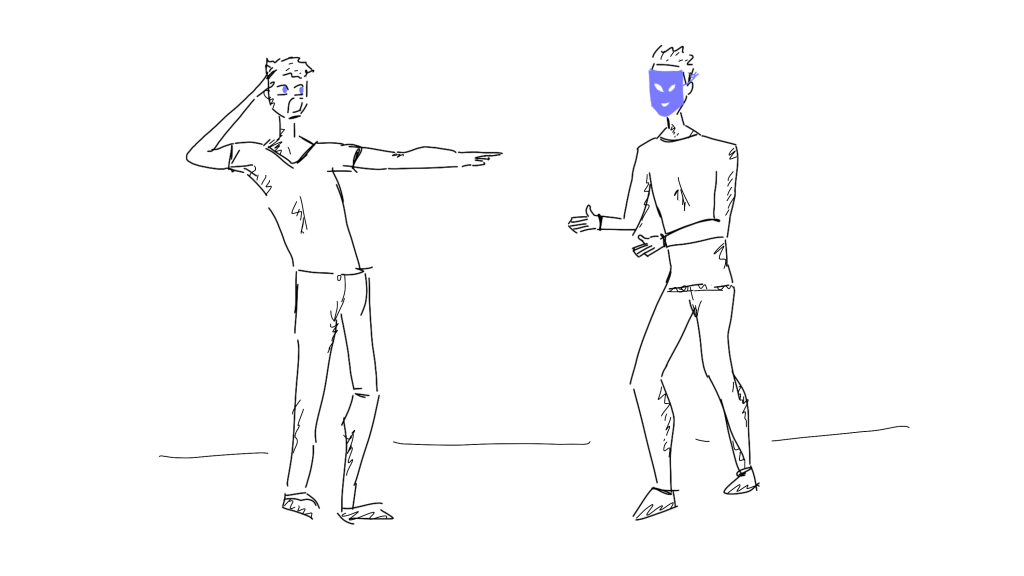
Capgras syndrome, also known as Capgras delusion, is a rare and fascinating psychological disorder that causes an individual to believe that someone close to them, often a spouse, parent, or friend that has been replaced by an identical impostor. Although this syndrome is very uncommon, this condition can be distressing – both for those who experience it and the loved ones around them.
This condition grows from a disconnection between the brain’s visual recognition system and its emotional response system. Essentially while the individual may visually recognize a familiar face, the emotional familiarity typically triggered by that recognition is missing. This disruption can lead to the false belief that the person is an impostor.
Symptoms of Capgras syndrome can vary in intensity. Some individuals only exhibit the delusion occasionally while others experience it consistently. In extreme cases, Capgras can extend to inanimate objects or pets, where the person believes that familiar items have been replaced with duplicates. The disorder can contribute to social isolation and confusion.
Capgras syndrome does not have a specific and standalone treatment. Instead, therapy focuses on the underlying causes, most often a psychotic disorder or neurological condition. Antipsychotic medications, cognitive behavioral therapy (CBT), and supportive psychotherapy are commonly used. In cases linked to dementia or brain injury, treating the neurological disorder may alleviate symptoms.
While rare, Capgras syndrome offers valuable insights into how the brain processes identity and emotion. Its study continues to challenge and enrich our understanding of perception, memory, and reality. As research progresses, clinicians hope to better identify early signs, apply effective treatment strategies, and minimize the distress associated with this puzzling disorder.
Works Cited:
- Hirstein, W., & Ramachandran, V. S. (1997). Capgras syndrome: A novel probe for understanding the neural representation of the identity and familiarity of persons. Proceedings of the Royal Society B: Biological Sciences, 264(1380), 437–444. https://doi.org/10.1098/rspb.1997.0062
- Josephs, K. A. (2007). Capgras syndrome and its relationship to neurodegenerative disease. Archives of Neurology, 64(12), 1762–1766. https://doi.org/10.1001/archneur.64.12.1762
- Psychology Today. (2023). Capgras Syndrome. https://www.psychologytoday.com/us/conditions/capgras-syndrome

 pathoscribe
Leave a comment