Written & Art By Sophia Salazar
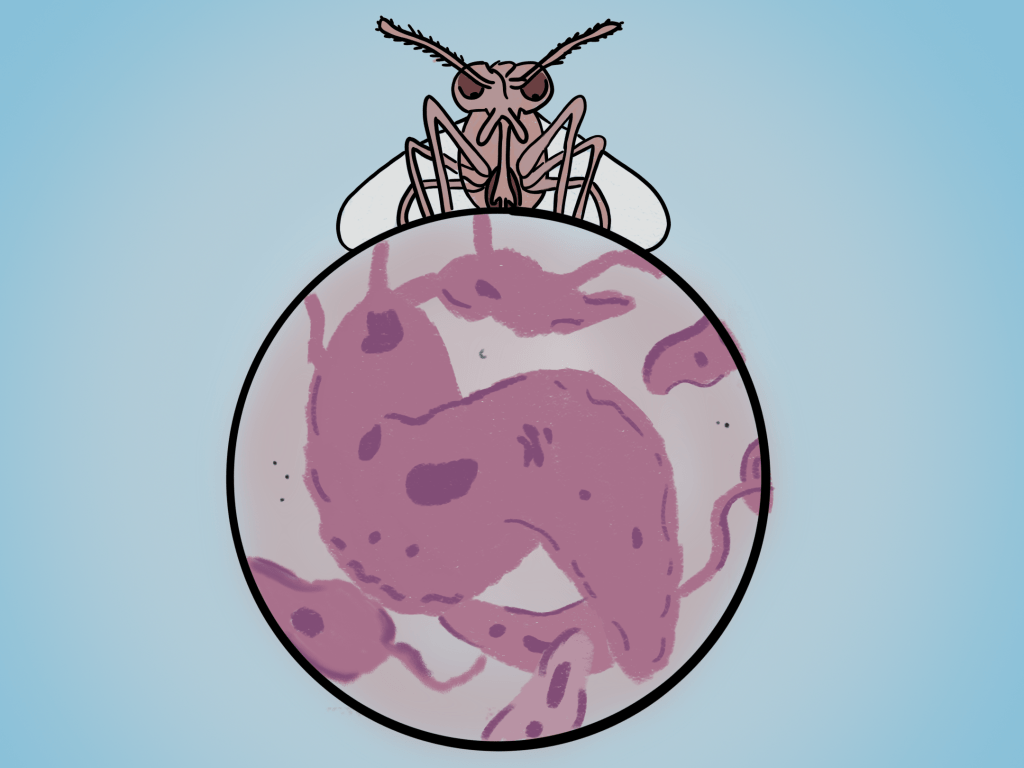
Leishmaniasis is a neglected tropical disease, although this classification does not imply that it is unimportant. According to the WHO, an estimated 700,000 to 1 million new cases of leishmaniasis occur annually, with this incidence rate on the rise (WHO). Thus, increased awareness and action are especially needed for this disease.
Leishmaniasis is caused by protozoan parasites from over 90 sandfly species. These parasites are transmitted through the bite of infected female phlebotomine sandflies, which feed on blood to produce eggs. Transmission events commonly happen through injection of the parasite from the skin. They are uncommonly transmitted through contaminated needles or blood transfusions.
The disease manifests in three primary forms after an individual is infected. Cutaneous leishmaniasis is the most common form, and is characterized by skin ulcers and lesions on exposed parts of the body. Mucocutaneous leishmaniasis manifests as impairments to the mucous membranes of the nose, mouth, and throat. Visceral leishmaniasis is the most serious form and is seen with extreme fever, weight loss, spleen and liver enlargement, and anemia (Dogan).
So, what accounts for the rising incident rates in recent years? The effects of climate change have expanded the range of sandflies by creating optimal breeding conditions, which include increased temperatures and rainfall (Javier Moreno Nuncio and Fernandez-Prada). Consequently, leishmaniasis infections have become increasingly prevalent in non-endemic areas such as countries in Europe and North America. Another major factor that has led to the boom in leishmaniasis infection coincides with the social determinants of health. Poor housing and domestic sanitation in impoverished areas create an ideal habitat and breeding space for sandflies, which also gives the insects greater access to blood meals from humans. While anyone who is exposed to leishmaniasis is at risk of infection, immunocompromised individuals and people living in poverty are especially at risk (Javier Moreno Nuncio and Fernandez-Prada).
Research and community initiatives to combat leishmaniasis infection have been insufficient. Although there are measures for leishmaniasis prevention and treatment, various limitations do exist. There are no current vaccines or prophylactic interventions available, so prevention is to simply avoid getting bitten by a sandfly. The gold standard treatment for leishmaniasis, an antiparasitic disease, is liposomal amphotericin B (Dogan). Other alternative drugs and therapies are used in extreme cases, such as miltefosine, thermotherapy, and cryotherapy.
Works Cited:
“Leishmaniasis.” World Health Organization, World Health Organization, http://www.who.int/news-room/fact-sheets/detail/leishmaniasis. Accessed 20 June 2025.
Javier Moreno Nuncio, Francisco, and Christopher Fernandez-Prada. “Leishmaniasis: This Neglected Tropical Disease Is Spreading Fast, and Europe Is Nowhere near Prepared.” The Conversation, 28 Mar. 2025, theconversation.com/leishmaniasis-this-neglected-tropical-disease-is-spreading-fast-and-europe-is-nowhere-near-prepared-235031.
Dogan, Simge Eva. “What Is Leishmaniasis? Causes, Prevention and Treatment: News.” Wellcome, 23 Jan. 2025, wellcome.org/news/what-is-leishmaniasis-causes-prevention-treatment.


 pathoscribe
Leave a comment