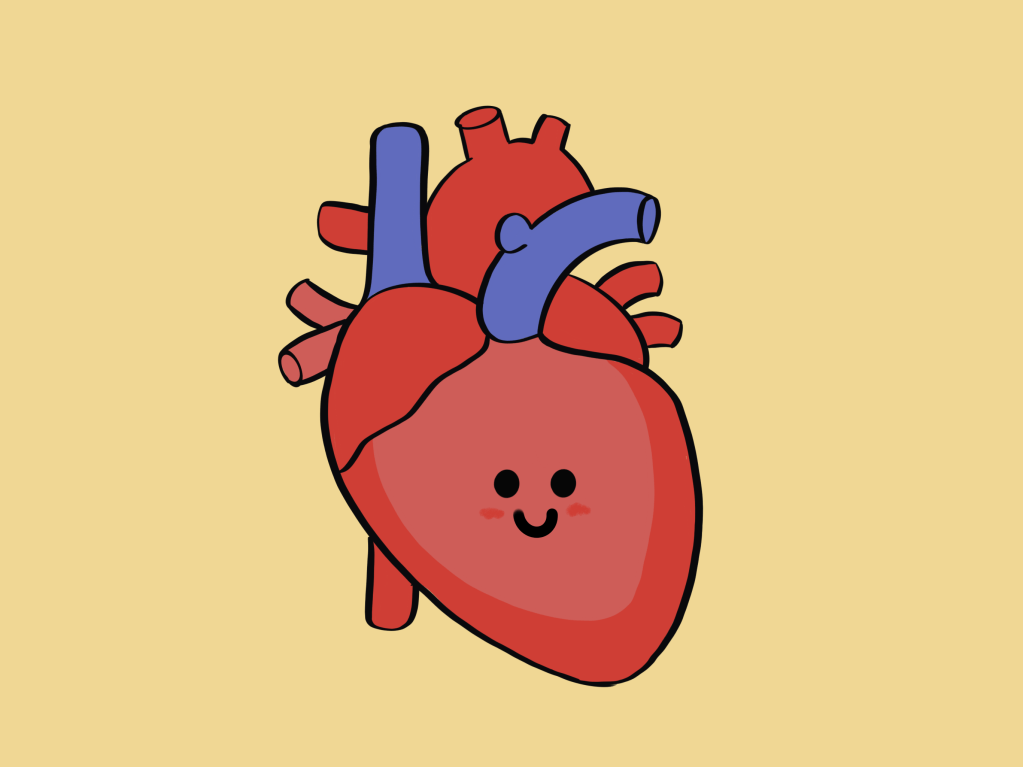
Written & Art by Srivalli Adarapu
The organ that never stops beating into action, always working, can also become so vulnerable over time when neglected. With heart disease ranking as the leading cause of death across the world, we must prioritize our heart health. As intimidating as heart disease may seem, these 4 simple habits can significantly reduce your risk. It’s never too late to take action for the health of what could be considered your most important organ!
- Adopt a Heart-Healthy Diet!
Make sure to incorporate fruits and vegetables into your diet, especially those high in vitamin C and beta-carotene, like strawberries, kiwis, carrots, and broccoli. These nutrients help prevent the buildup of plaque in the arteries, which can result from high cholesterol, and thereby reduce the risk of heart disease, such as atherosclerosis. Fruits and vegetables are also excellent sources of energy, as they are rich in fiber and low in calories. They are also rich in vitamins, minerals, and antioxidants.
Be sure to choose whole grain products over refined grains, as they are processed and contain extra unhealthy fats and lack the raw nutrients that are beneficial for your heart health.
Avoid saturated and trans fats, as they are high in cholesterol and lead to an accumulation of plaque in the arteries. Saturated fats are found in animal-based fat products, like butter. Instead, opt for unsaturated fats, which tend to be from plant-based sources, like avocados, olive oil, nuts, and seeds.
Choose low-fat sources of protein, such as fish, eggs, legumes, and low-fat dairy, over full-fat sources of protein, like full-fat milk.
Lastly, be sure to limit sodium and salt intake. Sodium is already naturally found in many foods, so adding excessive sodium to foods can dangerously raise your blood pressure. Sodium raises blood pressure by increasing the blood’s retention of water and thereby increasing the volume of vessels, requiring more force to pump blood.
- Manage Stress
When experiencing stress, your body secretes adrenaline to activate your sympathetic nervous system, increasing your heart rate and elevating your blood pressure in the long term, making you more prone to heart disease. You can alleviate your stress by practicing mindfulness, spending time with loved ones, and engaging in hobbies.
- Exercise Regularly
Exercise helps reduce blood pressure, decrease inflammation, and train muscles to efficiently extract oxygen and nutrients from blood vessels, reducing the demand on the heart to pump more blood. Whether it’s daily walks, aerobic activity, or strength training, regularly exercising significantly boosts your heart health.
- Sleep enough
Getting sufficient sleep is crucial for your heart, as it allows your heart to recover. Sleep also influences your eating and exercising choices, along with your mental health. Conditions like sleep apnea and chronic sleep deprivation are correlated with high blood pressure and heart disease. Getting quality, sufficient sleep is essential for more than just your heart health, but also your overall health.
Works Cited:
“Vegetables and Fruit.” Heart and Stroke Foundation of Canada, www.heartandstroke.ca/healthy-living/healthy-eating/vegetables-and-fruit.
“8 Steps to a Heart-healthy Diet.” Mayo Clinic, http://www.mayoclinic.org/diseases-conditions/heart-disease/in-depth/heart-healthy-diet/art-20047702.
“Stress and Heart Health.” http://www.heart.org, 8 Feb. 2024, www.heart.org/en/healthy-living/healthy-lifestyle/stress-management/stress-and-heart-health.
“How Does Sleep Help Your Heart?” BIDMC of Boston, http://www.bidmc.org/about-bidmc/wellness-insights/heart-health/2023/08/how-does-sleep-help-your-heart.

 pathoscribe
Leave a comment