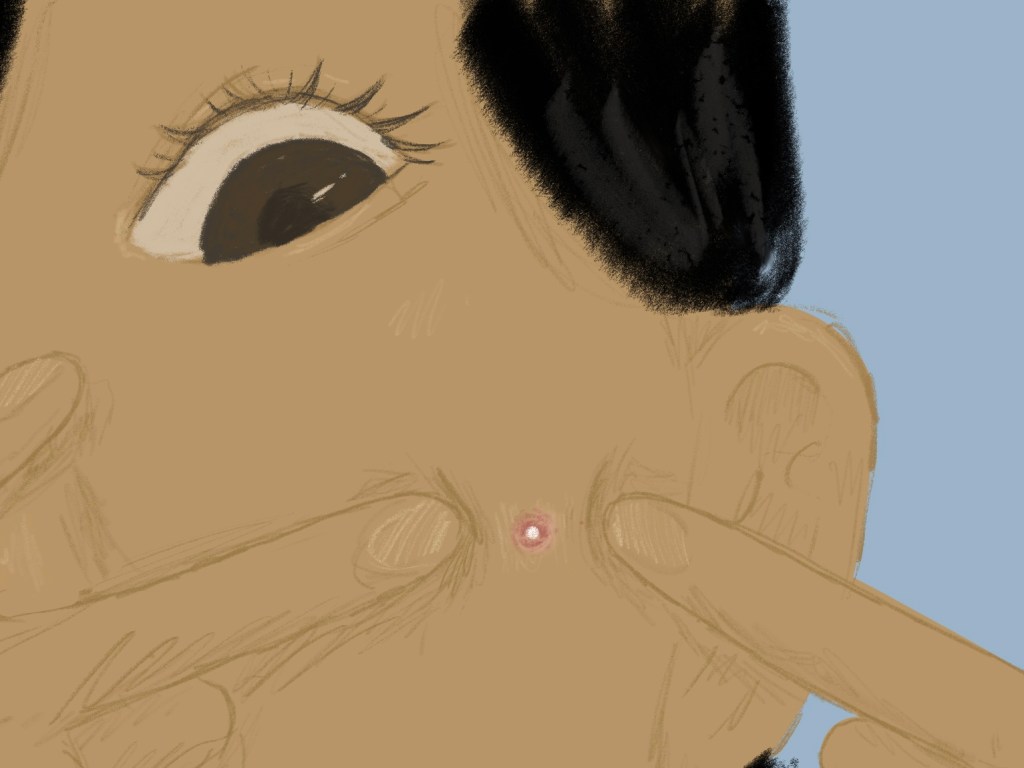
Written by Akemi Li | Art by Maya Wen
Acne is caused by clogs in hair follicles where dead skin cells and oil stack up to clog pores, creating outbreaks of lesions, also known as zits or pimples. Outbreaks regularly occur on the face; however could also be in areas including the back and chest. Excess consumption of oily food or simply high production of oil could cause acne, along with the growth of bacteria in pores or the buildup of dead skin cells. Other causes include stress, environmental irritants, picking at blemishes, family history, and hormones.
Anyone, regardless of age or race, can develop acne; however, it is more common for teenagers and adults. Statistics show that it’s more commonly seen in teen males, , yet in adulthood, acne is seen to be more common in females.
Different types of acne consist of whiteheads, which are when plugged hair follicles stay beneath the skin, creating white bumps. Another type of acne is blackhead, caused by plugged follicles appearing on the top of the skin and opening up, creating black dots as the air in the atmosphere discolors the sebum. Blackheads are more commonly seen on the nose. Other types of acne are papules, pustules, and nodules.
If breakouts worsen, dermatologists may ask questions regarding current medications, family history, skin type, and symptoms and would try to diagnose other possible health disorders that may cause pimples. Treatments that a doctor would prescribe to their patient for acne involve retinoids, antibiotics, sulfur, and salicylic acid in the form of creams, gels, lotions, soaps, and pads. It’s important that patients converse with their doctor if, while using these over-the-counter medications, they receive side effects like burning, skin irritation, or redness. Extreme severe cases may require laser/light therapies, injecting corticosteroids, superficial chemical peels, or surgical procedures.
There are certain rules to keep in mind for regularly maintaining the skin. It is important to clean the skin regularly with products like cleansers and lukewarm water, especially after constant sweating, morning, and night, before bed. If someone were to have oily hair, it’s recommended to wash their hair daily. Using sunscreen as a routine is also important, don’t overuse cosmetics and skincare, and avoid touching your face
Works Cited:
National Institute of Arthritis and Musculoskeletal and Skin Diseases. “Acne” National Institute of Arthritis and Musculoskeletal and Skin Diseases, 2023, https://www.niams.nih.gov/health-topics/acne

 pathoscribe
Leave a comment