Written by Huria Alzena Riaz | Art by MollyAnn Caulfield
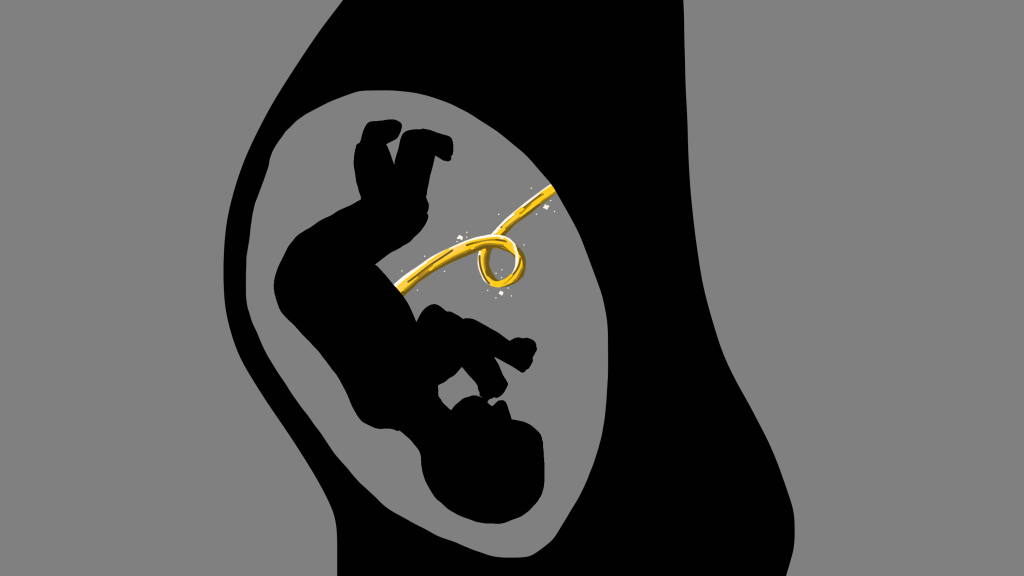
The placenta is a wondrous organ made of the mother’s uterine tissue interdigitated with cells of the growing embryo. It is connected to the embryo through the umbilical cord, a 50-100 cm long tube, rich in blood vessels carrying oxygen, nutrients, and crucial antibodies from the mother to the embryo. The placenta and umbilical cord together help nurture and sustain life in the womb. What if this blood could save a life beyond gestation, in the real world?
Cord blood is the blood left inside the baby’s umbilical cord after delivery. It contains red blood cells, white blood cells, platelets, plasma, and specialized bone marrow cells called stem cells. Stem cells are undifferentiated cells, meaning they can mature and grow into any cell type. This unique property has put them in the limelight as a novel and effective treatment option for many life-threatening diseases involving damaged or incorrectly formed cells.
Cord blood contains three types of stem cells. Mesenchymal stem cells are precursors for nerve, muscle, and cartilage cells. The second type, hematopoietic stem cells, has the potential to create any blood cell type. Lastly, very small embryonic- like (VSEL) stem cells are currently being researched for their potential as the most valuable type of stem cells, as they retain many features of embryonic stem cells, giving them the ability to transform into a wider array of tissue types.
Stem cells can be used to treat over 80 life-threatening diseases, including leukemia, lymphoma, immune system disorders, and sickle cell anemia. Ongoing research is looking into the use of these cells for treating diabetes, Parkinson’s disease, and HIV, as well as their use in regenerative medicine for autism, stroke, and spinal cord or brain injury.
Traditionally, stem cells for treatment were obtained through bone marrow or blood donations. This method has significant limitations as the procedure is painful and requires stricter matching protocols, making it difficult to find potential matches for most patients. Cord blood banking helps overcome these limitations.
If the patient, usually the mother, consents to donate cord blood, it is collected by a healthcare provider after the umbilical cord is clamped and cut. A needle is inserted into the cut cord to extract the blood, which is then put into a collection bag. The process takes only a few minutes and is safe and painless for both the mother and the baby. You can donate your cord blood by talking to your healthcare provider during prenatal visits. Most hospitals require you to tell them you want to donate cord blood before 34 weeks of pregnancy so that they can make arrangements for the collection equipment.
After the cord blood is collected, it is sent to cord blood banks where the blood is analyzed and categorized based on certain cellular markers such as blood type. The blood is also screened for diseases to ensure its safety. If found acceptable for use, the blood is cryogenically frozen until the cord bank finds a suitable match. Cord blood does not require strict matching compared to traditional transplants, making it easier for patients to find matches.
Cord blood banks can be public or private. Public banks are large FDA-regulated donation centers that may be free or paid to donate, depending on whether they have tie-ups with a hospital. Cord blood stored here can be used to save anyone’s life or for medical research to advance our understanding of its applications, thereby also saving lives.
On the other hand, private blood banks are paid and are specific to families. Blood donated to a private bank can only be used by family members, making it helpful for families with a history of health conditions that can be treated with stem cells, though the likelihood of needing it remains statistically low for most families. The American College of Obstetricians and Gynecologists recommends “against the routine storage of umbilical cord blood as ‘biological insurance’ against future disease, as the chance that a child or family member would develop a condition that could be treated with autologous (your own) cord blood is low.” This is due to the fact that while your own cells are usually a perfect match for your body, they are not appropriate for transplants, as the cells can contain the same disease you are treating for.
Cord blood, when not donated, is often discarded as biological waste. Yet, research and real-time treatments evidence its potential in giving so many people a chance at a life they couldn’t imagine a few years ago. If you or someone you know is pregnant, consider learning more about donation options in your community and spreading awareness about it. Donating cord blood is harmless, safe, and simple–one conversation with your healthcare provider and a few consent forms can be the difference between life and death for someone else.
Works Cited:
“About Umbilical Cord Blood.” Cells4Life, cells4life.com/cord-blood-banking-overview/about-umbilical-cord-blood/.
Cleveland Clinic. “Cord Blood Banking: Purpose, Procedure & What to Expect.” Cleveland Clinic, 15 Aug. 2022, my.clevelandclinic.org/health/treatments/23981-cord-blood-banking.
“Cord Blood Education for Parents, Health Professionals and Students – Save the Cord Foundation.” Cord Blood Education for Parents, Health Professionals and Students – Save the Cord Foundation, http://www.savethecordfoundation.org/.
M. Sun, MD, Jessica. “The Value of Saving Umbilical Cord Blood.” Duke Health, 3 July 2024, http://www.dukehealth.org/blog/value-of-saving-umbilical-cord-blood.
Schneider (MD) , Patrick, and Ohio State University. “Is Banking Baby’s Cord Blood Recommended?” Health.osu.edu, 24 Mar. 2022, health.osu.edu/health/cancer/should-you-bank-your-babys-cord-blood.


 pathoscribe
Leave a comment