Written by Danielle Jayme | Art by Anoushka Pandya
Having over 6 million cases worldwide, Crohn’s disease is a common health concern that falls under the inflammatory bowel disease (IBD) umbrella. Crohn’s disease, a type of IBD, is known to cause inflammation in the digestive tract, causing patients to develop severe diarrhea, malnutrition, or weight loss. Painful, dilapidating, and life-threatening are three words patients feel when suffering from the disease. With Crohn’s disease cases on the rise, it is significant to understand the immobilizing effects it can have on anyone.
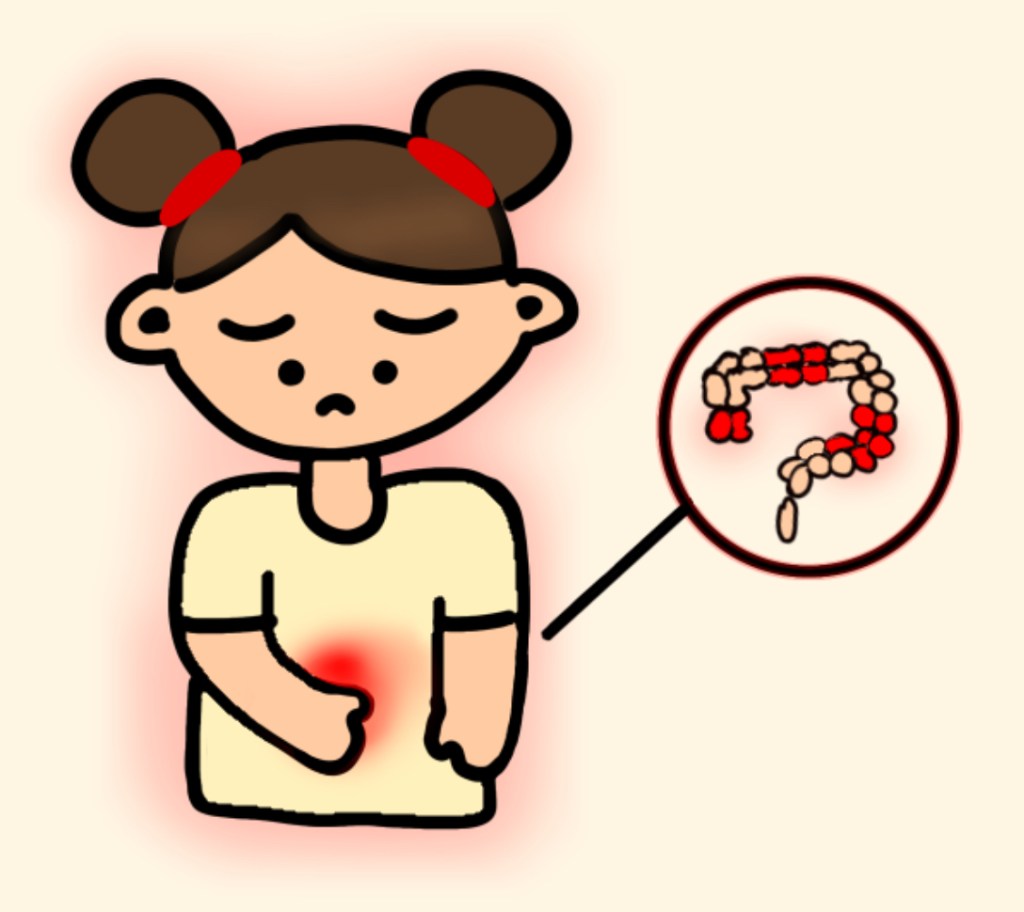
Crohn’s is different for everyone, leading to areas in the digestive tract being more inflamed than others. In some cases, Crohn’s is found only in the colon or the large intestine. Inflammation is often seen spreading throughout the end of the small intestine and the beginning of the large intestine. There are a plethora of symptoms for Crohn’s disease, some ranging from mild to severe. Some symptoms include belly pain and cramping, diarrhea, fatigue, and reduced appetite or weight loss. According to the Mayo Clinic, individuals with more severe Crohn’s disease may experience symptoms that extend beyond the intestinal tract. These symptoms include kidney stones, iron deficiency, and inflammation of the skin, eyes, and joints.
Healthcare professionals have concluded that there is no specific cause for Crohn’s disease. They previously speculated that Crohn’s disease was caused by diet and stress; however, they soon found out these factors aggravate Crohn’s disease instead of creating it. Several factors contribute to the development of Crohn’s disease. RFor example, researchers have identified more than 200 genes associated with Crohn’s disease, but they are unsure if genes increase the likelihood for someone to be diagnosed with the disease. Bacteria, viruses, or other environmental components may take part in triggering Crohn’s disease. Certain bacteria in the gut microbiome are assumed to be related to Crohn’s disease, but it is still unknown whether these bacteria cause the disease.
Unfortunately, there is currently no cure for Crohn’s disease that works for every individual. However, different medicines and procedures have been approved to help combat the life-changing symptoms Crohn’s disease creates. Anti-inflammatory medicines, immune system suppressors, biologics, Janus kinase inhibitors, and antibiotics are just a few examples that patients with Crohn’s disease are prescribed to suppress the inflammation. Two procedures that health professionals also recommend are nutrition therapy and surgery.
Crohn’s disease is shrouded in mystery and unsolved explanations. Nevertheless, health professionals’ goal in improving medical treatments will, ultimately, help create a better life for the individuals who suffer from the disease. Now more than ever, it is paramount to sympathize and raise awareness for the patients who battle with Crohn’s disease each day, so let’s uplift and support the people affected by Crohn’s disease!
Works Cited
Mayo Clinic. “Crohn’s disease.” Mayo Clinic, 29 October 2024.
http://www.mayoclinic.org/diseases-conditions/crohns-disease/diagnosis-treatment/drc-20353309


 pathoscribe
Leave a comment