Written by Goonj Gautam | Art by Maya Wen
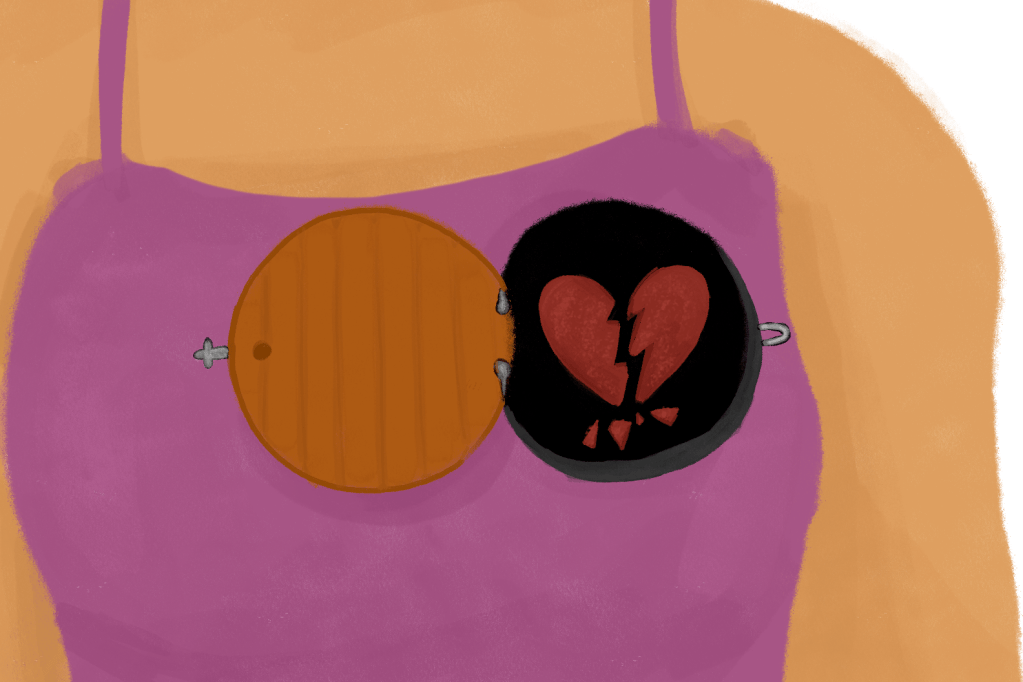
Although many of us have experienced a level of heartbreak in a relationship, very few have experienced heartbreak syndrome. In fact, less than 2% of those who had a suspected heart attack experience it. Heartbreak syndrome, a short-term weakening of some of the heart’s muscles, goes by multiple names, such as takotsubo cardiomyopathy, stress cardiomyopathy, transient apical ballooning syndrome, and many more.
While the precise source of the disorder is unknown, the causes of heartbreak syndrome can be sorted into two categories: emotional and physical. Emotional triggers can include strong anger, fierce arguments, devastating news, or surprise, while physical stressors typically include surgery, high fever, seizures, and low blood sugar. Experts believe that the stress hormones released by physical or emotional stressors obstruct the proper functioning of the heart for a short time. It should be noted, however, that about 30% of cases don’t have an identifiable source.
What makes you more likely to suffer from a broken heart (syndrome)? Although the reasons are unknown, being a female, older than 50 years of age, suffering from psychiatric or neurological disorders, or having a history of depression or anxiety makes one more likely to suffer from takotsubo cardiomyopathy. However, males who get broken heart syndrome are more likely to have a worse prognosis. There are also multiple types of this disorder–apical, mid-ventricular, basal, and focal–which affect different parts of the vital organ.
The symptoms of heartbreak syndrome are actually highly similar to those of a heart attack, so much so that clinicians have to look at an imaging of the coronary arteries to rule out a heart attack. Signs of this disorder encompass chest pain, shortness of breath, dizziness, and cold sweats. Although different healthcare providers may order different tests, they would typically include coronary angiography, a blood test, an EKG, and a chest X-ray.
The treatment for takotsubo cardiomyopathy will depend on the severity of the symptoms, but it is recommended to include standard heart failure medications (such as beta blockers, diuretics, and ACE inhibitors) and aspirin. These treatments, however, can have side effects, such as allergies, blood clots, strokes, and infections. Those with broken heart syndrome will usually make a full recovery within a few days to weeks, but many have low levels of energy for months. It really makes you wary of getting your heart broken, right?
Works Cited
“Broken Heart Syndrome Is Real.” Cleveland Clinic, 2 June 2025, my.clevelandclinic.org/health/diseases/17857-broken-heart-syndrome.
“Broken Heart Syndrome.” Mayo Clinic, Mayo Foundation for Medical Education and Research, 11 Nov. 2023, http://www.mayoclinic.org/diseases-conditions/broken-heart-syndrome/symptoms-causes/syc-20354617.
“Takotsubo Cardiomyopathy (Broken-Heart Syndrome).” Harvard Health, Harvard Health Publishing, 13 June 2023, http://www.health.harvard.edu/heart-health/takotsubo-cardiomyopathy-broken-heart-syndrome.
Wittstein, Ilan Shor. “Broken Heart Syndrome.” Johns Hopkins Medicine, 16 Oct. 2021, http://www.hopkinsmedicine.org/health/conditions-and-diseases/broken-heart-syndrome.

 pathoscribe
Leave a comment