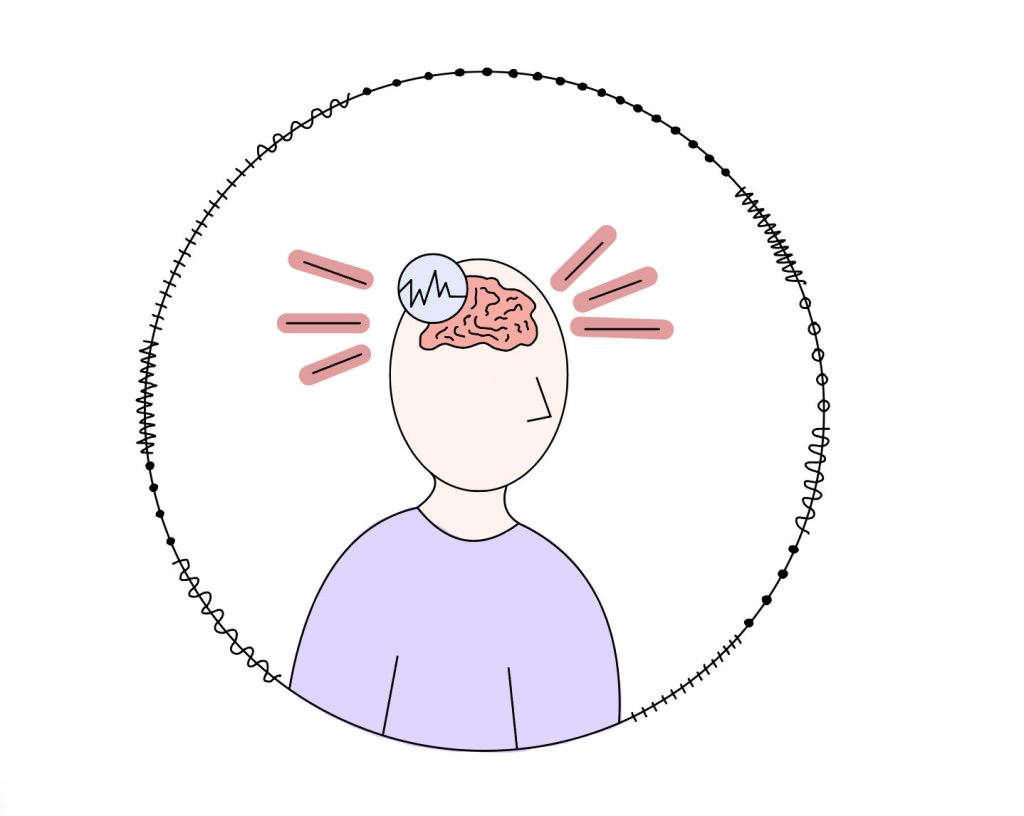
Written by Keira Lim | Art by Tanisha Arora
Being one of the most common neurological conditions, epilepsy affects over 50 million people worldwide. It causes recurring seizures, which are abnormal bursts of activity in the brain and can affect consciousness, movement, behavior, and more. Those with epilepsy may also experience cognitive or psychological issues. There are many causes for epilepsy, as well as different types of epilepsy, seizures, and treatments.
There are a variety of things that may cause epilepsy, as well as many risk factors that may increase the chances of its development. Some of those causes include infections in the brain–such as meningitis, HIV, and neurocysticercosis–brain damage, genetic factors, a stroke, traumatic brain injury (TBI), and comorbidities like depression, Alzheimer’s disease, diabetes, and autism. While these are all known to cause epilepsy, there is a large number of people with it that have unknown causes. In addition to all of those causes, people are more likely to be epileptic if they are children, elderly, or a smoker.
Although epilepsy does cause seizures, having a seizure does not always mean epilepsy, as neither febrile nor first seizures are linked to it. Epilepsy will be tested for by one or multiple tests after someone has had two or more seizures more than 24 hours apart from each other. After reviewing medical history and known symptoms in the person, numerous brain imaging techniques may be used, as well as blood and behavioral tests.
There are three main categories of seizures: focal, generalized, and unknown onset. Focal seizures are seizures that originate from just one lobe of the brain, while generalized seizures come from both hemispheres of the brain at the same time. Unknown onset seizures, as the name may suggest, do not have a known point of origin. People who experience focal seizures may or may not lose consciousness; these two states are called focal aware and focal impaired awareness. The seizure could also be motor or non-motor depending on whether there is movement during the seizure.
Those who have a focal impaired awareness seizure might enter a dreamlike state and engage in automatisms, which are repetitive and involuntary movements. Those who don’t may experience a wide range of feelings from deja vu to hearing things that aren’t real. They may also have auras, which is a warning sensation that signals that a seizure will occur soon. Some also experience a prodrone, which is like an aura but can last for days. Contrary to focal seizures, most people who have generalized seizures also experience a change in consciousness. There are types within generalized seizures like absence, which is where the person does not move or experiences slight twitches, tonic, where the body becomes stiff, and clonic, where there are jerking movements on one or both sides of the body. A seizure may be classified as the final main type of seizure, unknown onset, if there is not enough information to determine which of the other types it is. There are some seizures that do not fit into the other categories, like febrile seizures and first seizures, but neither of these generally point towards epilepsy.
In addition to types of seizures, there are hundreds of types of epilepsy that are called syndromes. They are characterized by age and seizure type and may vary in prognosis, treatment, frequency, and more. Epilepsy types can be identified through electroencephalogram (EEG) readings. An EEG is a non-invasive test that is used to read the electrical activity in the brain, which can give information about the seizure type and where it originated. Some epilepsy syndromes are Lennox-Gastaut syndrome, Juvenile Absence Epilepsy, and Sleep-related Hypermotor Epilepsy.
Seizures may occur randomly (called unprovoked), or be triggered by something. These triggers may cause someone with epilepsy to have a seizure but do not cause epilepsy themselves. Some common triggers include stress, dehydration, sleep deprivation, strobe lights, alcohol, and illness, but these are not the only things that may provoke a seizure.
Those who have epilepsy may be at risk of falling, having car accidents, or trouble sleeping due to seizures or other effects, but luckily there are a myriad of treatments that may be implemented to reduce or completely erase seizures from someone with epilepsy. In fact, up to 70% of people who have epilepsy can be seizure free if given the proper treatments.The most common way to treat epilepsy is to prescribe antiseizure medications, although lifestyle changes can also sometimes help. There are over 20 types of seizure meds available and may be prescribed based on seizure types, side effects, frequency, and more. Some diets may improve epilepsy, such as the ketogenic diet (keto diet), but only for certain individuals. Surgery is an option, but only considered if various medications have failed or if it is absolutely necessary, as it does come along with risks. Some of these surgeries include removing the area where the seizure originates, subpial transections, hemispherotomies, and thermal ablation. When choosing a treatment, it is best to follow a doctor or professional’s discretion, as they are the most educated in that area and can provide personalized support, as not all treatments will work for everyone.
Epilepsy is not a rare condition, and those who have it may not experience the exact same things as others with epilepsy. There are many misconceptions regarding this condition, including but not limited to: one should restrain someone when they have a seizure, one may swallow their tongue during a seizure, if one isn’t convulsing it is not a seizure, that epilepsy is contagious, that people with epilepsy are mentally impaired, and that people with epilepsy cannot live normal lives. All of the above are false claims contributing to the stigmatization of epilepsy, which may negatively impact the lives of those who have it. Being educated with the correct information is vital to be able to help when needed and stop the spread of misinformation. Treating everyone the way they need to be treated is also essential, and one should provide accommodations if needed; also, one should recognize that epilepsy patients want to be treated like people too.
Works Cited
“Epilepsy.” Mayo Clinic, 14 Oct. 2023, http://www.mayoclinic.org/diseases-conditions/epilepsy/symptoms-causes/syc-20350093. Accessed 9 Aug. 2025.
“Epilepsy.” World Health Organization, 7 Feb. 2024, https://www.who.int/news-room/fact-sheets/detail/epilepsy. Accessed 9 Aug. 2025.
“Epilepsy and Seizures.” National Institute of Neurological Disorders and Stroke, 7 Apr. 2025, http://www.ninds.nih.gov/health-information/disorders/epilepsy-and-seizures#toc-how-are-epilepsy-and-seizures-diagnosed-and-treated-. Accessed 9 Aug. 2025.
Seidenberg, Michael, et al. “Association of Epilepsy and Comorbid Conditions.” Future Neurology, U.S. National Library of Medicine, 1 Sept. 2009, pmc.ncbi.nlm.nih.gov/articles/PMC2802344/. Accessed 9 Aug. 2025
“What is Epilepsy.” Epilepsy Foundation, https://www.epilepsy.com/what-is-epilepsy. Accessed 9 Aug. 2025.

 pathoscribe
Leave a comment