Written by Akemi Li | Art by MollyAnn Caulfield
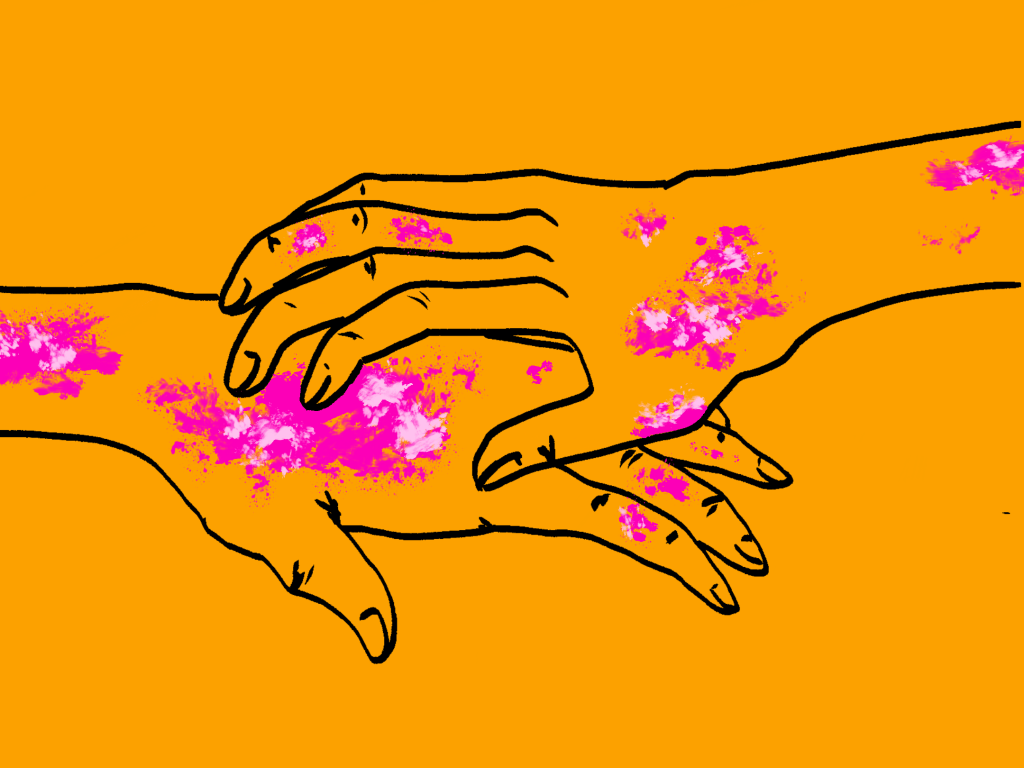
Dermatitis is identified as a term to categorize a group of conditions that create inflammation in the skin, leading to swelling and irritation. A common cause of dermatitis occurs when the skin comes into contact with something that creates irritation or triggers an allergic reaction that an individual may possibly have, like poison ivy, jewelry, or perfume. Dermatitis is further labeled into different types, with some including atopic dermatitis (eczema), diaper rash, contact dermatitis, and seborrheic dermatitis. This condition overall isn’t contagious, but it can cause discomfort in a patient’s life.
Common symptoms for patients diagnosed with dermatitis include rashes, itchiness, and dry skin. It may also cause skin to have blisters, crusts, flaking, or ooze. Other symptoms seen involve dandruff, thickened skin, and small, raised bumps that can change colors, like black or brown.
It is extremely important to see a doctor if symptoms worsen to affect daily activities and sleep. Other reasons to see a doctor may include when skin is in pain, or if symptoms are still appearing even after starting proper self-care. To diagnose, doctors will conduct tests like patch testing and skin biopsies. Once confirmed for the condition, treatments include using wet dressings, prescribing strength pills, employing light therapy, and applying rash cream or ointment. Risk factors include age, where it’s more common in younger children, often occurring during infancy, occupation, atopic dermatitis, allergies, and asthma.
Some complications may be at risk of infection from fungi and bacteria as individuals constantly scratch themselves due to pruritus (the uncomfortable send rations that causes the urge to scratch), causing the skin to develop cracks and sores. Infection could later spread and become life-threatening, though it is rarely seen. For individuals with darker skin, this health condition may cause a change in its color, either darkening or turning lighter. Such conditions are called post-inflammatory hypopigmentation and post-inflammatory hyperpigmentation; in order to return to the original skin color, it may take a long period of time.
To prevent dermatitis, it is important to develop a proper skin care routine. Habits like taking a shorter amount of time to shower, using mild soap, and moisturizing the skin are important to reduce the drying effects created by bathing.
Works Cited:
Mayoclinic. “Dermatitis” Mayoclinic, 2025, https://www.mayoclinic.org/diseases-conditions/dermatitis-eczema/symptoms-causes/syc-20352380



 pathoscribe
Leave a comment