Written by Ella Duzgun | Art by MollyAnn Caufield
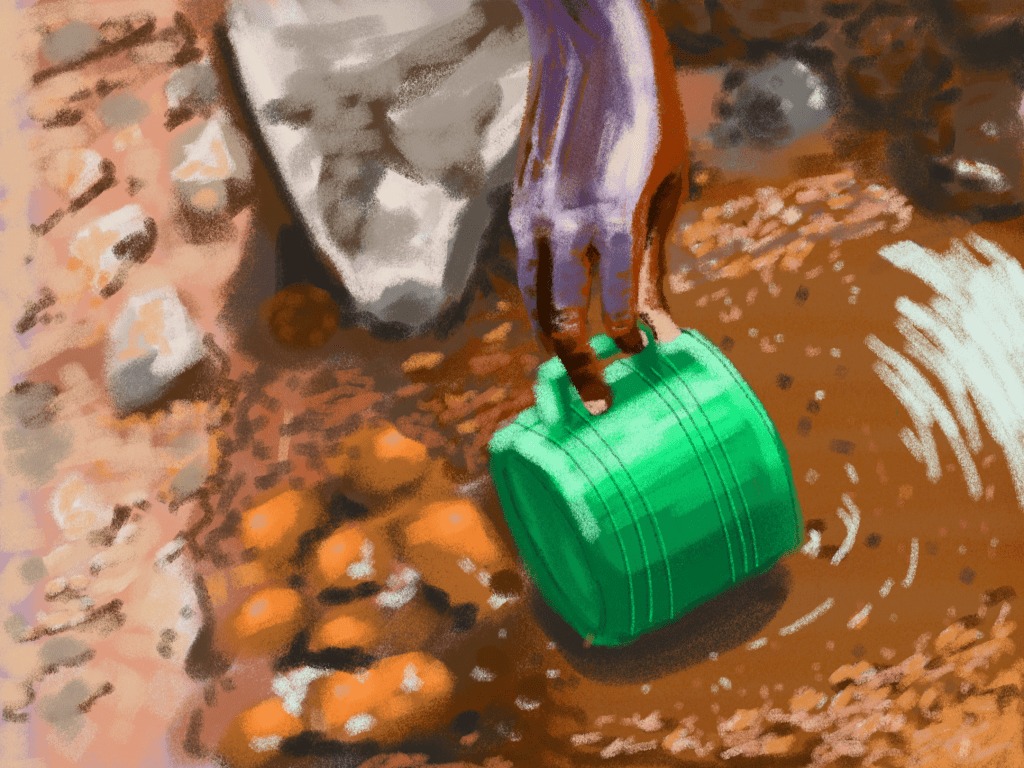
Women, men, children under the age of five, and even babies before they are born, are targeted by diseases in something crucial to their survival: water. Around the globe, 2.2 billion people are affected by the lack of access to safe water and sanitation, posing risks for many water-borne diseases such as cholera and typhoid. The rates of those who are affected continuously rise with other factors such as pollution, poor infrastructure, population growth, and socioeconomic inequalities. With clean water not being available, many disregard washing their hands, ultimately adding to the spread of these diseases. Agriculture is also impacted, which directly impacts the society’s vitality (drinking water). The global water crisis is a major public health emergency because a lack of access to clean drinking water leads to waterborne illnesses that spread fast if not addressed.
Cholera is a disease acquired from the consumption of food or water contaminated with the bacteria Vibrio cholerae. Some symptoms include watery diarrhea, and if left untreated, it can become deadly. Symptoms are seen from 12 hours to 5 days, while the bacteria are spread to their feces in 1-10 days. These can often be treated with antibiotics and IV fluids, but in some countries, access to this seems unreachable and often expensive. Cholera also causes life-threatening dehydration and essentially sucks nutrients out of people’s bodies. The World Health Organization reported in 2023 that there were 535, 321 cases and over 4000 deaths in 45 countries from those who were affected by cholera, and these numbers rise as we move further into the future.
Another common disease which is spread as a result of the lack of sanitation in water is typhoid fever. This serious illness can cause fever, tiredness, cough, stomach pain, diarrhea, or constipation. If it is not treated, symptoms can last about 3 to 4 weeks and may lead to dangerous problems like internal bleeding or damage to the intestines and brain. Doctors usually test this disease through blood work, but in many low to middle-income countries, hospitals may not have the equipment to do these tests. This disease can even be spread for years without feeling sick. Making sure water is clean is crucial to reducing the spread of this detrimental disease.
Overall, without access to clean and safe water, preventable diseases like cholera and typhoid fever continue to spread, especially in vulnerable communities. Water is a human right, and it is without a doubt unfair to countries that are not given the same resources to live in fear of getting such diseases. If governments do not take further actions to save and provide access to cleaner water, then the disease is sure to follow into future generations, creating an overall unstable environment.
Works Cited:
World Health Organization. Drinking-Water. World Health Organization,
www.who.int/news-room/fact-sheets/detail/drinking-water
Brockett, Sarah, Marlene K. Wolfe, Asa Hamot, Grace D. Appiah, Eric D. Mintz, and Daniele Lantagne. “Associations among Water, Sanitation, and Hygiene, and Food Exposures and Typhoid Fever in Case–Control Studies: A Systematic Review and Meta-Analysis.” The American Journal of Tropical Medicine and Hygiene, vol. 103, no. 3, 20 July 2020, pp. 1020–31. PubMed Central, https://pmc.ncbi.nlm.nih.gov/articles/PMC7470526/
World Health Organization. Cholera. World Health Organization,
 pathoscribe
Leave a comment