Written by Erica Tissera | Art by Erica Tissera
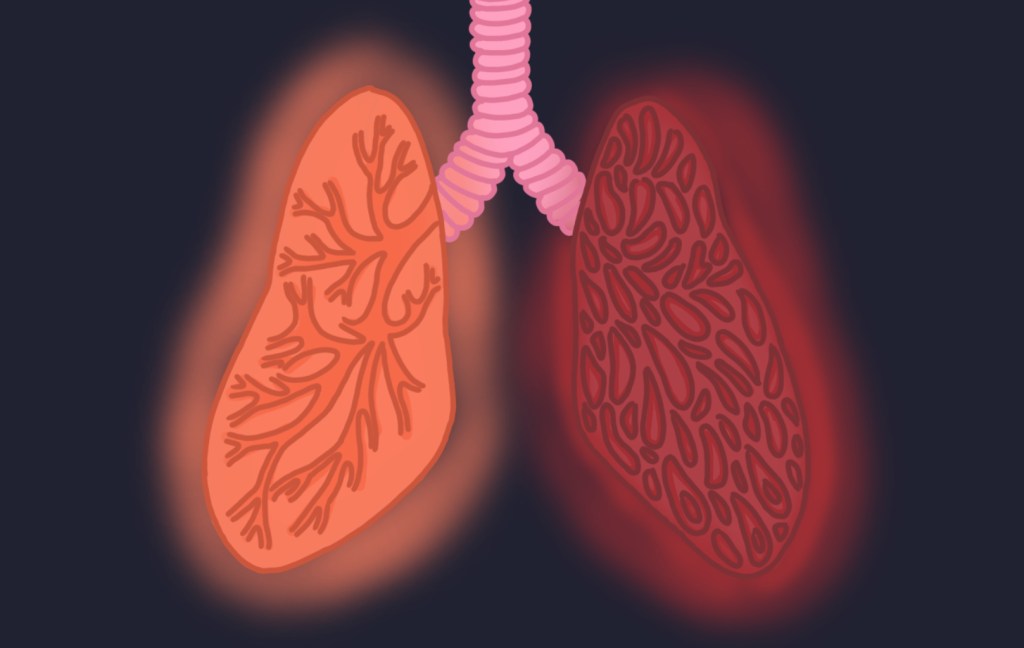
The struggle to simply climb a flight of stairs, chest tightening with each step, is a harsh reality for many who struggle with pulmonary fibrosis. Simply said, pulmonary fibrosis (PF) is a lung disease, one that is caused by the buildup of scar tissue in the lungs. This buildup of stiff, thick tissue is what makes lung functions so difficult, causing feelings of tightness in the chest.
There are two different types of PF: idiopathic and secondary. Idiopathic PF (IPF) occurs when there is an unknown cause, while secondary PF occurs when there is a known cause. IPF is the most common and is usually found in adults in their 50s to 70s.
According to the American Lung Association, the most notable symptoms of PF include a persistent dry cough, quick and shallow breaths, gradual unintended weight loss, tiredness, aching joints and muscles, and clubbing of the tips of the fingers and toes. If you are experiencing these symptoms, tell your doctor immediately to get tested for PF.
While there is no treatment for PF, if diagnosed, patients will likely be put through palliative care, or in other words, treatment to alleviate symptoms until death. Typically, patients are put on antifibrotic medications such as nintedanib and pirfenidone to slow the decay of lung function, ensuring that patients are as comfortable as possible until death. In some cases, lung transplants may also be done, but there is no guarantee that the disease will not return post-transplant.
However, PF is generally considered a rare disease, as roughly only 13-20 people will have it for every 100,000 people in the world. In the United States, there are about 100,000 to 250,000 people currently affected by it, although around 50,000 new cases are recorded annually.
While the condition is rare, it is important to implement good habits to prevent PF among other lung diseases as well. The best way to do so is to immediately stop smoking and avoid secondhand smoke. Tobacco damages lung tissue, which is what builds up and causes breathing difficulties. It is also important to avoid certain environmental factors, such as asbestos, dust, and silica, which can usually be achieved by wearing protective masks. To prevent infection, one can take annual precautions such as flu vaccines and COVID-19 boosters, both of which can actually reduce lung damage. Other habits include those of a healthy lifestyle, such as regular exercise and a healthy diet.
Works Cited:
American Lung Association. “5 Things You Should Know about IPF.” Lung.org, 2023, http://www.lung.org/blog/idiopathic-pulmonary-fibrosis-things-to-know.
Cleveland clinic. “Pulmonary Fibrosis: What Is It, Causes, Symptoms, Testing & Treatment.” Cleveland Clinic, Cleveland Clinic, 4 May 2021, my.clevelandclinic.org/health/diseases/10959-pulmonary-fibrosis.
Mayo Clinic. “Pulmonary Fibrosis – Symptoms and Causes.” Mayo Clinic, 2018, http://www.mayoclinic.org/diseases-conditions/pulmonary-fibrosis/symptoms-causes/syc-20353690.

 pathoscribe
Leave a comment