Written by Diya Desikan | Art by Maya Wen
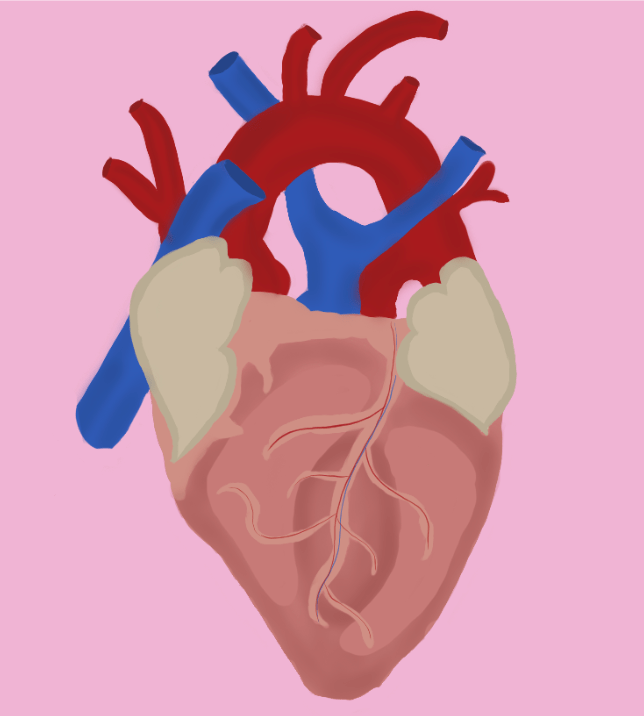
February is Heart Health Awareness Month, which emphasizes the importance of heart health and the risks of cardiovascular diseases. Cardiovascular diseases, or CVDs, are the leading cause of death on a global scale. 1 in every 5 deaths in the US is caused by a cardiovascular disease. It doesn’t discriminate by gender, socioeconomic status, or race. CVDs are a category of diseases that affect the heart and blood vessels. 80% of cardiovascular disease-related deaths stem from their most common manifestations, heart attacks and strokes.
The most common risk factors for heart attacks and strokes are unhealthy diets, tobacco use, overuse of alcohol, and being physically inactive. These factors are usually portrayed in the human body as elevated blood pressure, raised blood glucose levels, and obesity.
CVDs are not just limited to these two manifestations, which is why it is crucial to be aware of the various diseases and their symptoms. Heart disease is a condition where plaque buildup in artery walls produces a narrower artery, making it harder for blood to flow through and potentially producing a blood clot. A heart attack occurs when blood flow to the heart is blocked by a blood clot. If blood passage is blocked completely, the heart’s corresponding muscle begins to die. The damage to the heart muscle is called a heart attack.
A stroke is a blocked or ruptured artery. Ischemic strokes, the most common, develop when blood vessels that feed the brain get blocked. The blocked cells begin to die, which results in a loss of function. A hemorrhagic stroke is when a blood vessel in the brain bursts, usually caused by unmonitored high blood pressure. Damage from strokes can be permanent if too many cells die off from lack of blood and oxygen, or temporary, in which new cells will replace the damaged ones.
Another cardiovascular disease, heart failure, occurs when the heart pumps blood irregularly and doesn’t meet the body’s oxygen and blood requirements. Arrhythmia refers to an abnormal heart rhythm, in which the heart can beat too fast, tachycardia; too slow, bradycardia; or irregularly, affecting how well the heart works to produce the needs of its body. Lastly, heart valve disorders cover multiple types of heart valve issues. When the heart valves don’t open enough, less blood can flow through. When the heart valves are too stretched out, regurgitation can occur.
Symptoms of heart issues include chest pain and chest pressure, shortness of breath, dizziness, fainting, and fatigue. Cramping, swelling or sore muscles, cool and red skin, numbness on the face or limbs, and difficulty talking, speaking, or walking are all symptoms of blood blockage. If any of these symptoms sound familiar, consult a medical professional who will be able to diagnose the disease.
People suffering from cardiovascular diseases often are prescribed lifestyle changes, such as being more active, making better dietary decisions, and quitting alcohol or tobacco products. Other treatments include medication, surgery, and active surveillance, depending on the severity and situation.
Despite how common cardiovascular diseases are, not many are aware of their frequency and long-term symptoms. By raising public awareness, more people will be aware of their risks and take preventative measures to combat cardiovascular diseases.
Works Cited:
“Cardiovascular Diseases.” World Health Organization, World Health Organization, http://www.who.int/health-topics/cardiovascular-diseases#tab=tab_1.
“What Is Cardiovascular Disease?” Www.Heart.Org, 10 Jan. 2024, http://www.heart.org/en/health-topics/consumer-healthcare/what-is-cardiovascular-disease.
“What Is a Heart Attack?” Www.Heart.Org, 9 Jan. 2024, heart.org/en/health-topics/heart-attack/about-heart-attacks.
“Heart Disease Facts.” Centers for Disease Control and Prevention, Centers for Disease Control and Prevention, 15 May 2023, http://www.cdc.gov/heartdisease/facts.htm#:~:text=Heart%20Disease%20in%20the%20United%20States&text=One%20person%20dies%20every%2033,United%20States%20from%20cardiovascular%20disease.&text=About%20695%2C000%20people%20in%20the,1%20in%20every%205%20deaths.
“Heart Valve Disease.” Mayo Clinic, Mayo Foundation for Medical Education and Research, 22 Nov. 2023, http://www.mayoclinic.org/diseases-conditions/heart-valve-disease/symptoms-causes/syc-20353727.

 pathoscribe
Leave a comment