Written by Simran Ahluwalia | Art by Simran Ahulwalia
Out and about in our daily lives, we constantly hear about the dangers of UV radiation, and how important it is to protect ourselves from the sun’s harsh rays. One of those dangers is the development of a form of skin cancer, melanoma. Melanoma is one of the deadliest and rarest forms of skin cancer, with skin cancer being the most common form of cancer in the US. In 2020 alone, 324,635 people were diagnosed with melanoma, and more have been diagnosed since. As this disease grows in prevalence, we must work to understand it and its significance in healthcare.
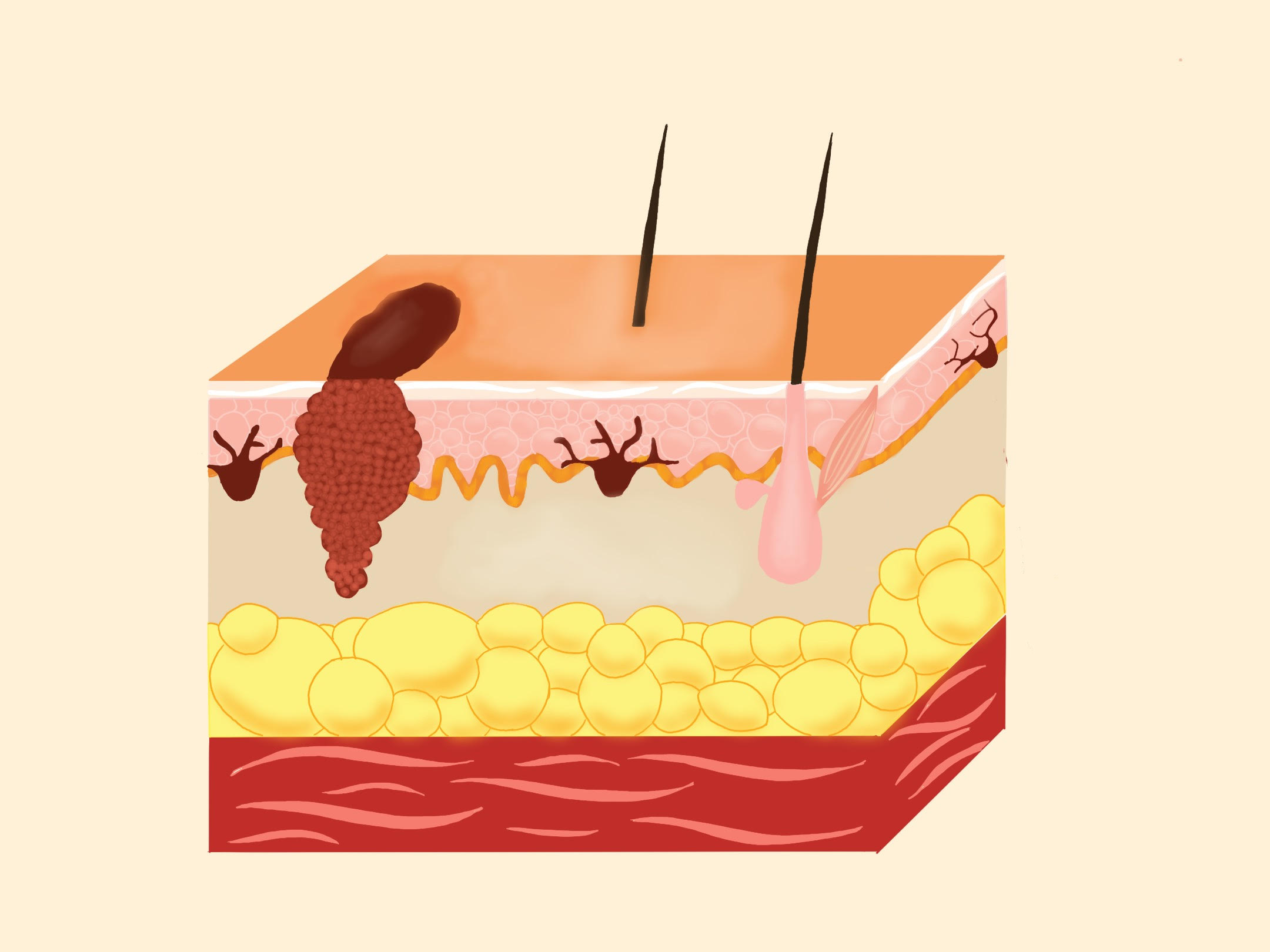
Your skin has 3 layers: the epidermis, the outer layer of skin; the dermis; the inner layer of skin; and the hypodermis, the deep layer of fat. Melanoma occurs in the deepest layer of the epidermis, just above the dermis. That layer contains cells called melanocytes which produce the skin’s pigment or color. Melanoma begins when healthy melanocytes change and grow out of control, forming a cancerous tumor. In the event that melanoma develops from normal moles that people already have on their skin, the mole will visibly change in shape, size, color, or border of the mole. Melanoma may also develop on skin where there is no existing mole.
There are four different types of melanoma skin cancer. Superficial spreading melanoma makes up about 7 in 10 melanoma of the skin. These tumors grow outward on the surface of the skin, seen as a dark spot in the skin that changes shape and gets bigger. Nodular melanoma has tumors that appear as a distinct, raised bump or nodule on the skin that is dark brown or black, or pink or red. Nodular melanomas grow down into deeper layers of skin earlier, so they are usually at a more advanced stage than superficial spreading melanomas. Lentigo maligna melanoma usually occurs in older people. It first appears as abnormally shaped tans or brown spots in areas that receive much sun exposure (like the face, ears, arms) and grows and changes slowly over time. Finally, acral lentiginous melanoma (acral melanoma) starts in areas that do not receive much sun exposure, like the palms of hands, soles of feet, or under the nails. This type of melanoma makes up a large portion of the melanomas in people with lighter skin tones.
When found early, melanoma can be cured with surgery. Being one of the most serious forms of skin cancer, it can grow deep into the skin, becoming an invasive melanoma. It may also invade blood cells and spread to lymph nodes and distant parts of the body, which is called metastatic melanoma. Other possible cures for melanoma include chemotherapy (using drugs to stop the growth of cancer cells), radiation therapy, immunotherapy, and targeted therapy. However, these are not the only options; there are currently new types of treatment for melanoma that are being tested in clinical trials. For example, vaccine therapy, which includes using a substance or group of substances to stimulate the immune system to find the tumor and kill it, is being studied in stage III melanoma. However, treatments for melanoma may cause side effects. Patients can enter clinical trials before, during, or after their cancer treatment, but this is a choice that requires significant thought, as clinical trials help improve the way cancer will be treated in the future.
With clinical trials into melanoma still being conducted, the understanding of melanoma is constantly evolving. The reason why melanoma occurs is still not certain to scientists, but everyday research is conducted to solve this. Through this research and clinical trials, this cancer will not only become less formidable and less deadly but also treatment methods will improve going forward, saving the lives of so many more people in the future.



Leave a Reply