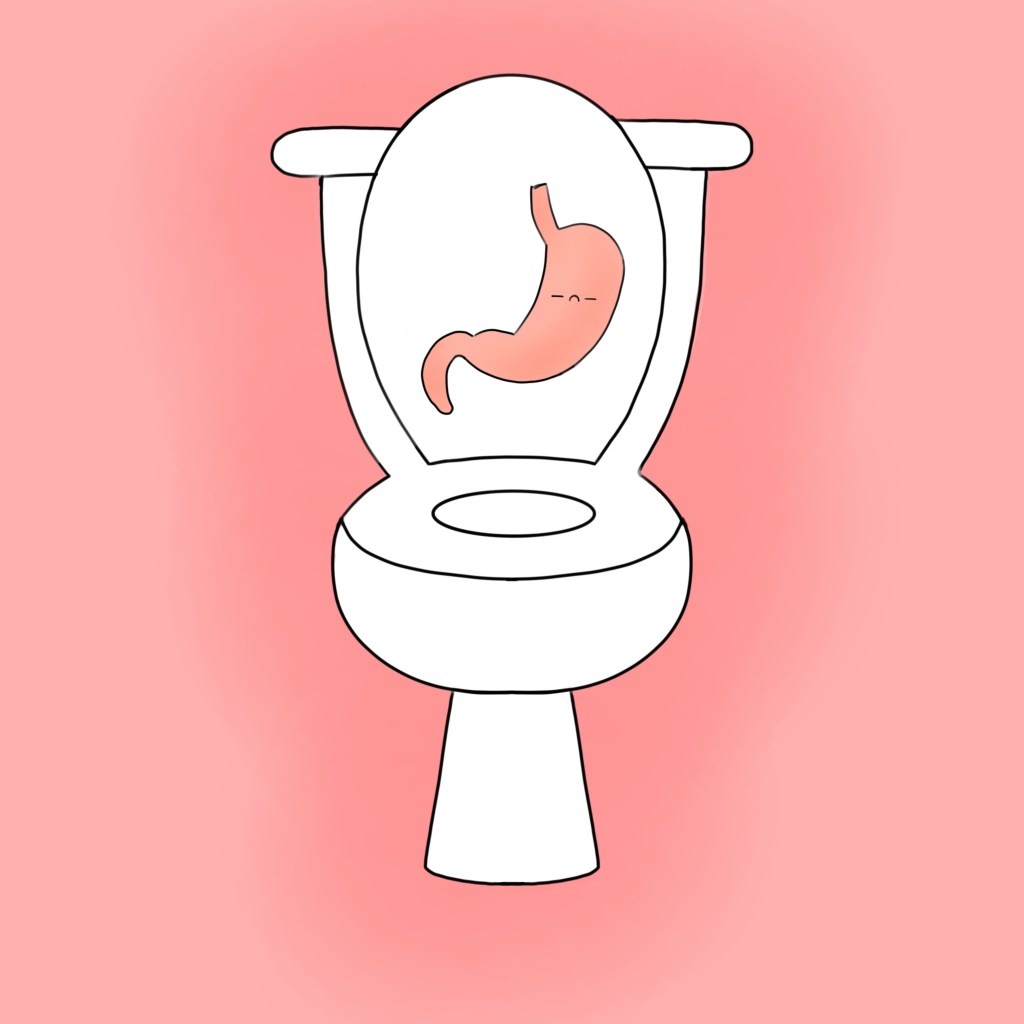
Written by Anoushka Pandya | Art by Anoushka Pandya
Maybe you have heard of the term IBS once or twice before and associated it with never-ending diarrhea, something extremely gross, but what exactly is it? IBS is a syndrome that refers to a group of symptoms (see our article: Disorders, Diseases, and Syndromes: What’s the Difference) that impact the abdomen and digestive system. It is a prevalent disease that affects up to 15% of the population. IBS is more common in women, affecting around 20% of women and 11% of men.
There is no exact cause for IBS. IBS is said to be linked to genetics, environmental factors, oversensitivity in the gut, stress, or abnormal food intake. If your family has IBS, you are more likely to have IBS yourself.
IBS causes a range of symptoms in the abdomen, including pain, constipation, diarrhea, bloating, and gas. Someone with IBS will feel a constant need to use the restroom or that their bowels are not empty after using the bathroom. These symptoms are not deadly but are uncomfortable and painful. People with IBS have fluctuating symptoms, which tend to come and go, lasting for varying periods. Every individual has different symptoms and experiences with IBS.
IBS is classified into different subtypes that are characterized by an individual’s stools, or poop. IBS-D, or IBS-Diarrhea, refers to someone with loose or watery poop. IBS-C, or IBS-Constipation, refers to someone with hard or lumpy stools. IBS-M, or IBS-Mixed Bowel Movement, refers to someone with alternating diarrhea and constipation. They may have mucus in their poop and mixed bowel movements.
IBS is a lifelong problem and is very difficult to live with. Unfortunately, IBS does not have any exact cure. There are, however, ways to reduce and control the symptoms of IBS. One way is through diet changes, as IBS may be triggered by certain foods. Often, restricted foods include alcohol, caffeine, dairy, sweets, and certain fruits or vegetables. Another way is meditation. IBS is often called “nervous stomach” because it can be triggered by stress. If you or someone you know has been suffering from similar symptoms for a while, you should go to a doctor to potentially be diagnosed with IBS.
Raising awareness of IBS can reduce the stigma behind such a prevalent disease. IBS is joked about and seen as gross, which often makes people suffering from the syndrome feel unsafe. Because of this, it is even more crucial to raise awareness and reduce the stigma surrounding IBS. Becoming aware of IBS, its pervasiveness, and its so-called “gross” symptoms will be a step forward in creating a safe environment for those suffering from this syndrome.
Works Cited:
GL Associates and Endoscopy Center. “The Statistics of IBS: How Many People Suffer from the Condition?” GI Associates, gi.md/test-colonoscopy/the-statistics-of-ibs-how-many-people-suffer-from-the-condition#:~:text=It%20is%20estimated%20that%20it,a%20chronic%20yet%20manageable%20condition
Cleveland Clinic Medical Professionals. “What Is Irritable Bowel Syndrome (IBS)?” Cleveland Clinic, 2023, my.clevelandclinic.org/health/diseases/4342-irritable-bowel-syndrome-ibs.
Case, Holly. “IBS-M: Causes, Symptoms, and Treatment.” Healthline, Healthline Media, 27 Mar. 2023, www.healthline.com/health/irritable-bowel-syndrome/ibs-m-causes-symptoms-treatment#lifestyle. “What Is IBS?” NHS Choices, NHS, 2021, www.nhs.uk/conditions/irritable-bowel-syndrome-ibs/#:~:text=There%27s%20no%20cure%2C%20but%20diet,a%20family%20history%20of%20IBS.



 pathoscribe
Leave a reply to The Gut-Brain Axis: How Gut and Mental Health Are Interconnected – pathoscribe Cancel reply