
Written by Jayne Thakur | Art by Maya Wen
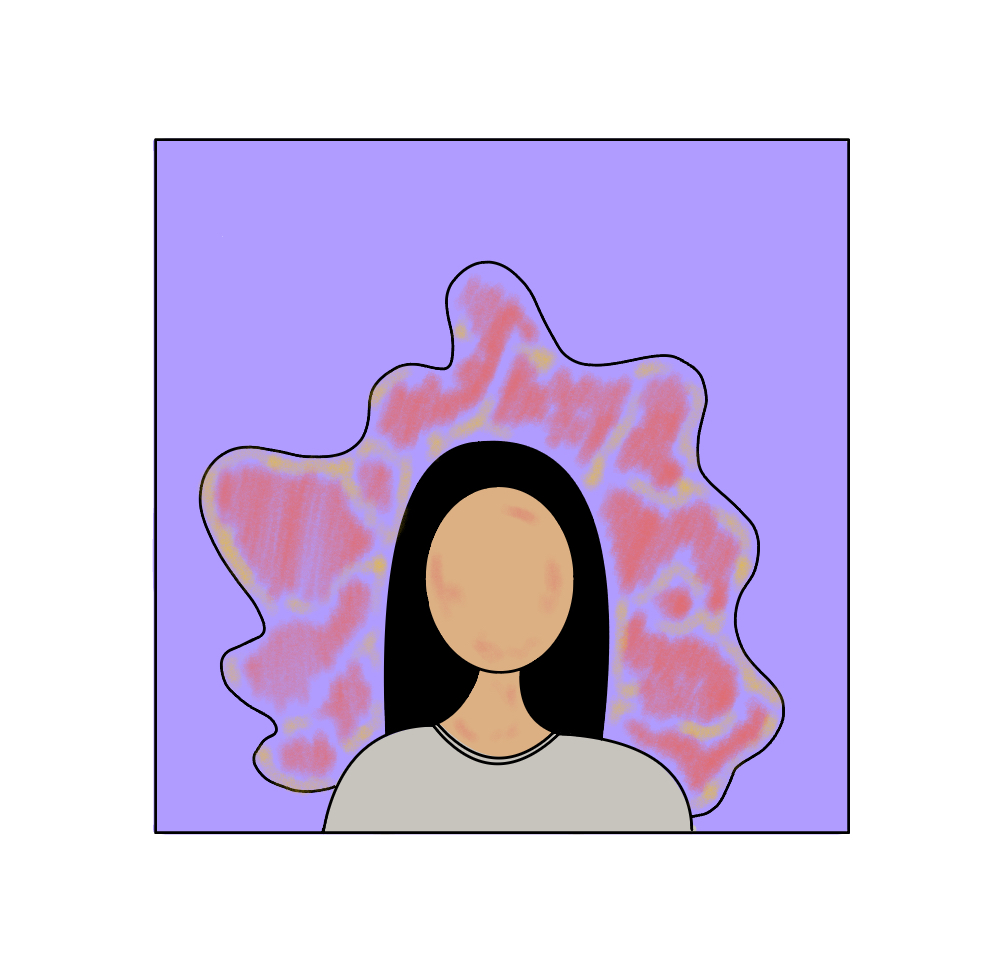
Amongst a plethora of skin-related health conditions emerging as of late, eczema is most likely the one that affects the largest demographic, and psoriasis is an extension, albeit a more serious one, of it.
Eczema is a condition in which the patient experiences several dry itchy spots or rashes, which may be triggered by an allergen, a weather condition, or is simply due to the skin’s makeup. It’s caused by the inability of the skin’s external barrier to retain moisture as well as it would in a person without any skin condition. While 20% to 30% of infants are diagnosed with it, eczema is a chronic condition, and it’s often alleviated through medication in at least half of its diagnosed patients. Often treated with light mild corticosteroid products and other soothing ointments, it does not require too much attention.
On the other hand, Psoriasis often presents itself as similar to eczema. However, it is an autoimmune disorder in which the skin multiplies its cells too quickly, leading to a buildup of skin cells, which often results in rashes and itchy spots that are similar to eczema. Whereas eczema is more common in children, a psoriasis diagnosis is more likely to be made well into adulthood. It requires significant drug therapy, as well as light therapy as it is an autoimmune disorder that also presents roadblocks to the patient’s quality of life. Corticosteroids are used to mitigate itching, while other medications may be prescribed by a doctor or pharmacist based on observed prognosis.
Despite its spread across the human body, these remain conditions that are not contagious and are not spread by being in contact with another eczema patient. With that said, if diagnosed with either condition, it is important to take care of yourself as it can cause severe harm to the body, even if it does not pose a risk to the rest of society.
The presence of stubborn, itchy patches requires medical attention and it is important to seek out the advice of a healthcare professional if you are faced with persistent symptoms.
Works Cited:
“Eczema.” Cleveland Clinic, 1 May 2024, my.clevelandclinic.org/health/diseases/9998-eczema.
National Institute of Arthritis and Musculoskeletal and Skin Diseases. (2024, August 7). Psoriasis. https://www.niams.nih.gov/health-topics/psoriasis
professional, C. C. medical. (2022, September 15). Psoriasis: What it is, symptoms, causes, types & treatment. Cleveland Clinic. https://my.clevelandclinic.org/health/diseases/6866-psoriasis
Mayo Clinic. (2024, May 15). Atopic dermatitis (eczema). https://www.mayoclinic.org/diseases-conditions/atopic-dermatitis-eczema/diagnosis-treatment/drc-20353279
Mayo Clinic. (2024b, May 17). Psoriasis. https://www.mayoclinic.org/diseases-conditions/psoriasis/diagnosis-treatment/drc-20355845


 pathoscribe
Leave a reply to Pathoscribe Fundraiser – National Eczema Association – pathoscribe Cancel reply