Written by Katelyn Effendi | Art by Katelyn Effendi
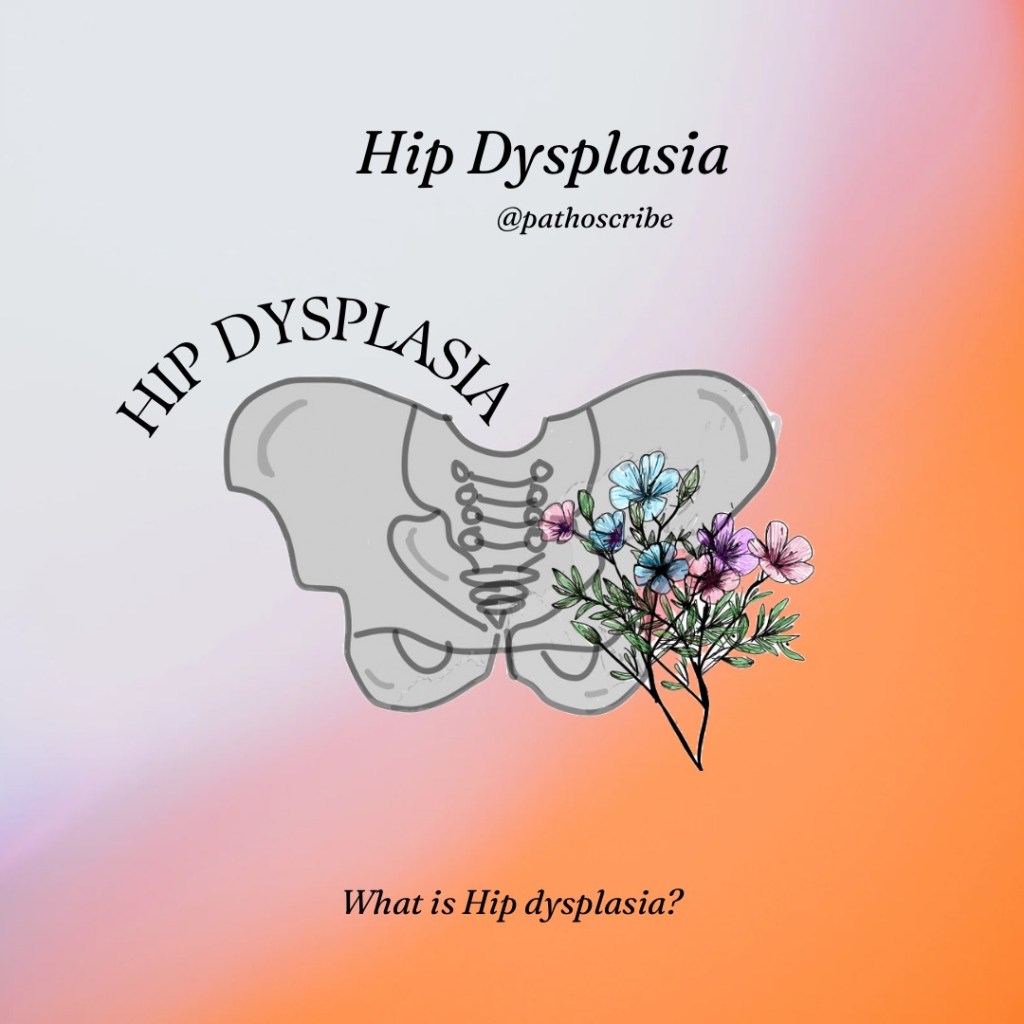
What is Hip Dysplasia? Hip dysplasia occurs when a hip socket doesn’t fully cover the ball portion of the upper thigh bone. This causes the hip joint to technically be dislocated. Hip dysplasia is usually found in newborn babies due to the limited space in the mother’s womb, causing the ball of the hip joint to move out of place. The risk factor for this is that later in the child’s life, the cartilage, called the labrum, rims the socket area of the hip joint, and will suffer a labrum tear. This can later lead to osteoarthritis, which causes pain around the hip joint area due to the contact pressure of the surface of the socket.
One in every 1,000 babies is diagnosed with hip dysplasia in the US. This disease is usually more prevalent in female firstborns. The symptoms of hip dysplasia include issues at the front of the groin, trouble walking, or different lengths of the legs. The longer hip dysplasia is left untreated, the more pain one might experience in the hip area because of the tear that is taking place. Cures for this vary from using a brace to having hip surgery. Even if there are alternatives, surgery is recommended to increase stability on the hip and prevent future hip replacement. The surgery performed on the hip involves the reshaping or repositioning of the hipbone to create a normal hip socket. This surgery, which is commonly used to help young adults with hip dysplasia, is called periacetabular osteotomy (PAO).
Recovery after surgery for young adults typically lasts for six months, consisting of physical therapy. Overall recovery, however, usually lasts for a year, and the first three months are the most challenging. Patients will not be able to use their legs normally because of the pressure placed on the bone, therefore, they are put on crutches for the recovery period. Exercise involving the stretching of the muscle will help patients be able to get back on their feet.
Results of the surgery are very beneficial as patients will be relieved from the pain in later years and be able to continue their activities. If patients decide not to proceed with surgery, especially with a severe case of hip dysplasia, it may result in a full hip replacement in later years. Let’s find out if any of the symptoms match your discomfort and check up with a doctor to prevent the pain that follows hip dysplasia.
Works Cited:
Mayo Clinic. “Hip Dysplasia.” https://www.mayoclinic.org/diseases-conditions/hip-dysplasia/symptoms-causes/syc-20350209
Cincinnati Children’s. “Hip Dysplasia Adolescent.” Cincinnati Children’s, 2022, https://www.cincinnatichildrens.org/health/h/hip-dysplasia#:~:text=Adolescent%20hip%20dysplasia%20is%20a,and%20don’t%20realize%20it.


 pathoscribe
Leave a reply to Katelyn Effendi – pathoscribe Cancel reply